

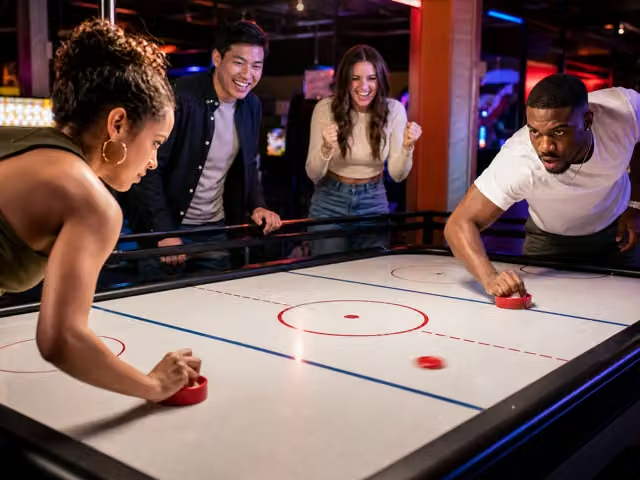
The quick version
Take one striker each and check that the puck glides with the air on. Choose the first server with rock, paper, scissors. Put the puck flat on that player's half, agree you are both ready, then strike it. Play continuously on your own halves. A puck that drops into your goal gives the opponent one point, including an own goal. The player scored upon serves next. First to seven wins, with no win-by-two rule.
Saved on this device only — clearing your browser's cache or site data removes them (no account backup).
Check the table before starting
Use a conventional two-ended air-hockey table with a goal at each end, a center line, two strikers sized for that table and one flat compatible puck. Multi-puck machines, four-sided tables, tabletop battery toys and digital games can have different rules. This is a friendly format based on physical air hockey, not a sanctioned tournament or a particular purchased edition.
At an arcade, check access, payment, posted rules and the machine's score or time limit before starting. Ask staff whether it can support a game to seven; do not change operator settings. If it stops sooner, use the posted finish or agree before play to finish at shutoff using the score then. That is a house alternative to the main seven-goal game; an equal score is a draw unless both agree to another permitted game.
Turn on the blower as the table instructs. Gently slide the puck both ways to check that it glides and can be retrieved from each goal. Ask the operator to address a sticking puck, damaged striker or unreliable goal sensor. Keep bags and drinks off the table and leave room to move behind both ends. Spectators stand clear with hands away from the playing surface.
Start at 0–0. Choose ends by agreement, then play rock, paper, scissors for first serve. This replaces a tournament referee's face-off. Each player holds one striker; only one puck is in play. Before scoring, try a few gentle returns and one side-rail bank each, then reset to 0–0.
Control, shoot and defend
Serve from your half
The server places the puck flat on their own half while play is stopped. Both players say ready; the server moves their hand away and hits the puck with the striker. A hand placement alone cannot score. After a goal, the person whose goal received the puck retrieves it and serves again when both are ready.
Play continuously
There are no alternating turns or touch limit. Block, settle and hit the puck with your striker. Straight shots and rebounds off the side rails are legal. Either player may strike a puck touching the center line; do not strike a puck entirely on the opponent's half. For this friendly format, keep your whole striker on your half, including the follow-through. Stay on your own side of the center line.
Keep the puck moving
Once a puck arrives and remains on your half, send it across the center line within seven seconds. A return across the line starts a new count on the receiving half; a bounce that stays on your half does not. If someone stalls, the other player counts aloud at a steady pace. Give each player one warning per game; the next completed seven-count without crossing loses possession. This spoken enforcement is a house method, not a precise referee shot clock.
Count a goal
A puck entering and dropping into a goal scores one for the other player. An own goal counts the same. A puck that merely rebounds out of the goal mouth does not score. Say the new score aloud, agree it before restarting and check the display if there is one. If the puck lodges at the opening, stop and agree whether it dropped or tipped into the goal; a flat puck still on the field has not scored. If neither can tell, use the replay remedy below.
Finish at seven
The first player to seven wins immediately, even at 7–6. There is no extra equal turn or two-goal margin, so a completed game has no tie. For a rematch, swap ends, reset both scores and give the other player the first serve. Stop when the agreed game ends or the table becomes unavailable; an interrupted game is unfinished unless the pre-agreed machine-shutoff alternative applies.
Aim at a side rail so the puck rebounds toward the goal from a different angle. Start gently enough to keep the puck flat. More force is not the goal of the practice rally.
Use one clear friendly remedy
Keep the striker flat rather than lifting it over the puck to trap it from above. That trap is called topping. Use the striker, not your hand, clothing or body, to play a live puck. Releasing the striker, topping, touching a live puck with your body, striking into the opponent's half, or breaking this guide's stricter striker boundary stops the rally and gives the opponent possession on their own half. A goal caused by the offending shot does not count. If the innocent player scores during the same action, keep that goal and use the usual next serve instead of also imposing a possession penalty.
House rule for a hand save: if a hand or body deliberately blocks a puck going directly into the goal, award the opponent one goal, then let the player scored upon serve. This easy-to-call remedy replaces a tournament technical-foul free shot; do not describe it as the official penalty.
House rule for an escaped puck: stop when it leaves the surface or hits a shield, the top of a rail or a foreign object, even if it comes back. Retrieve it after everyone is clear; do not swing at an airborne puck. An attacking shot that sends it off gives possession to the defender. A defender who lunges forward and sends it off gives possession to the attacker. If it leaves after a stationary, sideways or backward block, give it to the defender. If the cause is unclear, replay from the last agreed possession with no point.
For an accidental spectator touch, disputed sensor event or simultaneous unresolvable foul, stop, retain the last agreed score and replay from the player who last had clear possession. If nobody had possession, alternate these neutral restarts, beginning with the original non-server. Place the puck on the chosen half with hands clear, ask ready and resume. This is a house replay, not a center-table face-off.
Make the next rally better
Help a first-time player try control before speed: stop a gentle puck with the striker, then aim a measured shot. Try defending a little in front of the goal, returning toward the goal when the puck approaches a side opening. Experiment with position rather than treating one distance as correct for every table or player. Ask before offering coaching during a game.
Show the center line and explain the score before the first serve. Agree that the spoken score, corrected together while play is stopped, is your record if the electronic counter misses or duplicates a goal. At a venue, involve staff if equipment or posted rules conflict with your plan. A seven-goal target is not a promise of a certain number of minutes.
Either player can call a pause for a loose puck, equipment problem or discomfort. Both acknowledge the pause; then place the puck on the last agreed possessor's half and restart when ready. Ordinary pauses and restarts here are house procedures. Tournament play instead has referee-controlled time-outs, advantage decisions and technical penalties.
The main game is exactly two active players. Extra friends can watch clear of the table or use the four-person relay variation. Table height, reach, grip and venue noise differ; check the actual setup with each player rather than promising a seated or universally accessible format.
Already know the game?
Ideas & Twists
Choose a variation together before you start.
Air hockey · See main rules
House suggestion · 2 playersBank-shot bonus
A goal from a shot that hits at least one long side rail after the scorer's last striker touch and then enters the opponent's goal earns two points; other goals earn one. Multiple rail contacts still earn only two. Own goals and the house hand-save award always earn one. A defender's deflection does not erase a visible rail contact. Agree the bonus before the next serve; if the rail contact is uncertain, award one. First to at least seven wins, so a two-point goal can finish at eight. Track the agreed score aloud because the machine may count each goal as one. Serving, fouls and boundaries stay unchanged.
Air hockey · See main rules
House suggestion · exactly 4 playersGoal-by-goal team relay
Make two teams of two with an agreed order at each end. Only the first player on each team holds a striker; partners wait clear of the table. Start a normal game to seven team goals. After every awarded goal, including an own goal or hand-save award, stop and swap both active players with their partners. Transfer strikers while the puck is stationary. The incoming player at the end just scored upon serves when both are ready. Fouls and escaped pucks change possession without triggering a swap. Each individual receives their own first seven-count warning. First team to seven wins; no tie or win-by-two. This is a relay on a two-player table, not simultaneous doubles.
Air hockey · See main rules
House suggestion · 2 playersAgreed head start
For a willing mixed-experience pair, agree who receives a three-goal head start before beginning. Start that player at 3 and the other at 0; the player on 0 takes first serve. Play the same game, with every actual goal and house hand-save award adding one, until someone reaches seven. Do not revise the head start during play. An own goal benefits the opponent as usual. For a rematch, reset the same 3–0 arrangement, swap ends and again let the player on 0 serve. Both players must agree to the head start; it is a balancing experiment, not an assessment of ability.
About this guide
This friendly two-player format uses USAA’s 2018 rules as a reference, with the house choices explained below. Venue equipment and posted handling rules still apply; agree on the stated match and tie format before starting.
Ready for something different?
Find another game →