

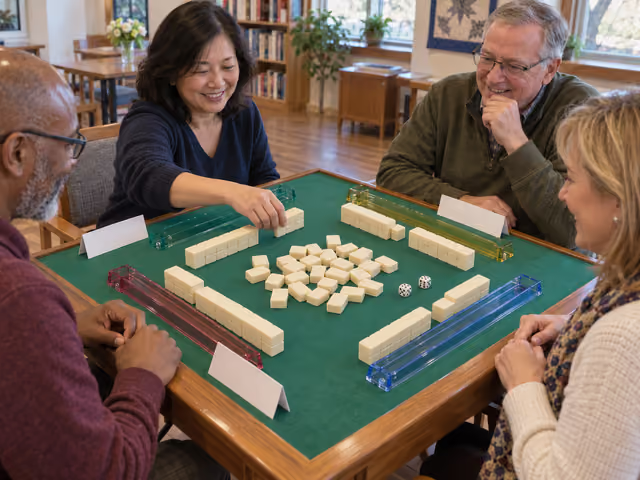
The quick version
Seat four players with matching annual cards. Build four walls, deal fourteen tiles to East and thirteen to everyone else, then pass three tiles right, across and left. Agree whether to do the second Charleston. East discards first; play continues to the right. Draw one tile, check for a card hand, optionally exchange an exposed joker, then discard one. A discard can also complete a permitted exposure or the whole winning hand. Reveal and verify fourteen tiles to win; an exhausted wall gives no winner.
Saved on this device only — clearing your browser's cache or site data removes them (no account backup).
Bring the right tiles and cards
Use the National Mah Jongg League's 2026 card, one genuine copy per player, and its procedural rules. Keep the card open throughout play. Different years and other publishers have different winning hands, so all four cards must match. The League's store is linked below; this guide explains the procedure but does not reproduce its hand chart.
Count 152 playing tiles: four of each number 1–9 in each of three suits (108), four of each wind (16), four of each dragon (12), eight flowers and eight jokers. Remove spare tiles. Give each player a rack and place two ordinary six-sided dice within reach. Use a stable table with space for walls, discards, racks and cards. Pushers and a cloth are useful but optional.
Play each hand for a verified winner. This guide's social format uses no money, payment penalties or card-value bonuses; the printed value does not affect who wins. Choose the first dealer, called East, by agreement. East is a role, not a compass direction. Turns and dealership move to East's right, counterclockwise.
Read a hand before choosing one
The suits are dots, bams (bamboo) and craks (characters). Winds are N, E, W and S; F means any flower. D means a dragon: red corresponds to craks, green to bams and white to dots. The white dragon, often called soap, also supplies a suitless zero when the card shows 0. Flowers are interchangeable; their numbers do not matter. Keep flowers in your hand like other tiles.
Every winning hand has fourteen tiles. Follow a card line's group sizes, numbers, suit relationships and words in parentheses. The card's colors show different suits, not fixed tile colors: one color uses one suit, two colors use two different suits, and three colors use all three. Groups shown in the same color use the same suit, except suitless flowers, winds and zeros. Parenthetical instructions take precedence. You may choose which suit represents a color within those instructions.
X permits exposed groups; C means keep the hand concealed until the winning declaration. Neither marking makes every grouping callable. A pair is two identical tiles; a pung is three, a kong four, a quint five and a sextet six. A printed run or year grouping can contain singles and pairs rather than one identical group. Compare a few candidate lines to your tiles; you can change your target later if every existing exposure still fits.
Build the walls and deal
Turn all tiles face-down and mix them thoroughly. Each player builds a wall nineteen stacks long and two tiles high, thirty-eight tiles per wall, inside their rack. East rolls both dice in the center; reroll both if either is cocked or leaves the playing area. East counts that many stacks from the right end of their own wall and separates it there. Start taking tiles immediately to the left of the break. Set the counted right-end segment aside; it is used last.
East takes two stacks, four tiles. Each player to the right does the same. Make three circuits so everyone has twelve. East then takes the top tiles of the first and third remaining stacks. The player to East's right takes the next end tile, the opposite player the next top tile, and the last player the next end tile. East now has fourteen; everyone else has thirteen. Count before passing.
Take from the current wall's end, top tile before the tile beneath it. When that wall section empties, use the wall belonging to the player on its left; walls are supplied clockwise while player turns run counterclockwise. Use all other walls before East's reserved segment. There is no separate dead wall or replacement draw for flowers or kongs.
Pass tiles in the Charleston
First right, across, left
Choose three unwanted non-joker tiles. Everyone places their pass face-down to their right before collecting the incoming pass from the left. Next, pass three across, then three left. Complete each pass together before starting the next; do not pass jokers in any Charleston or courtesy pass.
Use the blind pass only at the last pass of a sequence
On the first left, you may forward one, two or three incoming tiles from your right without looking at them, adding tiles from your own hand so your outgoing pass totals three. For example, give one unwanted tile plus two unseen incoming tiles. Keep the remaining incoming tile. This option also applies on the second Charleston's final right, using unseen tiles from the left; never on the other passes. If everyone needs incoming tiles, start with whoever has the most available unwanted tiles, pass those first while saying how many more you owe, then circulate incoming tiles unseen until each outgoing pass totals three. If everyone wants to blind-pass all three tiles, this guide uses Sloper’s IOU workaround as a house convention: East declares a completed winning hand or starts by passing one unwanted tile. Circulate that tile unseen three times, with each player passing and receiving it once per circuit, until everyone has fulfilled their three-tile pass. Then continue to the next agreed passing phase.
Decide together about the second Charleston
After the first left, pause. Any player may stop the second Charleston, with no reason required. Decide before anyone collects the second-left pass. If nobody stops, everyone completes three more passes: left, across, right. Once begun, finish that sequence. The last right allows the blind pass described above.
Offer the courtesy exchange
Opposite pairs independently agree to exchange zero, one, two or three non-joker tiles face-down, even if the second Charleston was stopped. Use the smaller number requested by the two partners: if one wants three and the other one, exchange one each; if either wants zero, that pair does not exchange. Each player keeps their original tile count. East may declare a verified fourteen-tile win before the Charleston or after a completed passing phase; otherwise East starts play by discarding, without drawing first.
Draw, claim and discard
Take your turn to the right
After East's first discard, the player to East's right draws the next wall tile. Count all concealed and exposed tiles together: normally thirteen between turns, fourteen after drawing. Check for a complete card hand. If not winning, you may exchange eligible exposed jokers, then place one tile face-up in the center and name it clearly, such as 'three bam'. The next turn goes to your right. Do not pick ahead.
Claim only what you can use now
Any player may call the latest correctly named natural discard, even out of turn, to complete a pung, kong, quint or sextet in an X hand. You must already hold the other required tiles, including any usable jokers. Say 'call', place the taken tile on top of your rack, and expose the entire matching group there. Do not draw as well. Optionally exchange jokers after completing the exposure, then discard; play resumes to your right, skipping intervening turns. A kong gives no extra tile. You cannot expose a pair, singles or a sequence, or call merely to collect a future useful tile.
Know when a discard wins
For the fourteenth tile that completes the entire card hand, say 'mahjong'. The winning discard may complete a single or pair, and a C hand may claim it too. C hands cannot claim earlier discards for exposures. A discarded joker cannot be claimed for any purpose. Old discards and your own discard are unavailable.
Keep the claim window clear
A discard is committed when fully named or when it touches the table; identify it correctly before taking or claiming. A claim must be spoken before the next player seats the drawn tile on the rack, discards, declares mahjong or announces a joker exchange. Merely touching, lifting or tapping a wall tile does not close that window. If another player calls while it is still open, return the drawn tile to its exact wall position. After you move a wall tile, you cannot voluntarily switch to the prior discard; returning it for someone else's timely call is different.
Finish an exposure before the next action
Putting the called tile on top of the rack or starting to expose commits you; you cannot return the discard and cancel. You may adjust that new group's size or tile mixture before discarding or initiating a joker exchange. After either action it is fixed, except for legal natural-for-joker exchanges. You cannot call an incomplete quint, redeem a joker and then add it to that exposure.
Use and exchange jokers
A joker can replace a tile only within a group of three or more identical tiles. It cannot supply a single, either tile of a pair, or a non-identical printed run or year grouping. Several jokers may belong to one eligible group, including a fully joker-filled concealed group. To call a discard, the exposed group must include that natural discard.
On your turn, after drawing or after completing a legal discard exposure, you may exchange a matching natural tile from your hand for a joker in an exposure on any rack, including your own. Announce the exchange; offer the natural tile hand-to-hand to the other player, who verifies it and returns the joker. Do not put your offered tile on the discard floor. Any flower can replace a joker representing a flower. More than one exchange is allowed. This changes no tile count; use the joker in your concealed hand, declare a verified win if complete, or discard one tile to end the turn. A C hand may redeem another player's exposed joker without exposing its own tiles.
Verify the winner before resetting
On a draw, legal joker exchange or winning discard, declare mahjong and show all fourteen tiles on top of the rack. Point to the exact card line and arrange the tiles so the others can check the numbers, groups, suit choices, joker placements and X/C restriction. A called winning tile also goes on top of the rack. Other players keep their hands and the walls intact until verification.
A verified hand wins immediately; there is no equal-turn finish. If the last wall tile is drawn without a win, the player still discards and gives others their usual claim opportunity. A legal exposure of that last discard can still be followed by a joker exchange and discard; keep resolving permitted claims until play would require a wall draw that cannot be made. If nobody completes a valid hand, it is a wall game with no winner. For another hand, mix all tiles again and move East one seat to the right, whoever won.
For competing timely calls, a mahjong claim beats an exposure claim. Between two claims for the same purpose, the player nearest in turn order to the discarder has priority, unless the other player has already committed the claim by putting the discard atop the rack or beginning that claim's exposure. A simultaneous rack-and-call favors the caller. If two players contest a win, verify the priority claimant first; if that claim is invalid, the other timely mahjong claimant can be checked. Resolve the tile once; do not award two wins.
Handle mistakes and help people learn
Before playing, lay out one example of each tile family and show how a pair differs from a pung. Ask each person to find an X line on their own card and explain its group sizes; no memorization is required. Keep two plausible hands in mind through the Charleston rather than committing to the first one you see. Slow spoken passes and clear discard names help people follow the table.
If a tile count is wrong before play, stop. The player immediately to East's left may correct a missing thirteenth tile from the wall during the Charleston; other incorrect counts require a misdeal, remix and redeal with the same East. For this social format, use a house remedy for an accidentally passed joker: return it immediately if the exchange is still identifiable; if later passes make correction uncertain, redeal with the same East.
An incorrect tile count during play, incompatible exposures or an exposed group that cannot fit any X hand can make a hand dead. An active player may challenge using only publicly visible exposures and discards, never hidden tiles they happen to hold. If agreed, the challenged player stops drawing, calling, exchanging and discarding. Skip their turns. Earlier valid exposures stay available for joker exchange; an illegal exposure and tiles exposed in an erroneous win return to the concealed rack. If the dead hand resulted from exposed tiles belonging to a C hand, all its exposures return and their jokers cannot be redeemed.
For this social format, disputed dead-hand claims pause play while the two players consult the card and rulebook using public information. If they cannot settle it, let the challenged hand continue and resolve it after the hand ends, without payment penalties. This house procedure is intended to avoid exposing private tiles mid-hand. If only one active player remains, end without a winner; this is also a social-format house finish.
A fully exposed false mahjong makes that hand dead; the others continue from the proper next active player if their hands and walls are intact. An immediate mistaken declaration can be withdrawn before anyone exposes, throws in tiles or disturbs a wall. If the tiles or walls have been destroyed, this guide's house remedy is to end with no winner and redeal under the next East. Do not reset just because someone says mahjong, rush a draw to shut out calls, or add Chinese-style flower bonuses, chow claims or kong replacement draws.
Already know the game?
Ideas & Twists
Choose a variation together before you start.
American mahjong · See main rules
House teaching formatOpen-hand lesson
Keep exactly four players and the same 2026 cards, walls, deal and Charleston. Lay concealed tiles face-up in front of each rack so everyone can discuss candidate lines and passing choices. Separate them clearly from claimed exposures on top of racks; face-up teaching tiles are not exposures and their jokers cannot be redeemed. Pause before each draw or claim to explain whether it is legal. Correct a mistake before the next player acts; if discovered later, stop that practice hand and redeal. Finish when someone verifies a valid fourteen-tile card hand or the wall runs out; record no winner or points. Then restore hidden tiles for the main game.
American mahjong · See main rules
House session formatFour-deal match
Add paper and a pen. Play exactly four completed deals, rotating East right after each so everyone deals once. Give one point for each verified mahjong, regardless of card value, self-draw or joker use; everyone else gets zero. A wall game or hand abandoned under a house remedy gives everyone zero and still counts as a completed deal. A pre-play misdeal does not count; correct it with the same East. The most points after four deals wins the session; equal totals share the win, with no extra tiebreak deal. All tile, Charleston, exposure and joker rules remain unchanged.
American mahjong · See main rules
House hand-selection formatOne-section challenge
Before mixing, all four agree on one named section of their 2026 card that contains X hands. Only that section's printed hands may win this deal. Keep every tile, the usual deal, Charleston and turn rules; do not remove other numbers or suits. You can pivot between hands in that section, but any exposure must still fit a permitted X hand. A hand that would win elsewhere on the card does not win this challenge. Finish on a verified hand in the chosen section or the ordinary wall-game ending; use the same claim priorities and dead-hand procedures. Return to the whole card on the next deal unless everyone agrees to another section.
About this guide
Uses four-person American mahjong with genuine matching 2026 NMJL cards, not another mahjong ruleset. NMJL's January 2026 bulletin controls the current claim and exposure clarifications. The independent Association guide and Tom Sloper's referenced FAQ supply procedural explanations; the card and Mah Jongg Made Easy remain the official references. Winner-only scoring, the stated social dispute/reset remedies and all three variations are house formats. No annual hand chart is reproduced.
- National Mah Jongg League · 2026 cards and official rulebook ↗
- National Mah Jongg League · January 2026 rule clarifications ↗
- American Mah Jongg Association · procedural rulebook ↗
- Tom Sloper · NMJL rule questions and references ↗
- Tom Sloper · all-blind-pass IOU convention and historical League correspondence ↗
Ready for something different?
Find another game →