

The quick version
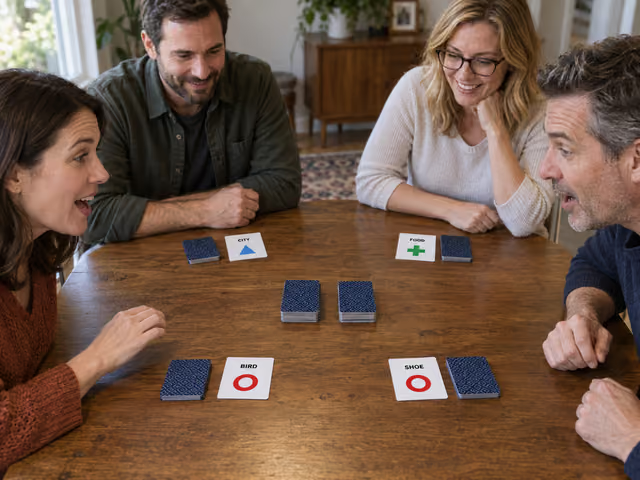
Take clockwise turns flipping a card onto your own pile. When two visible symbols match, those players race to finish a correct example of the opponent's category. The winner collects the loser's top card. Resolve every new match before drawing again; most collected cards when both draw piles are empty wins.
Saved on this device only — clearing your browser's cache or site data removes them (no account backup).
Choose one deck and make the piles visible
The original box contains two distinct decks. Each has 92 category cards with eight symbols and eight Wild Cards. Use one deck, not both mixed together. Party Edition, Pop Culture and other editions have different card sets; this guide describes the original box.
For exactly three players, follow the publisher's suggested setup: choose two symbols and remove every category card bearing either one, plus every Wild Card showing either symbol. Set those cards aside for the whole round. For four to six, use the full selected deck.
Sit around a table where everyone can see the cards. Shuffle the selected cards thoroughly, split them into two face-down draw piles and put both within reach. Each person needs space for a face-up play pile and a separate face-down winning pile. Both personal piles start empty; nobody receives a hand.
Announce a one-deck round with repeated answers allowed. The optional no-repeat rule appears below. For this friendly format, equal final totals share the win, and a face-off tie after the draw piles run out uses the unused deck as a separate question supply. Those two tie choices are house rules.
Flip, face off and watch the next card
The shuffler flips first
Draw one card from either draw pile. Reveal it to everyone at once, without peeking, and place it face up in front of you. On later turns, place the new category card directly on top of your play pile so only its top card is active. With no match, the next person clockwise draws. Anyone with an empty play pile waits until they draw a category card before they can face off.
Answer their card, not yours
As soon as two players' top-card symbols match, pause the drawing order. Only those two race to give a correct example of the category on the other player's card. If your card says Bird and theirs says Shoe, you name a shoe while they name a bird. The first to finish a correct answer wins; starting to speak first is not enough.
Collect exactly one card
The winner takes the loser's top category card and puts it face down in their winning pile. Each collected card is one point. The winner's own top card stays visible, and the loser's newly exposed card becomes active. Winning piles never create matches. There is no hand to empty or card-slapping contest.
Finish the cascade
Check the exposed card immediately against every other top card and the active Wild Card. Resolve the next face-off, collect its loser's card and check again. Nobody draws until no matching pair remains. Then resume with the next person in the clockwise drawing order, regardless of who won. Losing every card in your play pile does not eliminate you.
A Wild Card connects two symbols
Place a drawn Wild Card face up between the draw piles, covering any previous Wild Card. It stays there and makes its two different symbols count as a matching pair between players. Ordinary same-symbol matches still count. Resolve any resulting face-offs and cascades; then the person who drew the Wild Card draws again. Repeat if that draw is another Wild Card. Wild Cards are not placed in a personal play or winning pile in the main game.
Break a face-off tie
If the two correct answers finish together, a third player reveals a category card from a draw pile for both tied players to answer. Ignore its symbol. First to finish a correct example wins the loser's card from the original face-off. A Wild Card drawn for this purpose goes back into a draw pile; draw another card. For another tie, reveal another category. Shuffle all tie-question cards back into the draw piles afterward; they do not score and never go onto a play pile. If both piles are empty, use the house remedy under hosting.
Count after the last match
When one draw pile empties, draw from the remaining one. When both are empty, finish every face-off and cascade caused by the last draw, including a final Wild Card. Then count only the cards in each winning pile. The highest total wins; equal highest totals share the win under this guide's house finish. Unclaimed play-pile cards and Wild Cards score nothing. For a new round, reset all personal piles and use the other deck or reshuffle the first.
If you win while your top card says Bird, Bird stays in front of you. The next opponent still answers Bird, even if your previous opponent already named one. In the main game, repeating that answer is allowed.
Teach one match, then keep the calls clear
Before the scored round, find two category cards with the same symbol and lay one in front of each of two people. Have them answer each other's category, move only the loser's card to a winning pile, and uncover a card underneath. Show a Wild Card's two-symbol connection too. Return the demonstration cards, apply the three-player removals if needed, and shuffle before starting the actual round.
Keep hands clear after each flip and turn cards so other players can read them. Spectators can point out a missed match but should not supply answers. A coin beside the next drawer's space can mark the paused drawing order; it is optional. Ask whether everyone wants a rapid spoken-answer game: it requires sustained attention and is often loud. A seated table setup does not establish an accessibility guarantee.
The publisher allows recognizable real or fictional, current or historical examples. The loser can call a group vote about an answer or who finished first. As a practical house procedure, a wrong example wins nothing and both players may keep trying; if a timing call cannot be settled, use the face-off tie procedure. If both players say they cannot answer either category, use that procedure as a house remedy too. No extra penalty card is added.
House remedy when the draw piles are empty: a third player shuffles the unused deck and reveals a category card for the tied players; skip Wild Cards. Use the usual first-correct-answer race and award only the original loser's card. Repeat with a new category for another tie or if both players cannot answer. Keep all of these question cards in the unused deck, separate from the depleted game deck. Then check for cascades again. This avoids adding new scoring cards after the last draw.
The printed rules for an unfair reveal or peek say to lose the drawing turn. For a concrete house handling procedure, put that drawn card back face down, mix the remaining draw cards and remake the two draw piles; the turn passes clockwise without putting that card into play. If the group cannot resolve an answer's validity, use a fresh tie question rather than rewarding a disputed answer. Agree these procedures before the first scored flip.
Already know the game?
Ideas & Twists
Choose a variation together before you start.
Anomia · See main rules
Publisher's optional ruleNo repeated examples
Turn on the printed no-repeat rule for this round: once an example has been spoken in play or conversation, it cannot win a later face-off for the same category card. The printed exception permits that word for a different card: Orange can answer both Type of Fruit and Color. This also counts an answer spoken too late to win. A barred repeat wins nothing; keep trying a fresh example. Choose this before play and keep the ordinary deck finish.
Anomia · See main rules
Publisher-listed house variationTwo examples to win
Require two distinct correct examples of the opponent's category instead of one. First to finish both wins the same one card; supplying only one has not won. Use two examples for each shared tie question too, as this guide's house clarification. Keep the normal Wild Cards, cascades and finish. This asks for a second idea after the obvious first answer.
Anomia · See main rules
Publisher-listed teams variation with house detailsPlay in pairs
For exactly 6, 8, 10 or 12 people, make three to six teams of two. Each pair shares one play pile and one winning pile; alternate which partner flips on successive team turns. Either teammate may answer a rival team's category, and the first completed correct answer from either pair wins. With three pairs, use the three-player symbol removals. A person from a third pair reveals tie questions. Both teammates count the shared winning pile once; highest team total wins, shared if tied. Shared piles and up to twelve participants come from the publisher; partner rotation, answering and tie administration are explicit house details.
About this guide
Uses the original English-language two-deck Anomia; the publisher currently links the 2009 First Edition directions. Three-player removals and optional no-repeat wording come from that PDF. Two-example and paired-team variations are publisher-listed house formats. Shared final wins, exhausted-draw tie questions from the unused deck, unable-to-answer and unresolved-call remedies, wrong-answer continuation, peek-card handling, team administration and teaching advice are this guide's stated house procedures. Main-game repeated answers are allowed. Other editions are not combined here.
Ready for something different?
Find another game →