

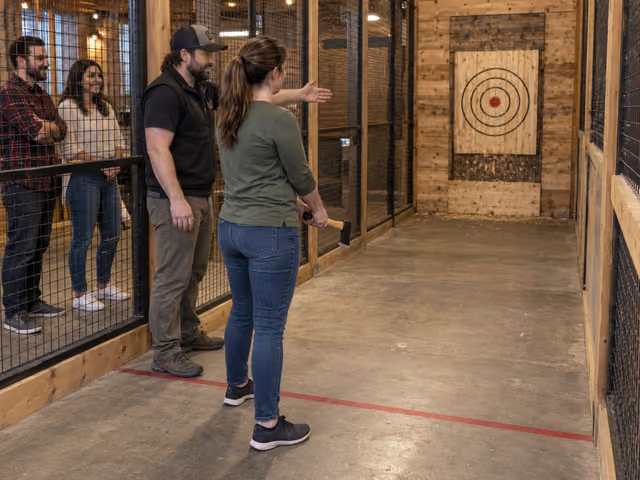
The quick version
Book an indoor coached lane for 2–4 throwers. Follow check-in and the staff briefing, then let everyone practice. Ask staff to approve a ten-throw scorecard using their target's regular scoring zones, with bonus targets off. Rotate one throw at a time, record the staff's score before retrieving, and compare totals only when everyone has completed ten throws. Equal totals share the result.
Saved on this device only — clearing your browser's cache or site data removes them (no account backup).
Book a coached lane and agree the game
This guide is an indoor recreational venue outing for two, three or four active throwers sharing a lane. Confirm the venue accepts your group and supplies a coach, throwing hatchets and enclosed wooden targets. Reserve enough time for check-in, instruction, practice and the proposed scorecard; the venue sets the booking length, price, lane capacity and supervision arrangements. Larger groups need a separate lane plan with staff.
Before paying, check participation requirements, cancellation terms, arrival time, waiver procedure, footwear, and any access or shoulder-movement needs. Tell friends what the booking includes. Let each person choose whether to throw or watch; ask the venue about spectator space and charges. Watching does not require entering the throwing area.
Bring closed-toe shoes for each thrower and clothes that allow the coached motion. The venue supplies at least one approved hatchet for the active throwing position, a secure wooden target, throwing line and lane enclosure. Have one paper score sheet and pen, supplied by you or staff, with each thrower's name and ten boxes plus a total. Booking confirmation, payment and any identification required by your venue are preparation items; a phone is not needed for the paper-scored game.
Ask the coach to approve a simple ten-throw social scorecard using the venue's regular target-zone values. Have staff explain the actual target key, boundary calls, misses, drops and faults before anyone scores. Write the key on the sheet if it is not displayed. For this house format, bonus targets are off, regular zones stay available, there is no speed rule, no target switch and ties are shared. This changes a social scoring format, never the venue's safety procedures. If staff cannot approve it, play the game they teach instead; its rules and finish may differ.
Watch the demonstration, then practice
Check in and complete the venue's participation procedure. Everyone listens to the safety briefing, including the staff commands for opening and clearing the lane, axe handling, the throwing line and the spectator boundary. Ask the coach to show a complete throw and retrieval cycle before picking up a hatchet.
One person practices at the position staff assign, using the grip, stance, distance and release that coach teaches. The others wait in the designated area. Let everyone have an equal practice opportunity before starting the scorecard; practice throws do not count. Ask the coach for one adjustment at a time if a throw will not stick. Do not turn this written guide into a substitute for live instruction.
Throw, hear the score, then retrieve
Take one turn
Use a fixed order, rotating through everyone for ten cycles. Only the staff-authorized thrower enters the active position. Pick up the supplied hatchet when instructed, face the target and wait for the coach's lane-open signal. Use the taught throw from the assigned line; never improvise tricks, extra axes or simultaneous throws.
Wait for the call
After throwing, stay behind the line. Let a bounced or dropped axe come to rest; do not try to catch it. Staff decide the score using the agreed regular-zone key. A missed, dropped or faulted throw uses the zero call explained at setup and still fills one scorecard box; do not award a replacement merely because it was unsuccessful.
Record and retrieve on permission
The scorer writes that throw's value in the next box. Before anyone retrieves, all throwing in the shared lane must be stopped and all axes at rest; wait for staff's explicit clearance. Follow their demonstrated retrieval and carrying procedure. The next throw starts only when everyone has returned to their designated area and staff reopen the lane.
Complete equal attempts
After each person has taken one turn, begin the next cycle in the same order. Ten cycles give each thrower ten counted attempts. Add each row; the highest total wins this social scorecard and equal highest totals share the win. There is no extra throw or sudden death. Offer another card only if everyone wants one and staff confirm enough booked time.
If staff call your first throw 3, write 3 in your first box. Your friend then takes their first turn. The scorecard tracks attempts, so a later 0 still occupies a box; nobody keeps throwing until an axe sticks.
End the scorecard and the visit cleanly
Do not start a card that staff say will overrun the booking. If time, a staff stop or a participant's decision ends a card before everyone completes ten throws, close it as unfinished and do not compare unequal totals to name a winner. Celebrate personal improvements instead. Anyone may sit out a later card; ask staff to manage the remaining group.
When the session ends, stop throwing on the staff signal, follow their equipment-return instructions and leave the lane clear. Thank the coach and confirm everyone is ready to leave. A practice-only visit has no winner; completing the coached session is its finish.
Keep the lane calm and decisions simple
Ask friends whether they want a score comparison before starting. Keep encouragement behind the spectator boundary and let the coach teach; ask permission before offering personal technique tips. Someone can act as scorer or watch if throwing does not suit them. Share photos only with the people pictured agreeing and within venue rules.
Clarify a disputed value before the hatchet is moved. Stay in the permitted area while staff inspect it; the coach's call settles this casual card. Do not reach into the target, adjust an embedded axe, change target boards or cross the line to argue. If the written score differs from the call, correct that box using the scorer and staff; do not invent a score for a forgotten throw.
Stop and get staff if equipment feels loose, a target appears damaged, someone enters the lane unexpectedly, or the taught motion is uncomfortable. No group variation can waive a staff restriction. This is standing, repeated arm movement with short retrieval walks; it is not a guarantee of seated access, quiet surroundings or suitability for every person.
Already know the game?
Ideas & Twists
Choose a variation together before you start.
Axe throwing at a venue · See main rules
House suggestion · no competitionPractice without a score
Remove the scorecard and winner entirely. After the same briefing, rotate one supervised practice throw at a time so everyone has opportunities. Ask the coach for help as wanted; do not impose a required number of successful sticks. The session finishes at the booked end or when the group chooses to stop. All handling and retrieval rules remain.
Axe throwing at a venue · See main rules
House suggestion · exactly four throwersTwo pairs, one combined total
Make two pairs before starting the same ten-throw card. Each person still gets ten individual turns in the fixed rotation; partners never throw together. Add both partners' completed totals to produce each pair's score. The higher pair total wins; a tie is shared. If any row is incomplete, there is no team winner. All target values, bonus exclusions and staff procedures stay the same.
Axe throwing at a venue · See main rules
House suggestion · personal progressCompare your two halves
Keep the same ten counted throws and staff scoring, but remove competition between people. Add throws 1–5 and 6–10 separately for each person, then compare their own halves. A higher second total marks improvement; equal or lower totals are information, not a loss. Do not change targets, extend the booking or repeat misses. An unfinished card has no full comparison.
About this guide
This is a staff-approved recreational outing, not a sanctioned WATL match. WATL's current page is updated July 8, 2026; older summaries may use different targets and bonus scoring. Venue sources support booking, footwear, supplied equipment and coaching. The ten-throw social card, bonus exclusion, fixed rotation, shared ties and all variations are explicit house suggestions requiring venue approval; the venue's scoring key and safety procedures control.
Ready for something different?
Find another game →