

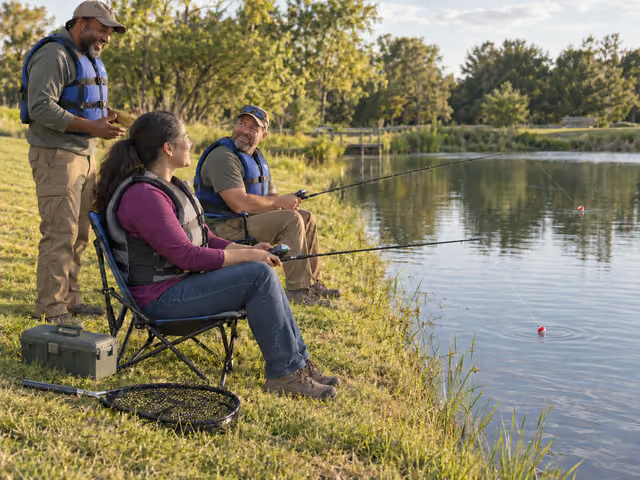
The quick version
Bring 2–4 adults, including an experienced angler. Check permission, current fishing rules and conditions for the exact water first. Practice without hooks, then rig legal bait under a bobber. Cast one at a time with clear space, watch your line, and ask the mentor to help land and release any fish as local rules allow. Finish at your agreed departure time, secure all hooks and leave the shore clean.
Saved on this device only — clearing your browser's cache or site data removes them (no account backup).
Choose the water and prepare together
This guide uses a daylight, shore-only freshwater outing for 2–4 adults, including one experienced angler who can check rigs, teach casting, identify likely fish and handle a catch. Choose a familiar pond or lake with a firm, level bank and an easy return route. Avoid steep or slippery edges, strong currents, restricted areas and overhead power lines. Everyone stays on land; boats, wading, sea fishing and harvesting fish are outside this format. If nobody can teach these skills, arrange a local beginner lesson first.
Before inviting people, check the current state or other responsible fishing agency's regulations and the site's own rules for the exact water and date. Confirm entry permission, open areas and hours, each angler's license or exemption and any extra permit, lawful target species, seasons, size and bag limits, permitted bait, hook types and rod limits. Check closures and fish-stress advisories. Release is not lawful for every species in every place: agree on the required response to any likely non-releasable catch with the mentor and agency before fishing. Do not start if that response is unresolved. A national beginner guide or catch-and-release intention does not establish a license exemption.
Ask who wants to fish, who is comfortable baiting a hook or handling fish, and who prefers to watch. Agree on transport, toilets, the return route and a departure time before site closing or darkness. Check weather and bank conditions again on arrival; cancel for unsafe conditions. The host carries a charged emergency phone and knows the site's location and emergency access. Confirm the actual path, seating and landing area suit each participant rather than assuming bank fishing is fully seated or accessible.
Bring one comfortable rod-and-reel combination per participating angler, each spooled with suitable monofilament; use beginner push-button spincast reels for this guide. Bring one single hook, clip-on bobber and suitable split-shot weights for each rig, plus spares, legal locally suitable worm bait in a secure container, needle-nose pliers, line clippers, a rubber-mesh landing net and a hookless casting plug. The mentor or tackle shop should match hook, line, float and weight to the expected small freshwater fish, rod and local rules. Choose single barbless hooks where suitable and permitted. Also bring the required license/permit evidence, current local rules and species-identification information, a first-aid kit, a waste container that safely holds discarded line and hooks, drinking water, sun protection, sturdy footwear and a properly fitted life vest for everyone. Folding chairs are optional. Keep hooks and tools boxed while moving.
Practice, then make one simple rig
The mentor checks each rod, line, reel and drag. With no hook attached, tie on the practice plug and find a clear area away from people and hazards. Take turns: look behind and beside you, hold the rod grip, press and hold the reel button, bring the rod back smoothly, then swing forward and release the button toward your target. Turn the reel handle to engage it and retrieve the plug. The mentor demonstrates slowly and corrects the release point. Nobody adds a hook until their casts are controlled. Stand for casting if that is the safer stable stance.
Remove the plug. For suitable monofilament and hook, the mentor demonstrates an improved clinch knot: pass the line through the eye, wrap the free end five times around the main line, feed it through the little opening by the eye, then through the larger loop just made. Wet the knot and tighten slowly; check that it is secure and clip the spare end. Use a different knot if the line or tackle requires it. Attach one or two appropriate split shots roughly 6–12 inches above the hook and clip the bobber farther up the line. The hook hangs below the weights; the bobber controls the bait's depth.
The mentor sets a shallow, castable hook-to-bobber distance that puts the bait in the known water depth rather than buried on the bottom. Reposition the bobber after retrieving to adjust depth. Use just enough weight for the float to stand and show a bite, not sink. Thread a small piece of lawful worm bait securely onto the hook; let the mentor do this for anyone who prefers. Keep hands away from the point. Exact hook sizes, line strength and depth depend on this site's fish and tackle, not a universal recipe.
Cast, watch and help each other
Start with a clear casting lane
The mentor assigns separated positions with room for each rod and backswing; if the bank is cramped, reduce active anglers. Wear the life vests. Cast one person at a time after checking that nobody, no wildlife and no obstacle is in range. Aim at the mentor's nearby clear-water target, not the farthest possible distance. Keep no more than two lines active at once in this beginner format, and fewer if the site rule or safe space requires it.
Watch your own bobber
Once the line is out, keep hold of the rod and attend it closely. Talk softly, keep lines in separate lanes, and let the bait settle. If the bobber moves under with a sustained bite, follow the mentor's instruction for the hook being used; for the ordinary bait hook here, raise the rod promptly and reel steadily. Avoid a violent overhead jerk. Bring the fish toward the ready landing net rather than swinging it through the air.
Let the mentor handle a catch
The mentor identifies the fish and applies the already checked species-specific rule. For a lawful release, keep it supported in the wet net or water, use wet hands if needed, and use pliers to remove an easily accessible hook promptly. Avoid gills, squeezing, dry ground and prolonged photographs. For a deeply lodged hook, cut the line close rather than digging it out. Support the fish upright in water and let it swim off when recovered; do not drag it backward. Follow local mandatory handling or retention instructions when release is prohibited.
Retrieve before changing anything
Reel in before rebaiting, altering float depth, moving position, taking a break or passing a rod. Put the hook safely away while stopped. When positions are shared, rotate in an agreed order after a retrieval, including after a missed bite; nobody needs a fish to earn a turn. Observers can watch the float, ask questions or relax away from casting lanes. Pause all casts while the mentor is helping with a fish, hook or tangle.
End on the plan you agreed
There are no points, winner or ties. The outing ends at the agreed departure time, at a participant's request to stop, or sooner if weather, bank safety or fish conditions deteriorate. A fishless outing still counts as a completed session. Do not prolong it until somebody catches one.
Retrieve every line, remove or secure the hooks in closed tackle storage, account for tools and collect all line, bait packaging and other litter. Do not leave tackle in vegetation or dump unused live bait into the water. Follow the local disposal and clean/drain/dry instructions before carrying gear to another water body. Check everyone is ready for the return, then leave together.
Keep the first outing easy to join
Prepare one reliable rig rather than asking beginners to select from a box of unfamiliar lures. Explain that a bobber is a visible bite signal, not a catch guarantee. Ask the local agency, site staff or knowledgeable shop what fish actually occur there; advice for bass at another lake may not fit a small panfish outing. If nothing bites, retrieve and check bait and depth with the mentor. Move only to another permitted, safe nearby position after securing all tackle; chasing fish along a rough shore is outside this relaxed format.
Consent applies throughout: nobody has to touch bait or fish, be photographed or keep fishing. Offer a demonstration and hand over a retrieved rod only when the next person is ready. Watchers stay part of the conversation. If everyone's time is spent repairing tangles, pause for hookless practice instead of adding more active rods.
For crossed lines, stop reeling and let the mentor untangle them away from faces; do not pull against a snag or grab a tensioned line. For a snag that cannot be freed safely from land, the mentor secures or cuts the line safely and follows the site's lost-tackle reporting guidance; nobody enters the water or climbs after it. For disputes over access, fish identity, hook legality or retention, stop fishing and check the responsible agency or site staff; a friend's recollection is not permission. If someone is injured or the mentor cannot handle a catch safely, stop and seek appropriate help. Never make catching a larger fish or grabbing a fish first into a contest.
Already know the game?
Ideas & Twists
Choose a variation together before you start.
Bank fishing with friends · See main rules
Host suggestionOne-rod buddy session
For 2–4 adults, use one checked rod and one active line for the entire group instead of one rod per angler. Keep the mentor present and all other equipment, personal license checks and safety boundaries unchanged. Agree on a repeating participant order. Each person casts, watches, retrieves, then passes the secured rod to the next ready person; a landed fish ends that turn after the mentor handles it. Rotate after an agreed check-in even if there is no bite, retrieving first. Others may watch the float or relax behind the lane. No shared license exemption, catch target or score is created; finish at the same departure time.
Bank fishing with friends · See main rules
Host suggestionCasting clinic before fishing
Replace the opening fishing period with an extended hookless casting clinic on a separate clear land area approved by the site. Use a casting plug and the mentor's safe direction; everyone else waits behind and outside the caster's rod range. In a repeating order, each willing participant makes three controlled casts and retrieves after each, then hands over the rod with the plug secured. These are practice attempts, not scored hits or a distance challenge. Repeat once only if the group wants, then the mentor decides who is ready for the ordinary bait-and-bobber setup. Anyone not ready may keep observing or practice in the separate lane under supervision. The same departure time, gear checks, license checks before fishing, catch handling and cleanup still apply.
About this guide
This is a suggested small-group outing led by an experienced angler. FWS and TPWD explain basic freshwater technique; NPS informs careful catch handling. Fishing permissions, species rules and conditions must be checked for your exact water and date. The group size, two-active-line limit, shore life vests and variations are host choices.
Ready for something different?
Find another game →