

The quick version
Write two nine-person batting orders. The visitors bat first while the home team fields nine, including pitcher and catcher. The umpire starts play; the pitcher throws to the batter. Put a fair ball in play and run first, second, third and home to score. Three outs switch the teams. Play six innings, skipping the final home turn if the home team already leads. A tie stands.
Saved on this device only — clearing your browser's cache or site data removes them (no account backup).
Gather the group and prepare the diamond
Bring 18 players plus one separate, experienced plate umpire. Make two balanced teams of nine, sharing experienced hitters, pitchers and catchers between them. Each team needs a willing catcher who can receive live pitches and at least one pitcher who can throw controlled pitches from the full distance. Beginners can learn the other roles, but this format needs those skills in the group before starting. The umpire does not also bat or fill a fielding position.
Use a permitted, maintained outdoor baseball diamond with secured first, second and third bases, home plate, marked foul lines, a backstop, a pitching rubber and clear outfield. Base paths are 90 feet; the rubber is 60 feet 6 inches from the rear point of home plate. Check field booking, permitted bats/footwear, neighboring users, surface hazards and weather. Do not move the mound closer to compensate for weak pitching. If the diamond or essential roles are unavailable, arrange practice instead of claiming this game is ready.
Bring at least three sound regulation baseballs and two sound adult wood baseball bats, one available to each team; inspect for cracks and damage. All 18 players need an appropriate glove; the two catchers need catcher mitts. Batters and runners wear correctly fitted double-earflap batting helmets. Have at least four usable helmets available to the batting team at once: one batter and up to three runners. Bring additional sizes when sharing cannot provide a proper fit.
Each team needs a complete catcher set: helmet/face protection with throat protection, chest protector, leg guards and appropriate protective cup. The plate umpire needs a baseball umpire mask with throat protection, chest protector, shin guards and appropriate protective cup. Wear field-permitted footwear and bring drinking water. Use paper and pencils for two lineups, inning totals and counts; an app is optional. Keep spare gear and waiting players outside live-ball areas. Only the current batter swings a bat; other players wait outside its reach.
Declare the pickup rules before the first pitch
This is a house format based on the 2026 Official Baseball Rules, rather than an MLB or MSBL competition. Play six innings, with no clock or automatic extra innings. Everyone fields and bats; there is no designated hitter or substitute roster. Keep each nine-person batting order throughout the game. Fielding positions can change between innings without changing that order; pitcher and catcher changes require suitable willing players and a stoppage.
Runners stay on their bases until the bat contacts the pitch. No leading off, stealing, pickoff attempts or advancement on wild pitches, passed balls or caught foul tips. A walk or awarded first base still forces the necessary runners ahead. If a runner leaves early, call dead ball, return all runners and repeat the pitch with its previous count; warn the runner. A repeat early departure by that runner makes that runner out, with the ball still dead and the pitch repeated. Three strikes retire the batter even if the catcher drops the third strike.
Use a settled pitching stance with the pivot foot touching the rubber, face the batter, pause visibly before delivery, and pitch overhand at a controlled level appropriate to the group. Pitch only when the batter, catcher and umpire are ready; no quick pitches, feints or throws to bases. For an illegal delivery, the umpire calls dead ball and adds one ball to the count; runners hold unless it is ball four. This replaces balk awards and professional timing/motion penalties. It does not permit dangerous pitching. There is no pitch clock, automatic ball-strike challenge system, shift restriction or professional three-batter minimum.
Mark the out-of-play boundary and home-run fence. As a simpler house overthrow rule, a thrown ball that leaves the playing area is dead: award each runner one base beyond the last base legally touched when the throw left the fielder's hand. A fair hit bouncing over the outfield fence awards two bases from the runners' positions at the pitch; a fair hit clearing it in flight awards home. On an unfenced diamond there is no imaginary home-run line: fair hits stay live until fielded, unless they enter a specifically marked obstruction/dead area, which awards two bases from the pitch. Never chase a ball into traffic or occupied space.
Begin, bat and change sides
Take the field
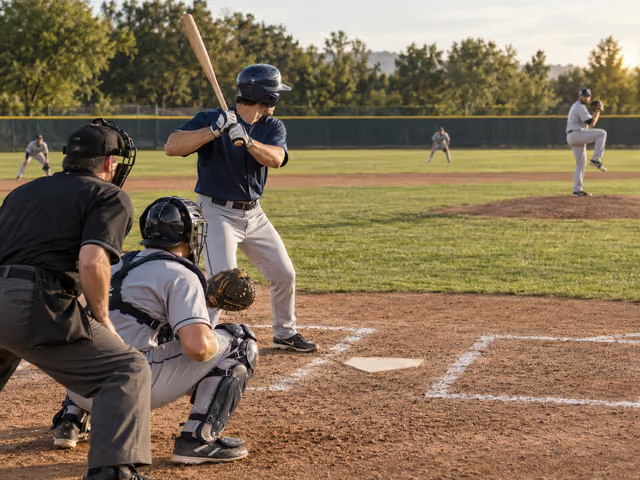
Agree which team is home; the visitors bat first. Home fields pitcher, catcher, first baseman, second baseman, third baseman, shortstop, left fielder, center fielder and right fielder. All are in fair territory except the catcher. Put the first visitor batter in the batter's box, catcher protected behind home plate and umpire protected behind the catcher. After warm-up throws and confirmation that everyone is ready, the umpire calls play and the pitcher delivers the first pitch.
Track balls and strikes
Each new batter starts at zero balls and zero strikes. A swing and miss is a strike. A taken pitch crossing any part of home plate in the strike zone is a strike; the zone runs from below the kneecap to the midpoint between the shoulders and top of the uniform pants in the batter's prepared stance. A taken pitch outside it is a ball. Four balls award first base, moving other runners only if forced. Three strikes are an out in this house game. The umpire announces counts so both teams can follow.
Decide fair or foul
The foul lines and bases are fair. A grounder before first/third is judged where it settles or is touched; it can roll from foul to fair before passing the base. At or beyond first/third, a grounder passing over/inside the base is fair; a fly is judged where first touched or where it first lands beyond the bases. An uncaught foul is dead: runners return, and add a strike only if there were fewer than two. A foul bunt with two strikes retires the batter. A sharp direct tip legally caught by the catcher is a strike, including strike three; a higher caught foul fly is an out like a caught fair fly.
Run when the ball is hit
On a fair hit, set the bat down rather than throwing it and run to first. Touch bases in order. You may run beyond first safely if you promptly return and make no attempt toward second; overrunning second or third can leave you available for a tag. Advance further on a live hit or fielding error at your own risk. A caught fair or foul fly retires the batter; existing runners must retouch their starting base before advancing, and may leave when the fielder first touches the ball. On an uncaught foul, return to the original base.
Make outs together
A fielder must secure a fly before it touches ground for a catch. For a force out, hold the ball while touching the base the runner must reach before the runner arrives. The batter going to first is forced; a runner on first is forced to second when a batter becomes a runner, and a full chain can force runners through third and home. Without a force, tag the runner while off base with the ball, or with a glove securely holding it. A force can disappear when the following runner is retired; announce the current outs and likely play before the pitch.
Switch after three outs
Record runs for the half-inning. The visitors field and home bats after the top half; after the bottom half the inning is complete. Clear the bases and reset outs to zero. Each team's next half starts with the batter after its last completed plate appearance, rather than restarting at the top. An unfinished batter leads off next time with a fresh count. Keep the nine-person order cycling.
With a runner on first, a ground ball gives the defense a force at second and then a possible force at first. With only a runner on second, that runner is not forced to third by a new batter; an out on that runner needs a tag. Demonstrate with the ball at rest before the game.
Count runs and finish the game
A runner scores one run by legally touching first, second, third and home in order before the third out. If the third out is a force, or the batter is retired before reaching first, no runs on that play count. If the third out is a tag on another runner, count a legal run that crossed home before that tag, subject to any upheld missed-base or retouch appeal affecting it. Ask the umpire to confirm doubtful totals before the next pitch.
Play through the top of inning six. If home already leads then, skip its final batting half. Otherwise play the bottom: home wins as soon as the winning run legally scores, subject to required base touches. On an over-the-fence home run, count all legal runs. If visitors still lead after three home outs, visitors win. If totals are equal after six, record a tie. There is no automatic runner on second or unannounced extra inning.
If unsafe conditions, injury or field access interrupt play, stop immediately. This house game has no minimum-inning official-result rule: a game stopped before its normal finish is incomplete, with the score recorded as a score so far. Resume only with the same orders, score, inning, outs, runners and count, or agree to abandon it. If someone cannot continue and nine suitable fielders per side are no longer available, stop rather than assigning automatic outs or inventing a replacement.
Handle the calls that confuse new players
Hit by pitch: a pitch touching a nonswinging batter outside the zone normally awards first if the batter tried to avoid it; forced runners move. The ball is dead. A swinging batter, or one struck in the zone, gets a strike instead; if the batter made no attempt to avoid an outside pitch, call a ball rather than award first. Check on the person and pitching control before resuming. Replace a pitcher who cannot pitch under control; a new pitcher gets warm-up throws, but no promised workload or safe speed is supplied.
Infield fly: with fewer than two outs and runners on first and second, or bases loaded, an ordinary-effort fair pop-up that an infielder could catch makes the batter out when the umpire calls it. It excludes line drives and bunts. The ball remains live; runners are no longer forced and can hold their bases, but must tag up if it is caught. If it becomes an uncaught foul, apply the foul-ball rule instead.
Missed base or early tag-up: before the next pitch, the defense can hold the ball while touching the missed base, or the original base on an early departure from a caught fly, and explain the appeal to the umpire. The umpire decides whether an out occurred. No play ends merely because a fielder asks for time: wait for the umpire's dead-ball call.
Contact and interference: tags are part of baseball, but deliberate collisions, fake tags and takeout slides are not part of this pickup format. Leave a route to the base rather than blocking a runner without the ball. As a house remedy, the umpire calls dead ball for interference or obstruction: an interfering runner is out and other runners return to their last legally touched bases at the incident; an obstructed runner receives the base the umpire judges would have been reached. Catcher contact with the swinging bat awards the batter first and moves forced runners. Dangerous deliberate conduct ends that person's participation and, with this exact roster, the game.
Use one umpire's judgment for balls, strikes, catches and close plays. Captains may ask briefly about a rule before the next pitch; discuss it with the ball dead, then accept the ruling. For a wrong batter noticed before a pitch, replace them with the due batter. If a pitch has already occurred, this guide's house remedy keeps completed action and count, puts the due batter in, and restores the proper order thereafter; it is not the professional batting-out-of-turn penalty.
Before starting, show newcomers their fielding area, the current batting order and who backs up each throw. Call for fly balls to avoid two fielders converging silently. Pitchers and catchers opt into their demanding roles; rotate other fielding positions only with agreement. This remains a running, throwing and hitting sport with hard-ball and tag risks. A courtesy-runner option changes some baserunning work, not all participation demands.
Already know the game?
Ideas & Twists
Choose a variation together before you start.
Baseball · See main rules
House suggestion · prevents a single early half dominatingFive-run innings
In innings one through five, end a half-inning at three outs or when its fifth run scores, whichever happens first. Finish the scoring play, recording only enough runs to reach five; remaining runners are left on base. The next half starts with the next batter after the completed plate appearance. In inning six remove the run ceiling for both teams, retaining the usual three-out or home walk-off finish. Keep 19 people, all gear, pitching, order and no-steal rules. Ties still stand after six.
Baseball · See main rules
House suggestion · MSBL-inspired, with its own replacement ruleDeclared courtesy runners
Before the game, each team may name up to two batters who will receive a courtesy runner after reaching a base. They still bat and must safely reach the awarded or earned base themselves. When play is over and the umpire calls time, use the most recent batter retired for that team who is not on base; if there has been no out, use the last available player in its batting order. The substitute is one of the existing nine, so the group remains 19. If that runner becomes due to bat, call time and replace them using the same most-recent-out rule, excluding the due batter and occupied players. Keep every player's original batting position and ordinary fielding role; no-steal and scoring rules stay unchanged. No mid-play swaps, extra players or automatic reach-base awards.
Baseball · See main rules
House suggestion · a different tactical inningTwo-out pressure game
Start every half-inning with bases empty and two outs already on the score sheet. The first actual out ends that half; walks and hits still build a rally. Keep the fixed batting orders moving from the last completed plate appearance, six innings, normal runs and the ordinary sixth-inning home walk-off or tie finish. Use the same 18 players plus umpire, full gear, live pitching, no-steal rule and other mechanics. The infield-fly condition cannot occur because every half begins with two outs. This changes the value of safe contact and fielding execution; it is not a promise of a particular game length.
About this guide
Core baseball mechanics were checked against the 2026 MLB rulebook and WBSC's 2025–2026 rulebook. This is a distinct six-inning adult pickup house format, not a complete transcription or sanctioned league ruleset. Exact 19-person attendance includes the separate umpire. No-steal/contact-only departures, dropped-third-strike outs, simplified deliveries/overthrows/interference, batting-order correction, roster/stop rules and all three twists are declared house choices. MSBL's 2025 rules inform helmet and courtesy-runner discussion; its roster, pitching-reentry, tournament timing and runner penalties are not imported. Community accounts inform preparation and inclusion, not official rules or popularity.
Ready for something different?
Find another game →