

The quick version
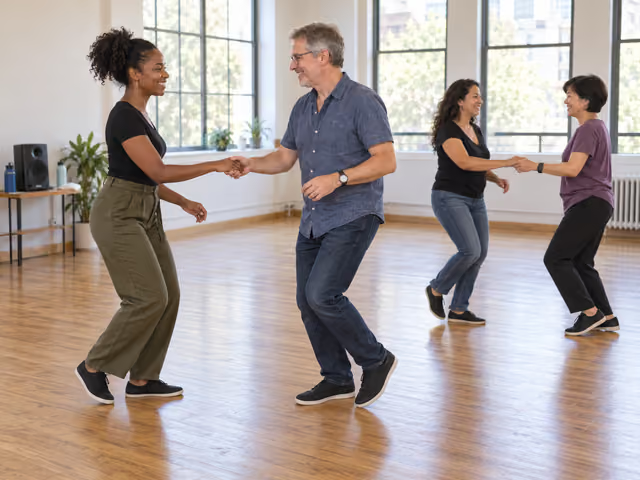
Choose lead and follow roles and ask before holding hands. Rehearse the six-count basic separately: lead steps left-right-left on 1-and-2, right-left-right on 3-and-4, then rocks back left on 5 and returns weight right on 6; follow uses opposite feet. Face each other, connect one hand lightly and repeat with small steps. Stop and reset whenever either person asks. End with the agreed final song; there are no points or winner.
Saved on this device only — clearing your browser's cache or site data removes them (no account backup).
Prepare the floor, music and partners
This is a hosted indoor practice lesson for 2–8 people, using a stationary six-count triple-step swing basic, often called East Coast Swing. It is a deliberately small introduction, not a complete Lindy Hop course, a line dance or a competition syllabus. Have one person who already knows this basic demonstrate and count; that host is included in the group count. If nobody can demonstrate it confidently, start with a beginner class and use this guide for practice afterward.
Bring one music player with an audible speaker, which may be built in, and playable swing music with a steady beat at a pace the group can comfortably follow. A standalone CD player with built-in speaker works instead of a phone. Choose the final practice song before starting; a music subscription or a particular recording is not required. Each dancer needs flat, secure shoes and clothing that allows easy movement. Put water and optional rest chairs at the edge.
Use a clear, dry, level indoor floor with room for every pair to step sideways and back without reaching another pair, furniture or a wall. Test that clearance before the music starts. Keep bags, cables and drinks out of the movement area. Shoes should allow comfortable small steps on that surface; stop if they slip or catch. Do not fit the group into a cramped room.
Pair by agreed roles, not by gender: a lead proposes direction and a follow responds while moving their own body. Neither role means pulling the other person around. Ask, ‘Would you like to dance, and which role would you like?’ A yes to one dance is not a yes to every partner, hold or recording. Anyone can decline, release hands, sit out or leave without explaining. With an odd number, one person practices separately or rests for a song, then the host offers them a willing partner at the break. Take turns being the unpaired person rather than leaving the same person out.
Learn the same small basic separately
First stand apart and listen for a steady beat. The host demonstrates slowly without music, facing the same direction as the learners so left and right stay clear. Keep knees relaxed and every weight change small.
Lead: 1-and-2: side left, close right, side left. 3-and-4: side right, close left, side right. 5: small step back left. 6: replace weight forward onto right. Follow: mirror the feet: right-left-right, left-right-left, back right, replace left. Each triple step has three weight changes over two beats; ‘and’ falls between the numbered beats. The back-and-return is the rock step. Repeat from the beginning.
The six counts describe the step pattern, not the length of a musical phrase. Keep repeating the pattern over the music; do not add two extra counts to make it eight. Teachers may start their count with the rock step instead. Agree on this guide's order for this lesson rather than mixing count labels.
Connect, practice and finish a song
Invite a light connection
Face your partner. Ask before connecting the lead's left hand with the follow's right at about waist height. Keep elbows softly bent and the grip easy to release. Take a comfortable distance; neither person should have to stretch their arm straight. Start with just that one hand, not a close embrace.
Repeat the basic together
The host counts a start and both begin the rehearsed basic. Keep it mostly in place, with no spins or traveling figures. Each dancer carries their own weight and keeps checking space behind them. Listen to the music and your partner rather than forcing a shape with your arm.
Reset without blame
If you lose the pattern, say ‘reset’, release hands and stop. The host counts another start when both are ready. Practice one part slowly without music if needed, then try the whole sequence again. A missed step does not earn a penalty, end a round or require an apology.
Pause before changing anything
At a song break, ask whether people want the same partner, a new willing partner, a role change, solo practice or rest. Recheck consent and roles before restarting. If someone stays with a partner, do not rotate them by force. If there is an unpaired dancer, offer the next paired practice to them and let a different volunteer rest or rehearse separately.
Finish with the agreed song
Once everyone has had an opportunity to try paired practice, play the chosen final song. Repeating only the basic is enough. At its end, release the connection, thank your partner and end the lesson. Anyone may stop sooner; if the group wants more practice, agree on another song together rather than extending the session silently.
Before adding music or hand contact, the host demonstrates one slow six-count cycle and everyone tries it separately. Ask which part needs another demonstration before forming pairs.
A shared finish rather than a score
This is a cooperative lesson. There are no points, rankings, elimination, ties or winner. The finish is the end of the agreed final practice song, not a perfect routine. Someone who watches, rests or practices separately has still taken part; paired dancing remains a choice.
For another session, keep the same basic or choose one of the variations below before starting. Learn turns and traveling figures with a competent teacher when the group is ready; extra moves are not required to complete this session.
Make mistakes easy and boundaries clear
Teach one thing at a time: rhythm separately, then a comfortable connection, then a song. Give slower learners another repetition instead of adding a turn while they are still finding the steps. Ask before giving feedback; a partner's unsolicited correction can make an already busy lesson harder to follow. Invite specific questions such as ‘Which foot takes weight on 6?’
If counts clash, stop and return to the lesson's agreed order. Do not declare another teacher's six-count starting point wrong. If one partner feels pulled, shorten steps, soften the connection and let go to reset. Each person decides what touch and distance feels comfortable; the host cannot override a refusal to rotate or dance.
If pairs approach each other, stop the music and spread out before restarting. Both partners watch the floor. After accidental contact, stop, check on the other person and make room; repeated collisions mean the floor is too crowded. Keep aerials, lifts, dips, drops and fast spins out of this beginner session. Stop for pain, dizziness or a tiring connection and rest. Ask everyone shown before photographing or recording; learning does not require filming.
A solo rehearsal or rest option can reduce pressure, but this standing, stepping partner format is not a promise of universal accessibility. Discuss the group's needs before the session and choose another activity or an instructor-led adaptation if these movements or contact do not suit them.
Already know the game?
Ideas & Twists
Choose a variation together before you start.
Beginner swing dance · See main rules
Teaching variationSingle-step practice
Replace each two-beat triple with one slow weight change: lead left on 1 and hold through 2, right on 3 and hold through 4; follow uses opposite feet. Keep the back-and-return on 5–6. Agree on this version before the song; continue the same partner invitation, small steps, resets and song-end finish. There are still no points.
Beginner swing dance · See main rules
House lesson suggestionTry the other role
At a song break, willing partners exchange lead and follow roles. Rehearse separately first using the other role's foot sequence, then reconnect with the new lead's left and new follow's right. Switch only between songs, not mid-pattern. Anyone may keep their role; use the same basic and finish with the agreed final song.
Beginner swing dance · See main rules
House lesson suggestionOpt-in partner circle
For an even number of at least four willing dancers, make a separate circle with equal numbers of agreed leads and follows. After each practice song, release hands; follows stay in their places while leads move one place clockwise. Ask the new partner before connecting and change roles only at a break. Fixed pairs and resting dancers stay outside this circle. If a dancer leaves or roles become unequal, stop the circle and use the main pair arrangement with fair solo/rest turns. Keep the same basic, no score and agreed final-song finish; fewer than four willing dancers also use the main arrangement.
About this guide
Swing has several traditions and no single universal beginner rulebook. Richard Powers' undated Stanford syllabus supplies the six-count triple and single timing used here. Swing Patrol's current class pages explain its broader Lindy Hop teaching; this guide does not reproduce its syllabus or claim affiliation. The 2–8-person indoor lesson, optional rotation, practice sequence and song-based finish are host suggestions. Swing Patrol London supplies role-choice, consent and floor-safety guidance. No purchased edition or competition rules apply.
Ready for something different?
Find another game →