

The quick version
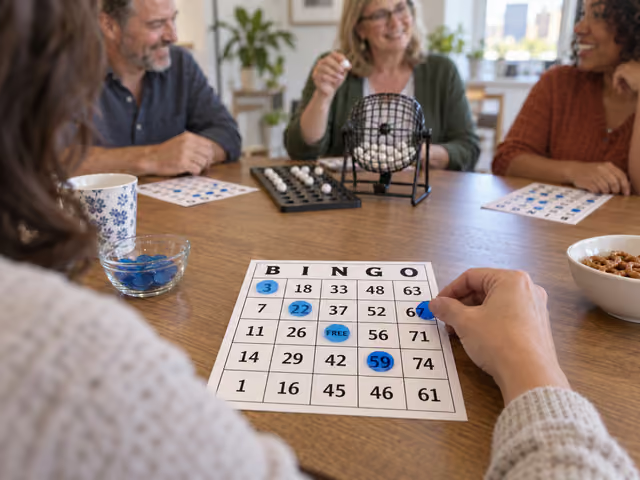
Choose one caller and give each other person one different 5×5 bingo card. Cover the FREE center. The caller mixes the 75 balls, draws one and says its letter and number. Cover that number if it appears on your card. Any complete horizontal, vertical or corner-to-corner diagonal line wins. Stop on a Bingo claim, check its numbers against the caller tray, invite other claims and name every verified winner before resetting.
Saved on this device only — clearing your browser's cache or site data removes them (no account backup).
Check the set and show the winning line
Host 3–12 people at a table: one caller and 2–11 players. This is a manageable home hosting range, not a universal bingo limit. The caller handles the draw and checks cards rather than playing a card that round. Rotate that job between rounds if people want a turn playing.
Bring a physical 75-ball bingo cage, all 75 lettered and numbered balls, the matching 75-position caller tray, one different reusable bingo card for each player and 25 reusable markers per player. Everyone needs a clear card-sized place and a seat. No phone, screen, timer or score sheet is part of this setup. Choose cards people can read comfortably and ensure everyone can hear the caller; seated play alone does not establish suitability for every access need.
Lay the balls in the tray and have a player check that 1–75 are all present once, in good condition and matched to their letters: B is 1–15, I is 16–30, N is 31–45, G is 46–60 and O is 61–75. Each card has five rows and five columns beneath B-I-N-G-O, with FREE in the center and 24 different numbers in the matching column ranges. Check for duplicate whole cards before dealing; duplicates would win together. Use the standard 75-ball cards, not 90-ball tickets or picture bingo.
Put all balls into the cage, clear the caller tray and distribute the cards. Everyone covers the FREE center. Demonstrate the target with a finger on an unmarked card: all five squares in any one horizontal row, vertical column or either full corner-to-corner diagonal. A line through FREE needs four called numbers plus the center; other lines need five called numbers. Four corners alone and bent lines do not win this round.
This home session names round winners and keeps no running score. Before drawing, explain that every valid line claimed during the checking pause shares the win, including a line someone overlooked on an earlier call. Claims after the caller declares the round closed are too late. This forgiving claim window is this guide's house rule.
Draw, mark and check before the next call
Make the first draw
The caller mixes the cage, releases one ball and reads its letter and number clearly, such as I, 22. Show the ball so players can see it, then place it in the matching caller-tray position. The first announced draw starts the round. Never return a drawn ball to the cage during the round.
Find the number on your card
Look in the named column and cover that exact number if it is present. If it is absent, leave your card as it is. Every player follows every call; there are no individual player turns. The caller pauses long enough for everyone to scan one card and repeats a call when asked before drawing again.
Stop when someone claims Bingo
Once you have an entire allowed line covered, say Bingo at conversation volume or use an agreed visible raised-hand signal. The caller stops drawing immediately. Leave every card and called ball in place. The claimant points out the line; read each numbered square aloud and check that its ball is already in the tray. FREE needs no draw. Uncalled numbers cannot complete a line.
Resolve the claim and finish
If the claimed line is incomplete or contains an uncalled number, remove incorrect markers, keep all legitimately called numbers covered and resume drawing from the remaining balls. There is no penalty in this house format. When a claim is valid, ask twice whether anyone else has a line and allow everyone to check. Verify those cards too. All valid claims made before the caller declares the round closed share the win; being loudest or claiming two lines gives no extra result.
Reset together
After naming the winner or co-winners, remove all markers except FREE, return every drawn ball to the cage and confirm the full set before mixing for the next round. Keep or exchange cards as agreed, rotate the caller if desired and announce the next round's pattern. The group may finish after any completed round; do not promise an exact number of minutes.
Before the round, say I, 22 and have everyone point to their I column and look for 22. Some cards will not contain it. Do not mark this rehearsal or remove a ball; the real round starts with a fresh random draw.
Make calls easy to follow and disputes easy to check
Start with one card per person. More cards add scanning work and change a person's chances; do not give someone extra cards halfway through a round. Keep chatter between calls or rounds so nobody has to compete with it. Ask whether the pace works rather than assuming experienced players and newcomers want the same speed. State both the letter and number; nicknames alone make the game harder to follow.
The actual ball and caller tray settle a misheard call. If the caller says the wrong letter or number, stop, announce the correction to everyone and put the ball in its correct tray position. Players remove any marker added solely because of the mistake and cover the corrected number if present. A covered square is not evidence that its number was called. Players may compare their marks with the tray during a pause.
Keep drawing suspended throughout a Bingo check. This small home version does not make the extra held draw described for regulated bingo machines. If two or more people have valid lines before closure, name them together; there is no tie-break draw. A missed earlier line can join the checking pause under the house rule announced at setup. Once the caller closes the round, begin the reset rather than reopening old results.
If a draw is repeated, the cage jams or a ball falls where it cannot be identified, pause and reconcile the cage with the called tray before continuing. Do not guess a missing number. If the draw history cannot be restored, abandon that round without a winner, inspect the full set and restart. If all 75 numbers are called yet no card has a valid line, something is wrong with the cards, marks or set: check together rather than inventing an extra draw. These restart remedies are host suggestions.
For the next round, show a new pattern before drawing. The variations below replace the target, not the number ranges, draw-without-replacement rule or shared-win check. Larger public events, electronic bingo and 90-ball bingo need their own instructions.
Already know the game?
Ideas & Twists
Choose a variation together before you start.
75-ball bingo · See main rules
House pattern optionFour corners
Replace the straight-line target with the four outer corner squares: top-left and bottom-left in B, top-right and bottom-right in O. All four corner numbers must have been called; FREE does not replace a corner. Other marked squares and completed lines do not count. Start with a cleared card except FREE and all 75 balls remixed. Stop, verify and name all valid corner claims before closure using the main game's claim window.
75-ball bingo · See main rules
Cover-all pattern optionBlackout
Replace the line target with all 24 numbered squares plus the already covered FREE center. Partial lines and corners do not finish the round. Start with fresh cleared cards and all 75 balls in the cage; call every drawn letter and number normally until someone claims the full card. Check every numbered square against the tray, invite other full-card claims and share the win among verified claims before closure. This usually needs more calls than a single-line round; there is no exact duration promise.
75-ball bingo · See main rules
House pattern optionTwo separate lines
Require two different complete allowed lines on the same card. Each can be horizontal, vertical or one of the two corner-to-corner diagonals; they may intersect and share a square, including FREE. A row read in reverse is still the same line and cannot count twice. Start a fresh round with cleared cards and all balls remixed. Claim only when both lines are complete, check all their numbered squares and use the same checking pause and shared-win rule. Two lines spread across different players' cards do not qualify.
About this guide
Reviewed against the Minnesota Gambling Control Board's online Charitable Gambling Manual on October 2, 2026. These pages describe regulated bingo; this guide adapts the physical 75-ball mechanics to a small home session. Any straight line, the 3–12 hosting range, one card per player, a caller who does not play, forgiving pre-closure claims, no-penalty false calls and restart remedies are explicit host choices. Licensed-event administration and prize procedures are outside this format. No purchased edition is prescribed: verify that the physical set has the standard 75 balls and 5×5 FREE-center cards.
- Minnesota Gambling Control Board · bingo terms and card format ↗
- Minnesota Gambling Control Board · equipment and number ranges ↗
- Minnesota Gambling Control Board · announce the pattern ↗
- Minnesota Gambling Control Board · calling and correcting numbers ↗
- Minnesota Gambling Control Board · verify and invite other claims ↗
- Minnesota Gambling Control Board · multiple winners ↗
Ready for something different?
Find another game →