

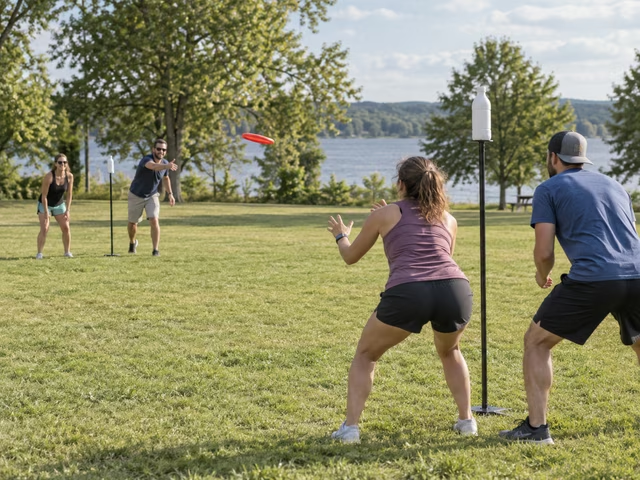
The quick version
Two pairs face one another behind their own poles, 20 feet apart. Teams alternate one disc throw, alternating throwers within each team. Only the throwing side scores: one for an eligible dropped disc, two for a dropped target, or three for both. Defenders stay behind their pole until the disc passes it. Play to 11, win by two; the winning throw must knock the target off.
Saved on this device only — clearing your browser's cache or site data removes them (no account backup).
Make both catches possible
Assemble the set according to its instructions on level grass. Start with poles 20 feet apart and the targets balanced on top. Clear a generous catching area behind and beside each pole. Keep exposed pole spikes out of foot traffic; use the complete set as designed. Teams have two players each, both behind their own pole. Toss to decide the first throw.
Identify the low-disc marker on the poles. Together define a catchable corridor before scoring: a disc above that marker and within the defenders' ordinary reach, rather than far overhead or far to either side. Try a few soft throws until everyone understands that corridor. This is an agreed judgment call, not permission to launch hard throws at people.
Throw, save and switch
Send one disc
Throw from behind your pole toward the other target or pole. The other team then throws back. Within each pair, alternate throwers on every team turn. A target knocked off its pole is live even if the disc itself is too low to score.
Let the throw reach its target
Defenders cannot reach ahead of the pole to block the flight. Once it passes the pole's plane, catch the disc or falling bottle before ground contact. Pole tending awards three points to the throwing team instead of adding normal drop points.
Count the objects that fell
An eligible disc reaching the ground scores one; a target reaching the ground scores two; both score three. Catching an object prevents its points. A low or uncatchable disc scores no disc point, but a displaced target still needs catching. A throw that strikes the ground before reaching the pole scores nothing.
Reset and announce
Agree the score, replace the target, retrieve the disc and wait for everyone to be ready. A bottle blown off before a throw is not a shot: this guide's house reset restores it with no score. The manufacturer describes a broader 'always live' rule, so announce this wind/reset exception first.
Win with an actual target knockdown
First team to at least 11 with a lead of two wins, but a winning throw must knock the bottle off. For a clear house implementation, a disc-only point that would end the game is not awarded; any other disc-only point counts. If a knockdown yields the winning total, stop immediately. You do not need to land exactly on 11.
Help the first game run smoothly
Before each throw, defenders can agree who prioritizes the disc and who watches the bottle. Both remain free to catch either object. Call for a catch, give your partner room and let a difficult object fall instead of diving toward a pole. The first-person Backyard Buffs review enjoyed the catching comebacks but found accurate throws difficult at first; its experience supports beginning at the shorter distance, not a guaranteed duration.
Already know the game?
Ideas & Twists
Choose a variation together before you start.
Bottle Bash · See main rules
Suggested house variationNamed catchers
Before the throw, defenders assign one disc catcher and one bottle catcher. Only the named person's catch cancels that object's points; a catch by the other person counts as a drop for scoring, but they should still catch it if needed for safety. Swap jobs after each throw. Keep the main finish. This makes positioning and communication a deliberate choice.
Bottle Bash · See main rules
Suggested house variationBottle points only
Remove disc-drop scoring entirely. A dropped target earns two, while a caught target earns none; pole tending also earns two. Use the usual live-target and grounded-throw rules. First to 10 wins, with no extra win-by-two requirement because points come in twos. Defenders can focus together on the single important catch.
Bottle Bash · See main rules
Suggested house variationCatch-and-score defense
Keep ordinary attack points, but award the defenders one point if a legal throw dislodges the target and they catch both target and disc before either lands. No bonus comes from an untouched target. Finish only after each team has taken 20 throws, alternating as usual; compare totals and share a tie. Both sides now have a scoring opportunity in the same exchange.
Bottle Bash · See main rules
Suggested house variationCall the direct hit
Before throwing, say 'direct' or 'open'. On a direct attempt, score ordinary points only if the disc contacts the bottle before touching the pole; otherwise score zero, including drops. Add one bonus point when that direct bottle contact happens and the target falls uncaught. Open attempts use the main scoring. Play to 15, win by two, retaining the winning-knockdown rule.
About this guide
Manufacturer scoring and catching boundaries supply the game. The pre-throw wind reset and precise handling of a disc-only would-be winning point are explicit house clarifications. All five variations are editorial suggestions. The 2020 review is one group's experience, reread in 2026; no claim of current popularity or universal playing time follows.
Ready for something different?
Find another game →