

The quick version
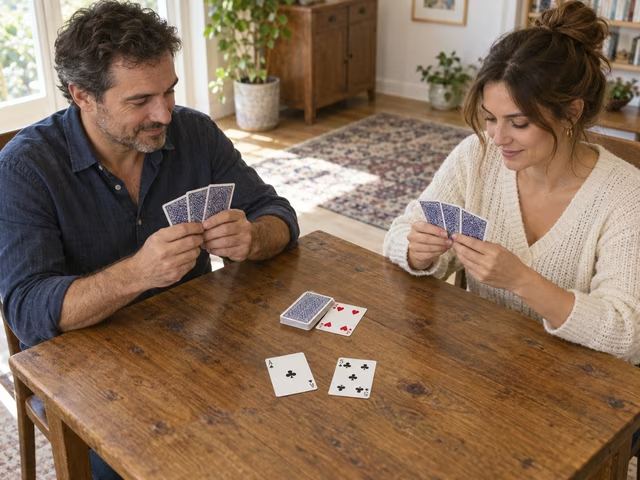
Use forty cards. Deal three each, turn one card up as trump, and overlap it with the face-down stock. The nondealer leads. Each person plays one card; the highest trump wins, or the highest card of the led suit if no trump appears. Following suit is optional. The winner draws first, the other player second, then the winner leads. Draw the exposed trump last. When all cards have been played, count captured card values: ace 11, three 10, king 4, queen 3, jack 2; everything else zero. More than 60 wins; 60–60 is a draw.
Saved on this device only — clearing your browser's cache or site data removes them (no account backup).
Make a forty-card deck and a clear trump
Remove all eights, nines, tens and jokers from an ordinary deck. In every suit the order, highest first, is ace, three, king, queen, jack, seven, six, five, four, two. Write that order and the scoring values on a sheet both players can see. This guide uses queen above jack; some regional packs and traditions reverse those two.
Choose a dealer, shuffle, and deal three cards each. Turn the next card face up. Its suit is trump for the entire deal. Put the remaining stock face down across part of that card, leaving its suit visible. The exposed card belongs to the stock and will be drawn last. Keep separate face-down piles for won tricks.
Play one card, then refill your hand
Lead the first trick
The nondealer puts one of their three cards face up. The other player answers with any one card. You do not have to follow suit, beat the lead, or use a trump.
Decide who takes it
A trump beats any non-trump. If both cards are trumps, compare their rank in the printed order. With no trump, the higher card of the led suit wins; a different non-trump suit cannot beat the lead. For example, a two of trump beats an ace in another suit.
Collect and draw in order
The winner places both cards in their capture pile and draws the top stock card. The loser draws next. Both again hold three cards. The winner leads the next trick. Keep the exposed trump in place until it is the final card available to draw.
Play out the last three cards
After the stock and exposed trump are drawn, stop replenishing hands. Continue taking tricks under the same rules until both hands are empty. Following suit remains optional even after the stock is gone.
Count points, not the number of tricks
Count ace 11, three 10, king 4, queen 3 and jack 2. Sevens through twos are zero. The deck contains 120 points; check that your two totals add to 120. A player with at least 61 wins the deal; 60 each is a shared draw. There is no bonus for the last trick or for taking many zero-value cards.
The main activity is one complete deal. If both want another, alternate the dealer. You can agree before starting to play best of three decisive deals, replaying draws, but that is a longer session rather than another mechanic.
Separate card strength from card value
Rehearse one trick with the rank key visible. A three outranks a king, and a low trump can take a high-value ace. Announce the trump suit after dealing. Let both players see each completed trick before collecting it, and keep the draw order deliberate: drawing first is part of the reward for winning.
Keep the first game free of partner signals or money. The variations below are separate formats; choose one before shuffling. Their different player counts and decks do not change the two-player requirements shown at the top of this guide.
Already know the game?
Ideas & Twists
Choose a variation together before you start.
Briscola · See main rules
Published Briscola Scoperta formatOpen-information Briscola
Play with both three-card hands face up. Also turn the top stock card face up so everyone sees what the trick winner will receive; reveal the next top card whenever a draw removes it. The bottom trump remains visible as usual. Keep ordinary trick rules, card values and the one-deal finish. You can now weigh a valuable visible draw against the cards you must spend to win it.
Briscola · See main rules
Published partnership format with a house communication boundaryOpposite partners
Use four people in two pairs sitting opposite. Deal three each from the forty-card deck, with an exposed trump beneath the remaining stock. Play counterclockwise from the dealer's right. Everyone plays one card per trick; the winner's team takes all four. Draw counterclockwise starting with the winner, who leads next. Combine partners' captured points; 61 wins and 60 each draws. For this version, do not reveal cards or give signals to your partner.
Briscola · See main rules
Published six-player format with a house communication boundarySix at the table
Use six people in alternating teams of three. Remove the four twos as well, leaving 36 cards. Deal three each and expose a trump under the stock. Each trick contains six cards; draw counterclockwise from the winner, with the exposed trump drawn last. Each team combines its captured points. The same 120 points and 61-point win apply. Use no partner signals or instructions in this hosted version.
Briscola · See main rules
Published Briscolone variant; one-deal house finishFive cards, no trumps
For two people, keep forty cards but deal five each and leave the rest face down; turn up no trump. The highest card of the suit led wins. In this selected version you must follow suit when able. Refill winner first after each trick until the stock ends. Card values stay unchanged. Count the deal's 120 points at the end; more than 60 wins and 60 each draws. This uses Briscolone's larger hand and no-trump decision, with a shorter one-deal finish instead of its cumulative match.
Briscola · See main rules
House implementation of double BriškulaTwo cards each to a trick
Use two players and the forty-card deck, deal four each, and expose trump as usual. A trick now takes four plays: leader, opponent, leader, opponent. Any card may be played. The strongest trump among all four wins; with none, use the strongest card in the first card's suit. Draw alternately from the winner until each has four again, using the exposed trump last. After the stock ends, play the remaining two four-card tricks. Keep ordinary point values and the one-deal finish. A second contribution lets you rescue or abandon your first play.
About this guide
Traditional rules as documented by Pagat, with the northern queen/jack order. The public event listing is evidence of one organized gathering, not a demand statistic. Open hands, partnership play, six-player play, Briscolone and double Briškula are documented formats. No-signalling partnership rules, Briscolone's one-deal finish and the forty-card two-player implementation of the double-trick idea are explicit hosting choices. Do not combine regional signalling systems without agreement.
Ready for something different?
Find another game →