

The quick version
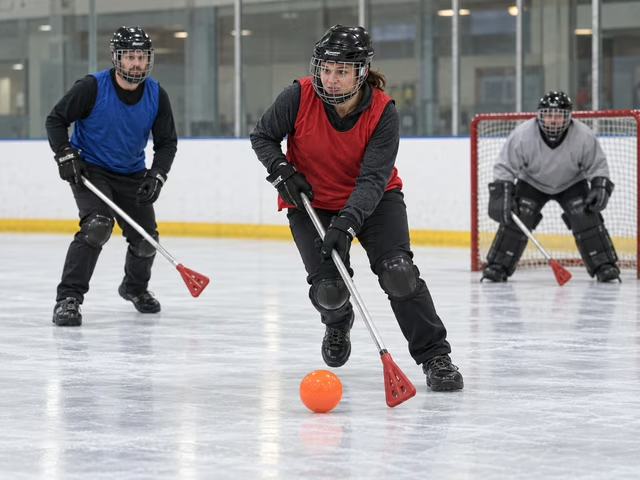
Play six per team, including one goalkeeper, for two eight-minute halves. Use the broom head to guide the ball into the opposite goal. Keep sticks below the waist, avoid contact and stay out of both goalkeeper creases. Most goals wins.
Saved on this device only — clearing your browser's cache or site data removes them (no account backup).
Get the game ready
The rink instructor fits broomball shoes, helmets with the venue’s required face protection, gloves, knee protection and any other required padding. Use broomball sticks and a broomball, not household brooms, skates or a hockey puck. Before the game, learn how to move, slow down and recover from a fall on this ice.
Divide twelve adults into two teams of six with one willing goalkeeper each. The instructor identifies the goals, crease boundaries and safe run-off. This house game uses no offside or icing, no checking, no diving and no raised shots. Play two eight-minute halves with a two-minute rest; pause the clock for safety or coaching.
Play the first game
Start with possession
Toss a coin. The winning team starts with a stationary ball at center, opponents 3 m away. On the whistle, pass to a teammate; do not shoot directly from a restart. This uncontested start replaces a face-off for beginners.
Move with a low stick
Run or walk in the taught stance and guide the ball with the broom head. Keep the entire stick below waist height, including the backswing. No body checks, stick checks, trips, kicks, hand passes or playing from the ice after a fall. Give a fallen player space and stop if necessary.
Shoot and protect the crease
A legal low shot completely across the goal line earns one. Nobody except that team’s goalkeeper may enter its crease. The keeper may stop or cover the ball there using the club-taught technique; do not swing at a ball the keeper controls.
Restart stoppages
After a goal, the conceding team restarts at center. A ball out of the rink or a playing fault gives opponents a stationary pass at the nearest safe place, moved at least 3 m from a crease; opponents stand 3 m away. A covered ball gives the keeper an uncontested release to a teammate. The referee stops unsafe conduct for instruction before continuing.
Two eight-minute halves
Swap ends and starting possession at halftime. Count goals completed before the final whistle; most goals wins and ties stand. The instructor controls when equipment may be removed and when players may leave the ice. Allow time to return every borrowed item.
Help everyone get started
Ice changes stopping distance. Make early passes gentle and avoid crowding the ball. No experience with hockey or skating is assumed; use the venue’s beginner instruction before scoring. The simplified possession restarts are deliberate house rules and require the rink’s agreement.
Already know the game?
Ideas & Twists
Choose a variation together before you start.
Broomball · See main rules
Suggested house variationPass before shooting
After gaining possession, complete two passes to different teammates before attempting a shot. Reset the count after a turnover or goal. An early shot gives opponents a free restart. Keep normal goals and time; supporting players become essential.
Broomball · See main rules
Suggested house variationNew finisher
After a player scores, they may not score the team’s next goal. They can still pass and defend. A goal from that player becomes a goalkeeper restart without scoring. Replace the restricted name when another teammate scores; keep the timed finish.
Broomball · See main rules
Suggested house variationNeutral support
Use thirteen adults, with one clearly marked neutral joining whichever side has possession. The neutral can pass but cannot score or enter a crease; they cannot return directly to their last passer. Change the neutral at halftime. Keep normal goals and the short halves.
Broomball · See main rules
Suggested house variationLane bonus
With the instructor, mark a wide side lane on each side of the attacking half. A goal earns two if the final pass came from one of those lanes; otherwise one. The shot itself remains low and outside the crease. Record points and use the same timed finish.
Broomball · See main rules
Suggested house variationPass-only crossing
Mark the center line as a passing boundary: players may cross freely without the ball, but the ball must cross it on a pass to a teammate rather than a solo dribble. A violation gives opponents a center restart. Keep normal goals and time; teams have to link the two halves.
About this guide
The two short halves, low shots, low sticks, no offside/icing and uncontested restarts are editorial house simplifications, not a complete USA Broomball match. All five twists are house formats for an instructor to approve. No equipment-availability or injury-rate claim is generalized from the example club.
Ready for something different?
Find another game →