

The quick version
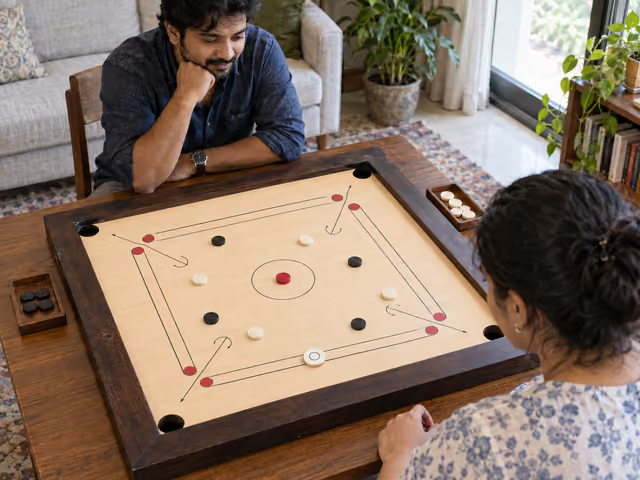
Sit opposite each other. White breaks a compact cluster of nine white pieces, nine black pieces and the red queen. Shoot the larger striker from your own paired baseline marks. Pocket your color to shoot again; a miss passes play. After you already have a piece pocketed, take the queen and cover it with your color on that shot or your very next shot. Once either player has covered the queen, the first to clear their color wins. Resolve fouls before declaring a winner.
Saved on this device only — clearing your browser's cache or site data removes them (no account backup).
Prepare the board and practice a flick
Use a standard South Asian-style 19-piece set, with small white and black wooden discs and a red queen. A multipurpose American Carrom board using rings, or Queen Games' 2025 Family + Friends edition with blue coins, has different equipment and rules. Check your set before inviting players.
Put the board on a level, firm support with both players able to reach their own shooting lines from opposite seats. Check all four pocket nets. Test the striker's glide; follow the board maker's surface-care and powder instructions rather than substituting household powders, sprays or waxes. Apply any required compatible powder before playing. Keep drinks and food off the playing area.
Each player takes three unscored practice flicks at one small disc. Rest your shooting hand, bend a finger behind the larger striker, and release the finger into its edge. Strike it rather than pushing it across the wood. Either hand is allowed. Try a soft straight shot, then a rebound off the inner wooden frame. Retrieve the pieces before the real setup.
Agree who breaks the first board; that player takes white and the other takes black. Place the queen at the center. Surround it with six pieces in a touching ring, alternating colors, then the remaining twelve in a touching outer ring, also alternating colors. For this house setup, align a white inner-ring piece and a white outer-ring piece toward the breaker. All 19 small discs lie flat in a compact cluster. Keep the striker separate.
Shoot, retrieve and take the next turn
Place the striker
Before every shot, position the larger striker on your own side so it touches both parallel baseline marks. At an end circle, cover that circle completely; otherwise do not touch it. Avoid the diagonal arrow marks. Stay in your seat, keep your elbow outside the playing surface and do not touch the smaller discs. Never shoot directly by flicking a small piece.
Break the cluster
White flicks the striker into the center cluster. This house format gives one attempt: if it misses the cluster, pass to Black without rearranging anything. A clean break pocketing an own piece earns another shot; otherwise pass, except for the queen rule below.
Wait and retrieve
Wait until all pieces stop. Resolve any foul first, then queen status, then the finish. Lift the striker without shifting small discs and place it anew for every shot. Keep pocketed colors in separate piles beside the board, leaving the queen separate until its cover is settled.
Continue for your color
A clean shot pocketing at least one of your pieces lets you shoot again, even if an opponent's piece also fell. Opponent pieces stay pocketed and help that opponent. If you pocket no own piece and are not taking a permitted queen-cover shot, pass. You may use cushion rebounds or contact either color; only what is pocketed determines continuation.
Pass after a miss
A clean miss, or pocketing only an opponent piece, ends your turn. The opponent takes the striker and shoots from their own side. Multiple pieces in one shot are counted together; do not decide the winner while they are still moving.
Pocket the queen, then cover it
House eligibility: you must have at least one of your pieces in your pocketed pile before the queen shot begins. Queen plus your first piece on the break is therefore too early here: return the queen, keep the cleanly pocketed colored pieces, and end the turn. This deliberately simpler rule does not use the federation's opening exceptions.
On an eligible clean shot, queen plus an own piece covers it immediately, regardless of which falls first. Queen without an own piece gives the same shooter exactly one immediate cover attempt. Pocket an own piece on that next clean shot to cover it; an opponent piece cannot cover it for you. Success lets your normal turn continue. Failure returns the queen and passes play, even if an opponent piece was pocketed. A foul also cancels pending cover.
A covered queen stays off the board. Either player may subsequently win by clearing their color; covering the queen does not reserve the win for its coverer. There are no queen bonus points in this one-board format.
For example, White already has two pieces pocketed and Black still has several pieces on the board. Queen and a white piece on one clean shot is a cover. Queen alone followed by a black piece is not a cover: return the queen, leave that black piece pocketed and give Black the turn. Later, queen followed by White's last piece on the next clean shot covers and wins, provided Black was not also cleared by that shot.
Use one agreed house penalty
A foul here means pocketing the striker, sending any piece out of the playing surface, pushing instead of flicking, shooting from an illegal starting position, or moving a small piece with your hand. Call it before the next shot. A placement problem caught before the flick can simply be corrected.
Apply this same house remedy every time: end the turn; retrieve the striker; return every small piece pocketed or knocked out on that shot, including opponent pieces. Return the queen too if that shot pocketed it or it was awaiting cover. Also return one additional previously pocketed piece of the shooter's color, if available. If none is available, waive that extra piece; keep no penalty debt. A queen covered on an earlier completed turn remains covered. Resolve this penalty before checking who has cleared a color.
Place returned pieces at the center without moving existing pieces. If occupied, use the nearest empty space alongside the central cluster; return the queen first, then colored pieces. The other player places them where they lie flat without overlap. This neutral center-return method is a house choice, not tournament penalty placement. If an accidental table bump makes positions unrecoverable, agree to replay the board without a winner.
Clear your color after the queen is covered
After resolving the shot and any cover, a player with no pieces of their color on the board wins, provided the queen is covered. That can be the opponent if you pocket their last piece. Stop immediately; there is no equal-turn reply and no running score to total.
Premature finish, house remedy: if a clean shot clears a color while the queen is still on the board or awaiting cover, return one of the pieces of that color pocketed on that shot and end the turn. Apply this to both colors if both were cleared. Return a pending, uncovered queen too. This keeps a piece available to cover it later; federation rules use different losing-board outcomes.
If a clean shot clears both colors after the queen is covered, call this house board a draw and replay with a new break. Do not award the board by guessing which piece fell first. For another board, collect all 19 pieces, switch the breaker and colors, and set the cluster again. If everyone agrees to stop before a result, record an unfinished board rather than inventing a winner from remaining pieces.
Help the next shot make sense
Before the break, explain three decisions: own color earns another shot; queen needs a cover; a striker foul uses the agreed return-and-pass penalty. Point to the paired shooting lines and show which disc is the striker. Announce 'queen covered' or 'one cover attempt' so the board's state stays clear.
When someone struggles, suggest one straight target and a softer flick instead of a spectacular rebound. A useful aim is the point on the target disc opposite the pocket; striking its side changes its direction. Ask before offering more coaching. Let the current shooter choose, and keep hands off the board while anything moves.
Different households use different queen, penalty and score rules. Read this format together rather than importing one familiar rule halfway through. For a disputed shot, settle what actually happened before applying the matching paragraph. If neither player can reconstruct an important finish, agree to replay. Beginners' misses can extend a board; do not promise a fixed finish time. Seated play still requires reaching, finger control and a useful view of the board.
Already know the game?
Ideas & Twists
Choose a variation together before you start.
Carrom · See main rules
Four-player house doublesPartners around the board
Use four players, one at each side, with partners opposite. Teams share a color and its pocketed pile; the opening shooter uses white for their team. After a turn ends, pass to the next seat clockwise, so teams alternate. The same shooter keeps all earned follow-up shots and takes their own queen-cover attempt. A teammate's earlier pocketed piece establishes the team's queen eligibility. Agree on advice before a shot; only the seated shooter touches the striker. Apply the main house penalties, queen rule, premature-finish return and draw rule to team colors. A team wins when its color is cleared after either team has covered the queen. For another board, the next clockwise player breaks and that player's team takes white. This adds two seats and changes the headcount; it does not create four separate colors.
Carrom · See main rules
House option for more frequent turnsOne-shot turns
Keep two players, the same setup and every main rule except earned continuation. After each shot, pass even if your color was pocketed. The one exception is an eligible queen pocketed without an own piece: the shooter takes exactly one immediate cover attempt, then passes whether it succeeds or fails. Queen plus own piece on one shot covers immediately and the turn then passes. A win still ends the board immediately; penalties and premature clearance still return pieces before a winner is checked. This limits long runs by an experienced player; it does not guarantee a shorter board.
Carrom · See main rules
House practice contestSix-shot bank challenge
Replace the full-board race with a two-player challenge. Remove the queen and all but three same-color small discs. Set one target at the center and the other two on a line across the board, two small-disc diameters to its left and right. Both players use that identical target setup and shoot from the same baseline in separate attempts, changing seats between attempts. Each gets six shots total, with no extra shots for pocketing. A target counts only if the striker hits an inner cushion before its first contact with any target. A direct-hit pocket, pocketed striker or anything knocked off-board consumes the attempt without credit: return all targets pocketed or knocked off by that shot to their pre-shot positions. Other moved targets stay where they stop. On a valid shot, leave pocketed targets off-board and count them. Stop early if all three have been pocketed. Reset the identical three targets for the second player. Most targets pocketed within six shots wins; equal totals share the win. Main queen, extra-piece penalties and color-clearance rules do not apply in this practice contest.
About this guide
The equipment, finger strike and standard color/queen structure follow the federation and Woodestic sources. This guide is an original friendly house format, not a tournament-rule digest or a purchased edition's complete rules. One break attempt, queen eligibility checked before the shot, uniform return-and-pass fouls with no debt, neutral center replacement, premature-finish recovery, draw/replay, untimed play and all three variations are explicit house choices. Tournament scores, exceptional queen openings, due/penalty combinations and losing-board awards must not be mixed into this game. Queen Games' 2025 blue-coin edition and American multipurpose ring boards are outside this format.
Ready for something different?
Find another game →