

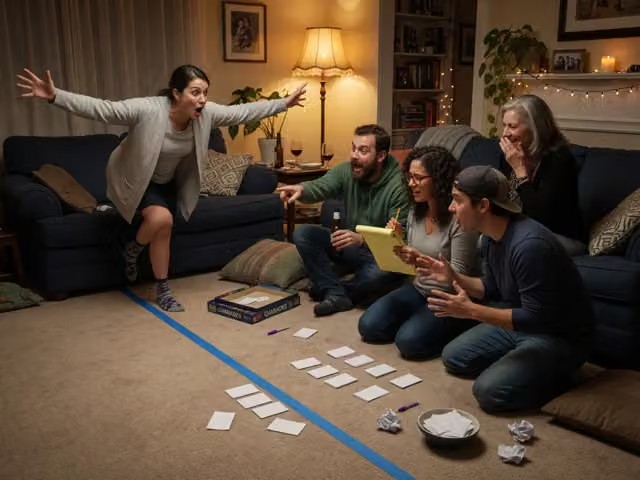
The quick version
Make two teams. Alternate 60-second turns, using one silent actor and one prompt each turn. A correct answer earns one point. After six turns per team, the higher score wins; share a tie.
Saved on this device only — clearing your browser's cache or site data removes them (no account backup).
Prepare the prompts
Make two teams as even in size as possible, with at least one willing actor on each. Each team writes six prompts for the other team, one per folded slip, plus six spares kept separately. Keep the main sets in separate bowls and label which team will act them. Use familiar actions, objects or titles; agree on the kinds before writing.
Place a chair or clear an acting space where everyone can see. Seated acting is fine. Choose who starts by a fair draw and agree that close wording counts when it clearly identifies the whole answer. The counts, clock and scoring here are house rules.
A person may choose guessing or timekeeping instead of acting. Put the willing actors in a rotation. Nobody takes a second turn until the other willing actors on their team have had one. Six turns per team is the finish even if teams have different numbers of actors.
Need prompt ideas? Start with familiar actions: untangling earphones, changing a flat tire, walking a dog that keeps stopping, carrying too many groceries, hanging a picture or folding a fitted sheet. Each team chooses its own answers privately; use these as models while preparing all six prompts and six spares for the other team.
Act, guess and finish
Read privately
Team A's first actor draws from the bowl of prompts written for A. Read it privately before the clock starts. Allow one replacement before acting, with no penalty; set that slip aside and use a spare written by the other team.
Start the performance
The other team starts a 60-second timer. Act using gestures and expressions. Do not speak, mouth words, make sound effects, spell letters or point at a real object to supply the answer. You may show the number of words and nod when a guess is heading in the right direction.
Hear the guesses
Only the actor's team guesses aloud. They can make as many guesses as they like. The actor signals a correct whole answer and reveals the slip. That ends the turn and earns one point. If the clock expires, reveal it and score zero. A clue-rule breach also ends that turn at zero.
Switch and total
Set the used slip aside either way. Team B now acts; alternate teams and rotate actors. A pass after the clock starts ends the turn at zero. After twelve total turns, compare the teams' six-turn totals. Higher wins; tied teams share the win. For another game, write fresh sets and let the other team start.
Make the first turn easy
Try one together: use “opening a stubborn jar” as an unscored demonstration, outside both bowls. The actor pretends to hold the jar, twists the lid and tries again while the room guesses. Keep it silent and use imaginary objects. Once everyone understands, begin the secret prompts. A useful set mixes things you can mime immediately with a few that need a sequence of actions. For example, carrying too many groceries gives an actor something concrete to show; a very obscure film title may leave the room stuck.
Keep a visible tally and announce the next actor while the other team takes its turn. If an answer dispute cannot be settled from the agreed wording rule, replace that turn with a fresh prompt and the same actor rather than changing the standard halfway through.
Already know the game?
Ideas & Twists
Choose a variation together before you start.
Living-room charades · See main rules
Suggested house variationReverse charades
Choose one guesser for each team's turn; all its other players read the same prompt and act together. They can coordinate silently but still cannot speak or spell. Rotate the guesser. Keep six alternating turns per team, 60 seconds and one point per correct answer; highest total wins, with a shared tie.
Living-room charades · See main rules
Suggested house variationOne continuous scene
Use only everyday action prompts. The actor must show one continuous scene rather than indicating word counts or acting separate syllables. Gestures and expressions still do the explaining. Keep the same clock, six turns per team and one-point result; compare totals and share ties.
About this guide
A suggested house version of charades. The publisher's charades discussion confirms that conventions vary; this guide selects silent acting and states its own prompt replacement, clock, scoring and tie rules. The variations are optional house formats.
Ready for something different?
Find another game →