

The quick version
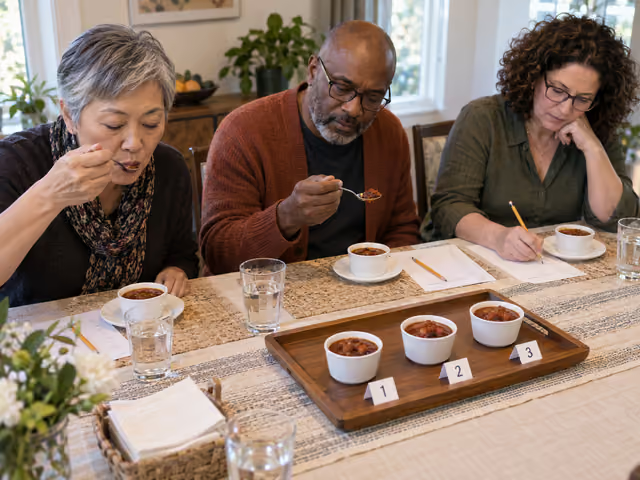
Choose three to six cooks and at least three separate judges, for six to twelve people total. Each cook brings one prepared chili. Serve equal numbered samples with the cooks hidden from the judges. Judges taste every entry, privately rank three different favorites, and give them 3, 2 and 1 points. Add the ballots; the highest total wins, with tied totals sharing the place. Reveal the recipes after voting.
Saved on this device only — clearing your browser's cache or site data removes them (no account backup).
Choose cooks, judges and the chili agreement
This is a bring-prepared-chili house format for an indoor home gathering. It has one category and one tasting round. Choose three to six cooks, each entering one chili, and at least three judges who did not cook or help with an entry. Everyone takes one role; total attendance is six to twelve. At six people, use three cooks and three judges. At twelve, six cooks and six judges works well. Ask judges to declare a close connection to an entrant before accepting the role; if the group considers that a conflict, switch roles or invite another judge.
One cook acts as host and manages the hidden number list and serving; another cook checks the final arithmetic. Judges do not see preparation, pots, recipe names or the cook-to-number list. Set up a kitchen serving area out of view of a seated tasting table. Confirm enough safe heating space for every entry before inviting cooks.
Send the same agreement to every cook: homemade chili containing chili peppers or chili seasoning; meat, bean and vegetable versions welcome; beans optional; no rice or pasta; mild to medium heat; no extreme-heat extracts or surprise hot ingredients. Each entry is judged as served, without toppings. Any recipe restrictions needed for the group must be agreed before cooking. These are this gathering's rules, not an official competition category.
Ask everyone about dietary needs before assigning judges. Cooks provide complete ingredient lists, including packaged seasoning ingredients and known cross-contact concerns. The host shares these by entry number before tasting. Do not hide ingredients to preserve anonymity. Only appoint a judge who can comfortably taste every agreed entry; anyone may stop or decline a taste.
Each cook brings at least half a cup of chili per judge for samples and retastes, plus any extra they want to share after voting. For six judges, that is at least three cups per entry. Bring a covered transport container and a separate ladle for each chili. The host supplies identical small cups, enough clean spoons for every taste, water and glasses, napkins, paper labels, a concealed cook-to-number sheet, pens, one ballot per judge and a tally sheet. Each ballot needs spaces for the judge's name, first, second and third choice. Have a food thermometer, working heat sources and shallow leftover containers ready.
Bring chili ready to serve safely
Cook each recipe fully before the gathering. Use a food thermometer: ground beef or pork needs 160°F (71°C), poultry 165°F (74°C). Keep hands, work surfaces and serving utensils clean, with raw ingredients separate from cooked food.
For transport, use covered, leakproof containers. Keep chilled chili at 40°F (4°C) or below in a cooler with ice packs; arrange prompt reheating on arrival. Reheat leftovers to 165°F (74°C) on the stove or in a microwave, stirring and checking throughout, before transferring to a preheated warmer. A slow cooker's warm setting is for holding hot food, not reheating cold chili.
Keep serving chili at 140°F (60°C) or above and check it with the thermometer. Serve small samples promptly. Refrigerate leftovers in shallow containers within two hours outside safe temperature control, or one hour above 90°F (32°C); count transport and serving time together. Discard food that exceeds that limit, and do not serve an entry whose handling history is uncertain. Tell the host immediately if a heat source fails so serving can stop.
Taste first, vote privately, then reveal
Give every chili a secret number
When all cooks arrive, the host assigns each eligible chili a shuffled number from 1 up to the entry count and writes the cook-to-number key. Keep it in the kitchen. Label the ingredient lists and serving ladles with those numbers. Remove recipe names and identifying decorations. Read the judging and tie rules aloud before pouring samples.
Start with equal samples
The host serves each judge about two tablespoons of entry 1 in an identical cup labeled 1; repeat for every entry. Serve one entry to all judges before moving to the next, so portions and temperature are comparable. Keep the reserve chili hot in the kitchen. Judges can taste in any order and note their own impressions. Use a fresh spoon for each taste; never return a used spoon to serving chili. Drink water between entries.
Compare and request retastes
Choose the chilies you personally enjoy most, considering flavor balance, texture, aroma and how pleasant they are to eat. Heat alone earns no bonus. Ask the host for a fresh numbered portion if you want a retaste, while the reserve lasts. Keep opinions and cook guesses private until voting closes; soft conversation about serving or ingredients is fine. Take a pause if needed rather than rushing a taste.
Rank three different favorites
After tasting every entry, each judge writes three different entry numbers on their ballot: first, second and third. One judge submits one ballot. Cooks do not vote. The host checks for three distinct valid numbers while the judge can still correct an error, then collects the ballot. If a judge declines an entry or leaves before finishing, they do not submit a ranked ballot; there is no pressure to eat.
Add points and finish
Give each first choice 3 points, each second choice 2 and each third choice 1. Add every valid ballot to the tally sheet; a second cook checks the entries and addition. Highest total wins. Equal totals share a place, even first; use competition places, so two joint firsts are followed by third. For example, totals 7, 7 and 4 give two joint winners and a third-place entry. Once every judge has submitted or declined a ballot, voting is closed. Reveal the numbers, announce the result, and let each cook explain one recipe choice before everyone shares the remaining chili.
With four entries, a judge can write first: 4, second: 1, third: 3. That ballot adds 3 points to entry 4, 2 to entry 1 and 1 to entry 3; entry 2 receives zero. It is a ranking of preferences, not a numerical quality score.
Keep the tasting friendly and comparable
Check the number on each cup before it leaves the kitchen. Keep portions similar, stir an entry before serving, and use its own ladle. Identical cups and a hidden serving area reduce clues, but an ingredient list or familiar recipe can still be recognizable. Ask judges to vote on the chili they taste. Do not sell this as perfect anonymity.
Recipe preferences differ. A bean chili is eligible under the agreed house rules; do not reject it halfway through because someone prefers Texas red. Keep toppings and sauces for the meal after ballots close. A cook may explain ingredients when asked, through the host, but should save the recipe story until the reveal.
Correct a mislabeled sample by replacing it with the right numbered sample before that judge votes. If the wrong identity affected several judges, pause and replace those samples for everyone affected. If a cook's identity is revealed, tell the group and continue the friendly tasting openly; the reveal does not alter points. Explain the mistake at the result.
If an entry is withdrawn before voting, remove it from every judge's choices. With fewer than three eligible entries, finish as an unscored tasting. If a withdrawal occurs after ballots have been submitted, cancel those ballots and retaste the remaining entries before a fresh vote, provided at least three entries and three willing judges remain. With fewer than three valid judges' ballots, announce no competitive result and enjoy the tasting. Do not turn an allergy, an unsafe dish or a withdrawal into a penalty.
Keep ballots until both cooks have checked the result. Fix arithmetic errors before announcing; a tie is a shared place, not a sudden new voting rule. After the reveal, invite specific, kind feedback such as a flavor someone noticed or a texture they liked. Share recipes only with the cook's agreement and divide cleanup among cooks and tasters.
Already know the game?
Ideas & Twists
Choose a variation together before you start.
Chili cook-off · See main rules
House suggestionAll-plant chili table
Before anyone cooks, replace the mixed recipe category with chili made entirely from plant ingredients: beans, vegetables, plant oils and seasonings, including plant-based stock. Keep the same three-to-six entries, separate judges, samples, ballots, points and shared ties. Cooks still provide complete ingredient lists; this theme does not settle every allergy or cross-contact need. Useful when the group wants to compare different bean and vegetable approaches.
Chili cook-off · See main rules
House suggestionRecipe exchange instead of awards
Keep the preparation, numbered samples, ingredient checks and safe serving, but omit ballots, points and places. After everyone has tasted as much as they want, reveal the cooks. Each willing taster names one specific thing they enjoyed; each cook may share a recipe or technique with the group. Nobody has to taste every chili, and the finish is the last cook's reveal followed by the shared meal and cleanup. This is an unscored tasting, so the main game's three-valid-ballot requirement does not apply.
About this guide
This complete house format uses prepared-at-home entries, flexible chili recipes and shared ties. ICS supplies a comparison for numbered tasting and ranked judging, but its sanctioned-event categories, on-site cooking, registration and tie procedures are not adopted. Group size, quantities, serving sequence, eligibility, withdrawal remedies and all three variations are host suggestions. Federal home-food guidance supplies the temperature and handling notes.
Ready for something different?
Find another game →