

The quick version
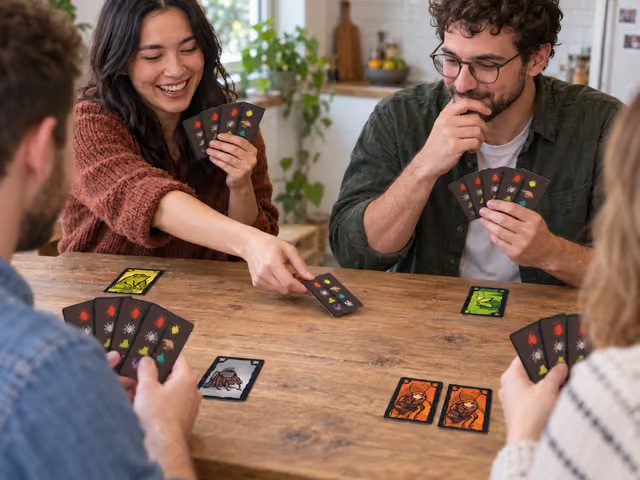
For 3–6 players, deal all 64 base-game cards and keep your hand private. Choose a starter, who slides one card face down to anyone else and names a creature. The receiver says true or false before looking, or chooses to peek and pass it to someone who has not seen it. A correct judgment gives the card to the latest passer; a wrong judgment gives it to the receiver. Keep it face up in that person's area; they start the next round. Four of one creature, or being unable to supply a card when you must start, ends the game.
Saved on this device only — clearing your browser's cache or site data removes them (no account backup).
Deal the creatures and learn their names
This main game uses 3–6 people and the base Cockroach Poker / Kakerlakenpoker set from Drei Magier / Schmidt Spiele, article 40829. Follow the English section of that manufacturer's base-game rulebook. Cockroach Poker Royal has different cards and extra rules; use its own instructions rather than mixing those components into this game. The official two-player base version is below.
Bring the complete 64-card creature deck: eight each of cockroach, stink bug, spider, fly, rat, toad, bat and scorpion. You also need a table with room for each person's private hand and face-up collection, and 3–6 seats. Keep the rulebook available for checking pictures and rules. There is no draw pile, discard pile, score sheet or required device.
Before shuffling, show the eight creature pictures and agree on their names, especially cockroach versus stink bug. Shuffle all 64 cards and deal them one at a time until the deck is empty. Unequal hands are normal: at three players they contain 22, 21 and 21 cards; at four, 16 each; at five, four hands of 13 and one of 12; at six, four hands of 11 and two of 10. Look at your own cards and keep their faces hidden from everyone else.
Leave each player's table area empty to begin. Choose any willing starter together; this is a host choice. The starter may choose any opponent, and play does not move clockwise. Each later starter is determined by who receives the revealed card.
Offer, judge or pass
Offer one card
Choose one card from your hand, place it face down and slide it to any other player. Name one of the eight creatures, such as 'This is a cockroach.' You may tell the truth or lie. That single card stays in play until someone judges a claim; nobody substitutes a different card.
Judge before looking
If you want to resolve the offer, say 'true' if you believe the latest creature claim or 'false' if you doubt it. Commit before seeing the face, then turn the card over. If your judgment was correct, the person who most recently passed it to you takes the card. If your judgment was wrong, you take it. A false judgment only needs to reject the named creature; you do not have to guess the actual one.
Or choose to peek and pass
Instead of judging, announce that you will pass. Look at the card privately, then slide the same card face down to someone who has not seen it during this chain. Repeat the previous creature claim or name a different creature, truthfully or falsely. Once you have peeked, you cannot switch to a true/false judgment yourself. The original sender and everyone who peeked are ineligible recipients. The last person who has not seen it must judge; they cannot pass or simply take a penalty without judging.
Keep the penalty visible and restart
Place the revealed card face up in the responsible player's own collection. Group identical creatures together so everyone can count them. It stays there and never returns to a hand. If the game has not ended, that player starts a new round by choosing a fresh card from their hand. Everyone becomes eligible again for this new card; reset the passing chain.
Alex offers a fly while saying 'cockroach'. Bea chooses to peek, then offers that same card to Cam while saying 'fly'. Cam says true and reveals a fly: Bea takes the card and starts next. If Cam had said false, Cam would take it. Alex's earlier claim no longer determines this judgment.
One loss ends the whole game
End immediately when a player has four face-up cards of the same creature. That player loses; all other players share the victory. Do not eliminate them and continue. A mixed collection of four cards does not meet this condition.
The other ending occurs when someone must start a new round but has no card left in their hand to offer. They lose and the others share the victory. Playing your last hand card is not an immediate loss: resolve its passing chain first. If somebody else receives the penalty, that person starts next, and you can still judge or pass cards offered to you.
There are no running points, equal-turn finish or tiebreak. Resolve one card at a time, so one player receives the game-ending penalty. In this selected base rulebook, collecting one of all eight creatures is not a loss condition. For another game, gather every card, shuffle, deal again and choose a starter together; do not carry penalties forward.
Keep the bluff playful and the chain clear
Before dealing, demonstrate one judgment with a visible fly: say 'cockroach', ask someone to say false, and explain that the sender would receive that card. Then say 'fly' and have them say true: the sender would again receive it. If they make the wrong judgment in either example, the receiver would keep it instead. These are open teaching examples; real judgments happen before the card is revealed. Return demonstration cards to the full deck before shuffling. During play, say each recipient's name and each creature claim clearly. Anyone can help recall who has already seen the current card; keeping the chain clear is more useful than trapping a newcomer on a memory mistake.
You may inspect your own hand throughout play and use the visible collections to reason about what remains. Watching the latest passer and choosing a recipient are part of the game. Other players can watch and discuss the possibilities, but the addressed receiver makes the judgment and nobody reveals a card they secretly saw. Bluffing applies to creature claims, not to secretly changing cards or hiding penalties.
Check a disputed picture against the eight examples in the rulebook. Judge the latest explicit claim, not an earlier one. If someone receives a card they already saw, stop before revealing it and redirect it to an eligible player while retaining the current claim; this is a suggested house correction. If the card is accidentally exposed before a judgment, return it to the round starter's hand and have that starter offer a different card if possible. Otherwise gather and redeal without a winner. This exposed-card remedy is also a house suggestion, not a publisher penalty.
Choose this game with people comfortable making and questioning playful claims. Targeting opponents is part of the rules, but teasing about a person's intelligence or honesty is unnecessary. Stop for discomfort and offer another game rather than forcing someone to perform. Softly spoken claims work at a shared table; a seated game still needs card handling, picture recognition and private hands, so agree on useful assistance before starting.
Already know the game?
Ideas & Twists
Choose a variation together before you start.
Cockroach Poker · See main rules
Official base-game variationTwo-player duel
For exactly two people, shuffle the full 64-card deck and set aside ten random cards face down without looking. Deal the remaining 54 as two private hands of 27. Every offered card must be judged true or false before it is revealed; peeking and passing onward is unavailable. Increase the matching-creature loss threshold from four to five face-up cards. Inability to offer a card when you must start still loses. The other player wins; the removed ten cards remain unseen and out of play until the next game.
Cockroach Poker · See main rules
Community house suggestionThree of a kind
For 3–6 people, agree before dealing that the game ends at three face-up cards of one creature rather than four. Deal all 64 cards and keep the normal judging, passing, next-starter and empty-hand rules. One person loses and the others share the win. This brings the matching-creature finish closer; it does not guarantee a particular playing time.
Cockroach Poker · See main rules
Designer house suggestionA creature to start
For 3–6 people, shuffle and deal one card face up into each player's collection before dealing all remaining cards into private hands as evenly as possible. Each opening creature counts toward the normal four-of-a-kind loss threshold and stays visible for the entire game. Choose a starter together and keep the normal passing, judging and empty-hand finish. The existing visible cards give the first claims context. This changes the publisher's empty-collection setup; use it only by agreement.
About this guide
Main rules follow the English pages 9–14 of Schmidt's currently linked base article 40829 rulebook, with its German rules clarifying the empty-hand trigger and unequal deal. This guide's main hosting range is 3–6; the publisher's separate two-player rules are provided as a variation. Royal cards, extra loss conditions reported in other editions, chips and card-hand rankings are not part of this format. Starter selection, demonstrations, chain reminders and accident remedies are host suggestions. Community reports inform hosting and the labeled three-card variation; the seeded setup comes from Crab Fragment Labs and is a house rule.
- Schmidt Spiele / Drei Magier · base game and current rulebook link ↗
- Schmidt Spiele · article 40829 multilingual base rulebook ↗
- Crab Fragment Labs · Cockroach Poker opening-card house rule ↗
- r/boardgames · contrasting group experiences and three-card house rule ↗
- r/boardgames · looking at your hand and teaching misunderstandings ↗
Ready for something different?
Find another game →