

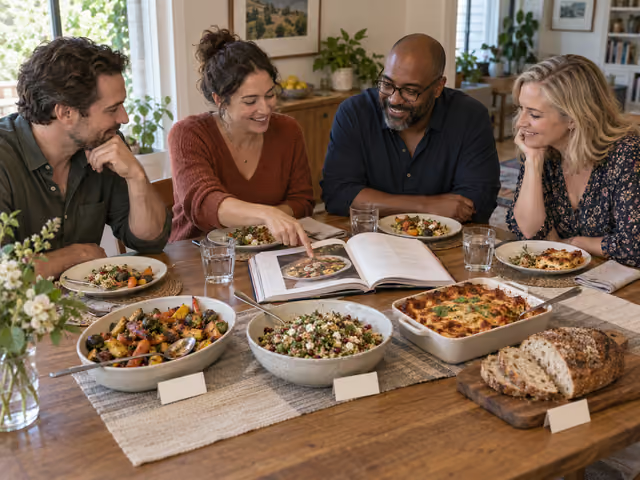
The quick version
Choose a book everyone can access and confirm the exact edition. Each person claims a different recipe before shopping. Agree on the menu, contribution sizes and food-storage needs, then cook ahead. On arrival, label ingredients and changes. The host introduces their dish, then everyone gets a turn to share a cooking note or pass. Eat only what suits you, discuss the book, and finish by putting food away and clearing the table.
Saved on this device only — clearing your browser's cache or site data removes them (no account backup).
Choose a book and build the menu
Invite 4–8 people, counting yourself, and agree on the place, arrival time and a closing time before confirming the gathering. Ask privately about dietary requirements and ingredients people need to avoid. Check that the menu, cooking arrangements and seating work for the actual guests. Each person claims and prepares one distinct recipe in the main format. For people who want to contribute together, use Cook in pairs below.
Pick one book after checking ingredient availability, cost, recipe difficulty and how everyone will read it. Confirm the title, author and edition or publication year; page numbers and recipes can differ across editions. Buying a book is not required: borrow a copy, arrange an in-person browse, or use recipes the author or publisher has made available. Check actual access before committing; a library may have a waiting list. Do not depend on an unreviewed screenshot or a chapter heading as the full recipe. Bring one printed copy to the meal for discussion.
The host keeps a paper sign-up list with each person's name, recipe title and page, expected yield, ingredient changes and any requested fridge or reheating space. Take claims in an agreed order; the first confirmed claim keeps a recipe if two people want it. A deliberate duplicate belongs in the Two takes variation. Set a confirmation deadline early enough for shopping and preparation, and tell the host about changes before bringing them.
For four people, a practical starting menu is two savory dishes, a side and a dessert; with more people, add complementary dishes before duplicating a category. This is a suggestion, not a rule. Decide whether you are making a tasting meal or full dinner. Compare the recipes' yields and agree on quantities together: a dish that serves four as a main can give eight people smaller tastes, but that alone does not make a full meal for eight. Account for the people who cannot eat particular dishes. The host also confirms water, enough plates and eating utensils, serving space and cleanup jobs.
Cook ahead and keep the food ready to serve
Read your whole recipe before buying ingredients, including any resting, chilling or overnight preparation. Choose something within your equipment and comfort level. Follow the recipe's preparation instructions and current food-safety guidance; this activity guide does not replace a recipe or teach every cooking method. Note what you changed and why, including substitutions, package ingredients and a different cooking method.
Bring the prepared dish in a covered container, its own clean serving utensil, and a label showing recipe title, page, ingredients and substitutions. The host's kitchen is for agreed storage or finishing, not an unexpected round of cooking. Reserve any fridge, oven or microwave use before the gathering. If that space is unavailable, choose a different recipe before shopping.
Plan safe transport and serving. For perishable food, keep cold food at 40°F or below and hot food at 140°F or above, checked with a food thermometer. Track time without safe temperature control through travel and serving: discard perishables left out for more than two hours, or one hour above 90°F. These are food-safety limits, not the activity's duration. Refrigerate leftovers promptly in shallow containers. Consult the linked FDA guidance when planning your particular dishes.
Ingredient labels help people decide what to eat; they do not establish that a home kitchen is free of cross-contact. Keep serving utensils separate, disclose uncertainty, and discuss suitable arrangements directly with anyone who needs them. Everyone may decline any dish. If safe handling or an ingredient cannot be confirmed, leave that dish out of the shared meal.
Share the meal and the cooking stories
Check in each dish
The host directs each arrival to the agreed storage or serving place. Match the dish to the sign-up list, put its ingredient label beside it, and confirm any changes with the cook. Keep the cookbook separate from spills and serving utensils. Give everyone a seat and a place for their plate.
Start with the host's recipe
The host says the recipe name and page, explains one choice or surprise from making it, and invites a question. For example: 'I made the grain salad on page 42. I used the listed herbs but cooked the grains ahead; the dressing soaked in more than I expected.' This invented example shows the discussion, not a recipe to cook.
Offer everyone a turn
Go around the table once. Each person introduces their dish, mentions a change or a useful preparation detail, and answers questions if they wish. Passing is fine; do not turn the introduction into a performance test. Guests can begin eating once the labels and safe serving arrangements are ready; food does not have to wait through every introduction.
Taste and compare notes
Serve small first portions of dishes you choose to eat, leaving others a chance to try them. Discuss the clarity of the instructions, the effort involved, and what you would repeat or change. Ask the cook before offering troubleshooting. Refer to the book when a step is unclear, and distinguish the printed recipe from a person's adaptation. There is no judging, compulsory tasting or score sheet.
Close the gathering
Before the agreed closing time, offer each person a final thought: a recipe they would make or one helpful thing they learned. People may pass. Put away safe leftovers, return containers and utensils, and complete the agreed cleanup jobs. The gathering is finished when the closing round and cleanup are done; it does not require every plate or serving dish to be empty.
Handle changes and make the next meeting easier
A missing or unsuccessful dish is not a loss. Tell the host as soon as possible so the group can adjust the menu or agree on a suitable replacement. If duplicate dishes arrive accidentally, enjoy both when suitable and let the cooks compare notes; do not reject a guest's work over the sign-up order. If all the contributions lean toward one course, clarify whether the gathering will be a tasting or add an agreed simple accompaniment. Do not quietly make the host responsible for filling every gap.
If someone disputes a recipe detail, open the agreed edition and read the relevant step. A documented substitution is an adaptation, not cheating. Discuss whether the instructions suited your kitchens rather than ranking the cooks. When one voice takes over, return to the round and invite the next person, with permission to pass. General conversation is welcome, but keep a clear opportunity to talk about the book.
If you want another meeting, agree on a willing host and a way to select the next book. Nobody inherits hosting automatically. The next host can suggest a book after checking access and dietary fit; do not choose by vote until everyone knows the viable options. A tied book preference needs no competitive tiebreak: seek agreement, leave the choice open, or consider the other book for a later gathering.
This is a house-hosted format informed by library clubs and cooks' accounts, not a published game with a governing rulebook. The headcount, recipe-claim order, discussion round, closing arrangement and variations are this guide's suggestions. Cooking effort and gathering length depend on the book and group. Seated conversation does not establish that every preparation task or home is accessible.
Already know the game?
Ideas & Twists
Choose a variation together before you start.
Cookbook club · See main rules
House suggestion · compare preparationsTwo takes on one recipe
Before sign-up closes, two willing cooks claim the same recipe instead of different ones. Agree whether both follow the printed recipe or one makes a clearly identified, suitable substitution; no hidden ingredients. Everyone else claims a different dish. Keep the total meal quantity appropriate rather than doubling it just for comparison. Label the two versions separately with ingredients and changes and provide separate serving utensils. Offer a side-by-side taste to people who want both, then have the two cooks explain their methods. Compare texture, flavor and instructions without voting for a winner. This deliberately relaxes the main format's no-duplicate rule; consent, handling and the closing round still apply.
Cookbook club · See main rules
House suggestion · explore beyond the obvious recipesChapter sampler
Before anyone claims a recipe, browse the book together and assign a different chapter or section to each cook where the book has enough suitable sections. Each person chooses a recipe from their section; if there are fewer suitable sections than cooks, share a section while keeping recipe titles distinct. Check the combined menu, ingredient needs and contribution sizes before confirming it, and reassign a section if it does not suit a cook. During each introduction, explain what the chapter taught as well as what happened with the dish. Finish with each person naming another section they would like to explore. This changes recipe selection and discussion focus; it does not require every chapter to be represented or every guest to taste every dish.
Cookbook club · See main rules
House suggestion · share the preparationCook in pairs
Replace individual contributions with cooking teams. With four, six or eight people, make pairs; with five or seven, make one trio and pair the others, giving two to four teams in this guide's range. Each team claims one distinct recipe, divides shopping and preparation by agreement, and cooks ahead in a kitchen its members agree to use. Someone can contribute shopping, reading the instructions or packing rather than handling heat or knives. Plan the yields together so the smaller number of dishes still fits the agreed meal. Teams bring one ingredient label and serving utensil per dish. In the discussion, offer each teammate a turn to share one part of the process or pass. Food-handling checks, voluntary tasting and the finish stay the same.
About this guide
Library programs establish the shared-book, cook-ahead meal format; they are examples rather than universal rules. The Programming Librarian account includes a prize vote, which this unscored house format does not adopt. No purchased game edition is involved: participants choose a cookbook and confirm its precise edition before claiming recipes. The 4–8-person range is the authored hosting scope, not a universal club limit. Community accounts inform access, kitchen-space and discussion advice. All three variations are house suggestions. Read individual recipes in your chosen book before cooking.
Ready for something different?
Find another game →