

The quick version
Alternate four throws each. A bag through the hole is 3; one resting on the board is 1. Subtract the lower frame total from the higher. First to 21 or more after a complete frame wins; going over 21 is allowed.
Saved on this device only — clearing your browser's cache or site data removes them (no account backup).
Set the boards and choose sides
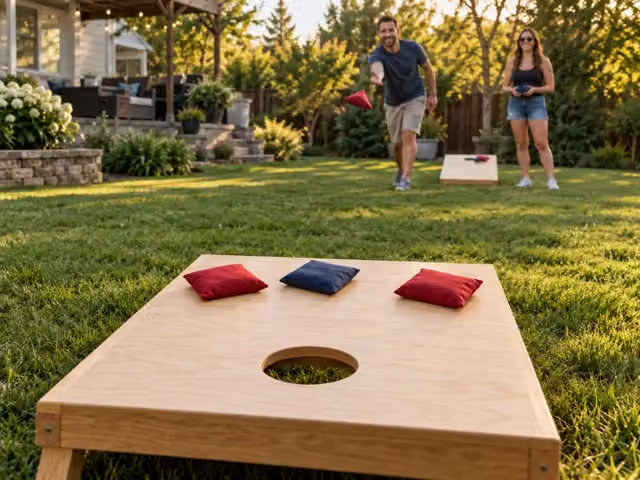
Face two stable boards toward each other, 27 feet between their front edges. Each side has four matching bags. The board's front edge is the foul line; pitchers stand beside their board and release without crossing it.
For singles, both opponents begin at the same end and walk to the other end after scoring. For doubles, put one partner at each end, with an opponent beside them. The two players at one end throw all eight bags; their partners throw the following frame back.
Choose the first throw by a coin flip. Before starting, say the finish aloud: 21 or more, measured after all eight bags. There is no exact-21 reset or automatic two-point margin in this format.
Throw, cancel and finish
Complete a frame
Toss underhand, alternating one bag at a time until both pitchers have used four. You may slide into a bag or knock it through the hole. Count its final position, not where it first landed. A ground-first bag is dead and worth zero; remove it before the next throw.
Agree on the points
After eight throws, count 3 for each bag through the hole, 1 for each bag still supported by the board, and zero for everything else. A hanging bag touching the ground is zero. Subtract totals: 8 against 5 gives the higher side 3 points; equal totals give neither side anything.
Start back the other way
The side that scored throws first in the next frame. If nobody scored, retain the previous opening side. Confirm totals before collecting the bags. Play another full frame until one side reaches or passes 21, then stop.
One hole bag and two board bags make 5, not 6. A bag pushed from the board through the hole becomes 3, replacing its earlier board point. Count each bag once.
Help the first frame feel easy
Have each person try two unscored bags, then score an example together. Keep a visible running total and a separate frame count for a fixed-frame variation.
Agree scores before moving bags. Inspect close ground-contact calls from the side. A line-fault bag is dead: spend the throw, score zero and remove it before the next toss. For this friendly game, use this house remedy whenever a dead throw moves live bags: restore them to agreed prior positions, or replay the whole frame with unchanged running scores if positions cannot be agreed. This replaces ACA's detailed disturbed-bag procedures.
Keep people out of the throwing lane and collect only after both pitchers finish. For another game, reset totals and choose the opener again. Extra friends can rotate into the next game rather than changing the four-bag allocation midgame.
Already know the game?
Ideas & Twists
Choose a variation together before you start.
Cornhole · See main rules
Suggested house variationThree-frame match
Replace the race to 21 with exactly three full frames. Keep cancellation and add each net score to the running total. Higher total after frame three wins, even below 21. If tied, play another complete frame; repeat only while tied. This gives every match a clear minimum length.
Cornhole · See main rules
Suggested house variationWin the frame
Discard running bag points. A higher bag total earns one frame win; a tied frame earns nothing. First to three frame wins wins the match. Keep alternating throws and normal bag values, and let the frame winner open next. A big scoring frame now counts the same as a narrow one.
About this guide
ACA's introductory rules support scoring and board spacing. Disturbed-bag restoration or replay is entirely a house remedy replacing detailed ACA procedures. Hosting advice and shorter matches are suggestions. The archive identifies the active full rulebook; tournament procedures are not reproduced.
Ready for something different?
Find another game →