

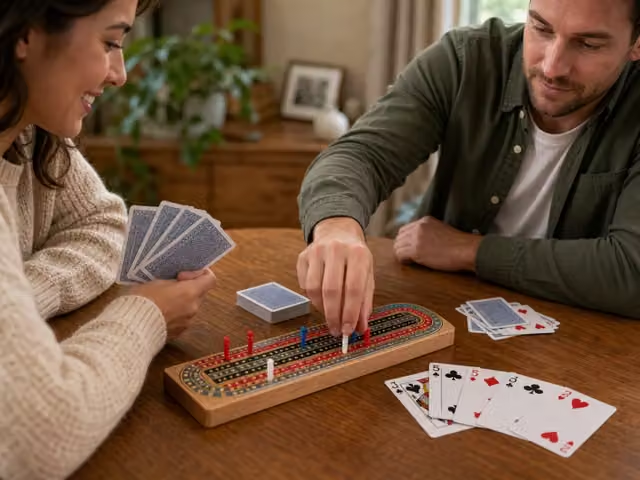
The quick version
Deal six each, discard two each into the dealer's crib, then cut a starter. Play your four cards without taking the shared count above 31. Count nondealer's hand, dealer's hand, then crib. First to 121 wins immediately.
Saved on this device only — clearing your browser's cache or site data removes them (no account backup).
Prepare, deal, and know when to stop
Use a joker-free deck and a board through 121. Start two pegs each at zero. Score by advancing your rear peg past the front by the points earned; the other peg preserves the previous total. Paper can substitute.
Cut for first dealer: lower rank wins, ace low; recut ties. Shuffle, let the nondealer cut, then deal six each, beginning with them. Each discards two face down into the dealer's four-card crib, keeping four.
The nondealer lifts part of the undealt deck; expose the lower part's top card as starter. A jack scores the dealer two immediately. Leave the starter separate for hand counting. Reaching 121 at any scoring moment wins immediately; no reply or tie. After a completed deal, alternate dealers and reshuffle.
Peg first, then count the hands
Start the shared count
The nondealer plays one card face up and announces its value. Alternate playing and announcing the combined total. Aces count one, numbers their value, faces ten. Keep each player's cards in a separate visible row so their four-card hand can be recovered.
Score the card just played
A total of 15 scores two. Consecutive equal ranks score two for a pair, six for three, 12 for four. The latest uninterrupted cards forming a run of at least three distinct consecutive ranks score its length, regardless of order or suit: five-three-four scores three. Jack and queen are not a pair. Add every combination your card creates.
Say go only when you cannot fit
Never exceed 31. If none of your cards fits, say go; your opponent continues while cards fit. When neither can play, the last player to place a card scores one. An exact 31 scores two instead of that one. Reset to zero; the other player leads if they have cards, otherwise the player with cards does. The final card likewise earns one unless it made 31. Pairs and runs cannot cross a reset.
Recover and count in order
After all eight cards are played, the nondealer scores their original four cards with the starter, then the dealer does the same, then the dealer scores the crib with the starter. Stop immediately if anyone reaches 121. Do not combine the two players' cards or count the crib early.
Count each hand and crib
- Each distinct subset totaling 15 scores two; cards can contribute to several combinations.
- Each equal-rank pair scores two; three of a kind scores six, four scores 12.
- Each longest run of at least three consecutive ranks scores its length. Duplicate ranks create distinct runs; exclude shorter runs inside longer ones. Ace is low.
- Four same-suit hand cards score four, or five with a matching starter. A crib flush needs all five matching. No pegging flushes.
- A jack matching the starter's suit scores one, called nobs. Hand counting never scores 31 or last-card points.
Three-four-four-five plus a nine starter scores two three-card runs for six, and a pair for two: eight total.
Leave each count on display
Say combinations aloud and leave cards visible until both players accept each total. Help correct missed counts in this casual format; muggins is excluded. Settle all three counts before redealing.
Already know the game?
Ideas & Twists
Choose a variation together before you start.
Cribbage · See main rules
Suggested house variationShort race to 61
Change only the target to 61 and mark that finish clearly on the board. Score the starter, pegging, hands, and crib as usual, with immediate victory when anyone reaches it. For a best-of-three match, start every game at zero and alternate the first dealer. Two game wins finish the match; no margin bonuses.
Cribbage · See main rules
Suggested house variationOpen-hand learning game
Deal six each face up, discuss discard choices, then form the dealer's crib face up. Cut the starter afterward as usual. Keep all four-card hands visible during pegging so both players can practice go calls and spot scoring combinations. Retain ordinary points, counting order, and the immediate 121 finish. Start a fresh hidden-hand game when you are ready.
About this guide
Two-player six-card cribbage follows ACC rules for go sequences, counting order, and crib flushes. Shared counting, the 61-point match, and open-hand play are suggestions. Tournament penalties and muggins are excluded.
Ready for something different?
Find another game →