

The quick version
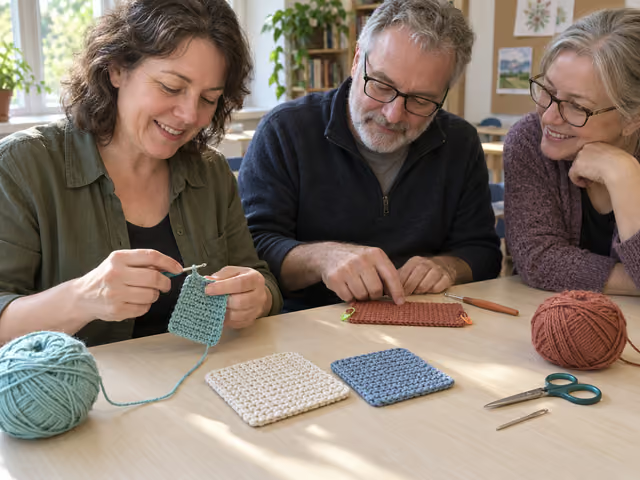
Give each maker cotton yarn, a matching hook and two stitch markers. Make a slip knot, then 16 chains. Work one single crochet into the second chain from the hook and each chain after it: 15 stitches. Chain one, turn, and work 15 single crochets into the previous row. Repeat until the height matches the width. Cut a long yarn tail, pull it through the final loop, and weave in both ends. Finish with a look at each other's work; there is no score.
Saved on this device only — clearing your browser's cache or site data removes them (no account backup).
Give everyone a clear place to stitch
This suggested format is for 2–6 adults, including the demonstrator. Each person makes one coaster. Choose an indoor table with good light, a seat and elbow room for everyone. Keep yarn balls on the table or in individual bags rather than trailing across the floor. The demonstrator should be able to make the whole coaster before hosting. Beginners can learn together, but arrange someone who can show the stitches and help with the first row.
Give each person a separate ball of smooth, light-colored, medium-weight 100% cotton yarn and a crochet hook of the size recommended on its label. A 5 mm hook with cotton labeled for that size is a practical starting choice. A full ball leaves room for practicing and restarting; this is a supply choice, not a claim that one coaster uses a whole ball. Avoid fuzzy or very dark yarn for this first project because the stitch tops are harder to see.
Supply two locking stitch markers per maker. Keep a shared pair of small scissors, a blunt large-eye yarn needle that fits the yarn, and a ruler within reach. Close the scissors when putting them down and return the needle to a dish after use. Read the instructions ahead or bring a paper copy. Screens and a timer are not needed during the session.
These instructions use U.S. crochet terms: chain is ch, and single crochet is sc. U.K. double crochet means the stitch called single crochet here. This is an original simple square project using standard techniques, not Yarnspirations' circular coaster pattern or the Craft Yarn Council's larger block. The circle is the gathering, not the shape you crochet. No magic ring, knitting needles or garment to repair is needed.
Make the starting loop and chain
The working yarn is the strand leading to the ball; the tail is the loose cut end. Hold the hook in whichever hand feels natural, like a pencil or a small knife, and guide the working yarn with the other hand. Keep the yarn loose enough to move. A left-handed maker follows the same counts in the opposite direction; demonstrate beside them or from an angle they can mirror.
Make a slip knot
Leave about 20 cm of tail. Cross the yarn to form a loop, then pull a small loop of the working strand through that first loop. Put the hook through the new loop and gently tighten the knot beneath it. Adjust the loop around the hook's smooth shaft so it can slide; do not tighten it against the narrow hooked tip.
Make one chain
A yarn over means catching the working strand over the hook from back to front. Catch that strand and draw it through the loop already on the hook. You have made one chain, with a fresh loop still on the hook. Pinch the work just below the hook with your other hand so it does not twist away.
Count to 16
Repeat that movement until the chain has 16 little V shapes. Count those Vs, excluding both the slip knot and the live loop on the hook. Slide your supporting fingers along as the chain grows. Pause here so a friend can check your count. The chain should bend easily and let the hook enter without force.
Build a 15-stitch square
Work the first single crochet
Find the chain V nearest the hook, then the next V: that second chain is where you begin. Insert the hook under the upper strand of that V. Yarn over and pull a loop through the chain only; there are now two loops on the hook. Yarn over again and pull through both loops. One loop remains on the hook. That is one single crochet.
Complete the first row
Make the same stitch once in each remaining chain, using the same upper-strand entry each time. Include the chain next to the starting knot, but do not stitch into the knot. You should have 15 single crochets. Their top edges look like 15 Vs. Clip a marker through the top V of the first stitch and another through the last. These mark stitches to work into, not extra stitches.
Turn and start row two
Chain one and turn the fabric like a page so you can work back across it. Keep the live loop on the hook. This turning chain raises the hook and does not count among your 15 stitches. The first stitch to work is the last single crochet of the row you just finished, beside the turning chain. Remove its marker, put the hook under both strands of its top V, and make one single crochet. Mark the new stitch's top V.
Keep the width steady
Work one single crochet under both top strands of each next V, including the marked last stitch. Move that marker to the last stitch you just made. Count 15 stitch tops before continuing. Do not add a stitch into the turning chain. For every later row, chain one, turn, and repeat this 15-stitch row. Everyone works independently; the demonstrator pauses after a new skill and offers help.
Stop at a square
Lay the fabric flat without stretching and measure its width. Add complete 15-stitch rows until its height is about the same as its width; the closest whole row is fine. Do not assume 15 rows will make a square: stitch height and hand tension vary. The finished width also varies. Check that it is broad enough for the base of the cup you want to use; if it is too small, keep it as a practice square or make the wider version below.
Secure the ends and share the result
After the last stitch of your last row, cut the working yarn leaving about 20 cm attached to the coaster. Pull that cut end all the way through the live loop and snug it gently. There should be no open loop left to unravel. Thread the tail into the yarn needle. On one face, run it under several existing stitches without pulling the fabric tight, then reverse direction through another path of stitches. Check the other face for an obvious loose strand. Trim the leftover tail after it is secure. Weave in the starting tail the same way.
Set the finished coaster flat and remove the markers. Follow the yarn label for washing and drying. Use it under an ordinary cup; this single-layer beginner piece is not a hot-pan pad or a waterproof barrier for a delicate surface.
There are no points, winner, race or tiebreaker. Each maker's finish is a square with both ends secured. Close the gathering when everyone has either finished or chosen a stopping point, then offer a look at the pieces and one tip that helped. Keep unfinished work attached to its ball: enlarge the live loop, take out the hook, and clip a locking marker through that loop so it cannot pull out. On returning, put the hook back in the loop, remove the marker and adjust the loop to the shaft. Nobody needs to cut an unfinished project just because the gathering ends. Count and store all hooks, scissors, needles and markers before clearing the table.
Help without taking over
Show a few movements slowly, then let each maker try. Ask whether they want a verbal cue, a demonstration on your own piece or help on their piece before taking it. Keep conversation soft and pause it while someone counts or follows a new step. A practiced maker who finishes early can help count, weave in ends or start a second coaster; others need not catch up.
More or fewer than 15 stitches? Check whether the first stitch was skipped, the final stitch was missed, the turning chain was counted, or one V received two stitches. Fix it before adding another row. With permission, remove the hook and gently pull the working strand to undo stitches back to the mistake. Put the hook in the remaining live loop and redo that part. This is often called frogging. Do not correct an extra stitch by silently skipping an unrelated stitch later; that hides the cause and changes the edge.
Hook will not go into the chain? Loosen your grip and try again; forcing the hook makes the work harder to control. If the starting chain is consistently too tight, undo it and remake it more loosely. Take breaks when fingers tire. A different comfortable grip is fine. For counting disputes, lay the work down and count the top Vs together, leaving the live loop and turning chain out.
The squares differ? Different tension can change size despite identical counts. Compare a piece with its own width, not with the demonstrator's dimensions. Uneven edges are a chance to find a stitch, not a reason to judge someone’s ability. Ask before photographing, exchanging or publicly sharing another person's work.
Already know the game?
Ideas & Twists
Choose a variation together before you start.
Crochet circle · See main rules
Keep the same stitch, make more room for a broad cup.Wider coaster
Suggested project change: start with 21 chains instead of 16. Work into the second chain and each remaining chain for 20 single crochets. Every later row has 20 stitches; keep the turning chain out of the count and move the two edge markers as before. Add rows until height matches this new width, then fasten off and weave both ends exactly as in the main project. Use the same yarn and hook; the wider piece takes more yarn and work. Check it against the intended cup base before calling it finished.
Crochet circle · See main rules
Alternate complete rows while a partner helps count.Pair-made square
Suggested group change: form pairs; with an odd group, the remaining person makes their own square and can ask the demonstrator for checks. Each pair shares one project, one yarn ball, one hook and two markers. The first maker completes the chain and row one. At each row end, count 15 together, then let the next maker chain one, turn and make the next complete row. Pass the project with the hook in its live loop; pass only after the receiving person is ready. The partner can count and point but asks before touching. Finish at a square and weave in both ends together. Agree before starting who keeps the shared coaster. Different tension may make edges uneven; use the same counting checks, with no score or speed target.
Crochet circle · See main rules
Begin with fabric already started, then learn the starting chain on a fresh piece.A ready-start first lesson
Suggested teaching change: before the gathering, the demonstrator prepares one 16-chain foundation and one 15-single-crochet row per beginner, leaving it attached to its own ball with a marker securing the live loop. This preparation uses additional host time and yarn. The maker replaces the live-loop marker with their hook, marks the two edge stitches, and begins with chain one and turn. Complete the same 15-stitch rows, square finish and woven ends. Then use the remaining yarn to practice the slip knot, 16 chains and first row on a new piece; this second piece can remain practice. Do not describe the prepared first row as something the beginner made. This gives beginners a full coaster while making room to learn the harder starting steps separately.
About this guide
Standard U.S.-term crochet techniques checked against Yarnspirations and the Craft Yarn Council. The 15-stitch square, 2–6-person circle and variations are suggested host formats, not an official class or a reproduction of a branded pattern. Community discussions inform counting, pace and help; they do not establish completion time.
- Yarnspirations — beginner patterns and lessons ↗
- Yarnspirations — make a slip knot ↗
- Craft Yarn Council — chain stitch and foundation row ↗
- Yarnspirations — foundation-chain entry methods ↗
- Yarnspirations — single crochet ↗
- Craft Yarn Council — single-crochet rows ↗
- Craft Yarn Council — turning chain ↗
- Yarnspirations — fasten off ↗
- Yarnspirations — weave in ends ↗
- Yarnspirations — absolute beginner and left-handed instruction ↗
- Craft Yarn Council — U.S. and U.K. stitch terms ↗
- Yarnspirations — cotton coaster lesson ↗
- r/crochet — group teaching and beginner project discussion ↗
- r/crochetpatterns — first-swatch stitch counts and markers ↗
Ready for something different?
Find another game →