

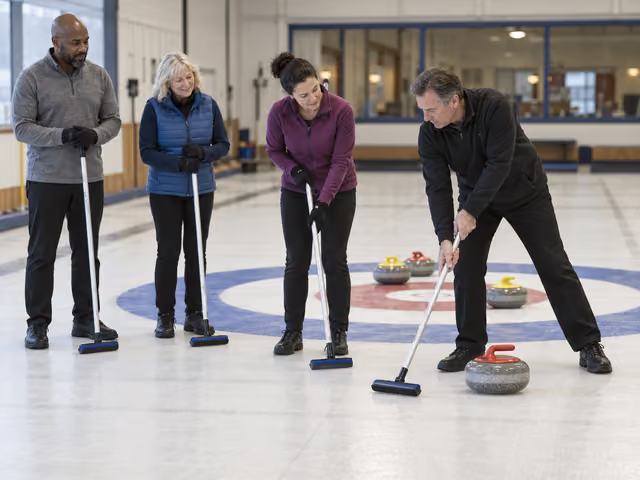
The quick version
Book eight participating friends into an instructed session that allows a two-end game. Bring clean shoes and flexible warm layers; confirm all club equipment. Begin with the instructor's footing, delivery and sweeping lesson. Make two teams of four, each using eight stones. Alternate one delivery at a time until all 16 stones have been played, then agree the score before clearing the ice. Play the second end in the opposite direction. The higher total wins; this beginner plan shares a tied result.
Saved on this device only — clearing your browser's cache or site data removes them (no account backup).
Book a lesson that includes your game
This plan is for eight participating friends, two teams of four, at an indoor curling club. The instructor is additional to those eight. A smaller party may join a club class, but that is a different group arrangement; confirm the club's pairings rather than expecting this game to work with missing players. Ask for instruction followed by two complete ends, the rounds of a curling game. A public class may have its own program, so confirm this format before booking or request a private beginner booking.
Check places, fees, arrival time, cancellations, registration or waivers, instructor availability and the session's finishing time. Tell the club everyone's experience and discuss any participation needs before paying. Ask about delivery-stick instruction if a sliding lunge does not suit someone; availability and suitability need the club's confirmation. This guide does not promise a seated or universally accessible session.
The club must supply a prepared sheet with marked houses, lines and hacks; 16 stones, eight with each handle color; a curling broom for each of the eight players; and suitable grippers, sliders and delivery supports fitted as needed for each beginner. Confirm staff can provide a measuring device and a way to record the score, such as the club scoreboard or paper and a pencil. Bring clean rubber-soled athletic shoes to change into, trousers that allow a lunge, warm removable layers and water for off-ice breaks. Confirm any protective equipment the club requires or recommends and its availability. Ordinary shoes need the instructor's approved grip or slider arrangement; skates and bowling shoes are not substitutes.
The rules reference is The Rules of Curling, 1 September 2026, published by Curling Canada. Its governing-body rules supply the mechanics below. This guide's two-end length and shared match tie are explicit beginner house choices, accepted by the club before play. The club controls its ice, equipment and teaching. Have the instructor explain any local adaptation before the first scored stone; do not assume international competition procedures are the club's lesson program.
Learn your footing before the first stone
Check in and tell the instructor you are beginners. Start off the ice or in the designated teaching area while staff check clothing, shoes and equipment. Follow their progression for stepping onto the ice, moving with grip, using a slider only for delivery, recovering balance and stopping safely. Let staff demonstrate a delivery and supervise your practice before scoring starts. Friends do not improvise a sliding lesson.
The hack is the foothold used to push off; the house is the circular target; its center is the tee. The instructor points out the release-end hog line, the far hog line, the tee line through the house and the back line behind it. Hold the stone by its handle, aim toward the skip's broom and use the small rotation taught by staff. Release before the near hog line. Staff should check that each person can perform their chosen delivery safely; ask for further help or stop if it feels beyond you.
Rehearse sweeping with the instructor, including where to stand and move, how to keep the brush on the ice and how to stay clear of the stone and another sweeper. Use a brief practice to distinguish 'sweep' from 'stop'. Sweeping takes effort; rest rather than losing your footing. Decide where someone can observe or leave the ice and how to tell the host. Ask consent before physical help or photographs.
Alternate stones through two ends
Choose roles and first delivery
Give each team one handle color and a fixed order: lead, second, vice-skip, skip. Each player delivers two stones per end. A team completes its lead's deliveries on that team's first two turns, then its second's, vice's and skip's. The teams alternate throughout; a player never delivers both stones back to back. The skip calls the target from the house; the vice takes that role when the skip delivers. Use the club's agreed coin toss to choose the first-delivering team. The other team has the last stone, called the hammer.
Deliver one stone
The instructor checks the path is clear. The player uses the taught delivery from the correct hack for their handedness, toward the skip's target, and releases the handle before the near hog line. Do not touch the granite after the delivery-end tee line or touch the stone after release. The two teammates who are neither delivering nor calling the target sweep as directed. The opponents wait still at the side in staff-designated positions.
Sweep, then wait for the stop
Sweep in front of your moving stone without touching it. Ahead of the far tee line, teammates may sweep their own moving stones; beyond that line only one player from each team may sweep at a time. Only the opposing skip or vice may sweep an opponent's stone there, once it reaches the tee line. Let staff teach this boundary before anyone attempts it. Wait until every moving stone has stopped before preparing the next delivery.
Keep or remove the stone correctly
A stone must finish completely beyond the far hog line, unless it struck another stone. A stone entirely beyond the back line, or touching a side line or divider, leaves play. A late release also loses the delivered stone. Staff handle removal and any required replacement of disturbed stones; do not reach into a moving shot. An out-of-play stone uses its delivery, so the other team still goes next.
Score only after all 16 deliveries
After each team has delivered eight stones, the two vice-skips agree which color is closest to the tee. Only that team scores: one point for each of its stones in or touching the house that is closer than the nearest opposing stone. Rings do not have different point values. For example, if the two nearest eligible stones are red and the next is yellow, red scores two. If no stone touches the house, neither team scores. Do not clear stones until both teams agree or the instructor measures.
Play back, then finish
Record the end's points and total. Under staff direction, reset for delivery toward the house at the other end of the sheet. Keep the same player order. The team that just scored delivers first, giving the other team hammer; after a blank end, the previous order remains. Complete the second end the same way. Add both ends: the higher total wins. This house plan shares a match tie and does not overrun the booking with extra ends. Return equipment, change shoes, collect belongings and leave the ice when staff direct.
Say: 'We alternate one stone at a time, each of us gets two deliveries, and only the closest team's stones can score after all sixteen.' The instructor still teaches movement and checks the rules; this is a spoken host reminder, not a replacement lesson.
Protect guards and report accidental touches
A guard can protect a stone in the house. The free guard zone lies between the far hog line and tee line, excluding the house. During the first five deliveries of the end, counting both teams, you may not remove an opponent's stone from that zone. If it happens directly or through another collision, remove the delivered stone and let the opponents, with staff, restore the displaced stones. The sixth delivery is the first after that protection expires.
For the same first five deliveries, an opponent's guard touching the center line also has no-tick protection: you may not move it off the center line or outside the guard zone. If it remains in play, the opponents may accept the result or remove the delivered stone and restore all displaced stones. Removing it from play instead invokes the free-guard-zone remedy. Ask the instructor to identify protected stones before planning a contact shot.
If your body or broom touches a moving stone, report it immediately. Before the stone crosses the far hog line, an own-team touch normally removes it; after that line, allow stones to stop and let the opponents and instructor resolve removal and restoration, acceptance of the result, or reasonable placement. An opponent's touch has a different remedy, so describe who touched what and where. Do not secretly put stones back or award a replay. For an accidentally moved stationary stone, keep the location known and ask staff to apply the displacement rule.
If the nearest opposing stones remain indistinguishable after staff's measurement, the end is blank. If the uncertain comparison only affects extra points, count the clearly nearer stones. A blank end is different from a tied match. Official play can continue with extra ends for a tied match; this booked beginner plan instead ends with a shared tie after its two ends.
Give beginners room to learn
Ask each person what they want to try, and let the instructor adjust teaching to the group. Start by aiming a draw toward the house rather than demanding a hard takeout. Keep the main player order fixed for the short game; compare comfort and control afterward, not friends' athletic ability. If someone wants to stop, stop the group game and ask staff for an appropriate lesson activity rather than silently redistributing their stones.
Keep conversation clear enough for sweeping calls and quiet during an opponent's delivery. Do not cheer a missed shot. Wait clear of other sheets, avoid stepping over stones and keep loose equipment out of the ice traffic. Do not leave hands or knees resting on the ice. Carry drinks and conversations to the designated off-ice space. Fatigue, a fall or damaged equipment means pausing and asking staff for help.
Have the instructor settle close measurements, release violations, guard protection and accidental touches. Read the actual scoreboard with staff; some club scoreboards show cumulative points with end-number markers, rather than a point total under each end. For an interruption or early stop, let staff close the session and report only completed ends; do not claim a two-end winner from an unfinished game. No price, session length or availability is universal.
Already know the game?
Ideas & Twists
Choose a variation together before you start.
Learn to curl · See main rules
House suggestion · instructor-approvedDraw-only coaching game
Before the first end, ask staff to replace intentional takeouts with draws toward the house. Keep eight players, two stones per player, alternating teams, two ends, ordinary scoring and the shared match tie. No shot may deliberately strike another stone; an accidental collision stands unless it violates guard protection, no-tick or a touch rule, which the instructor resolves normally. A badly aimed but legal shot is not replayed. This changes shot choice, not ring values or the score.
Learn to curl · See main rules
House suggestion · shorter endsOne stone each
With the instructor's approval before starting, reduce each player's allocation to one stone per end. Each team plays four stones in fixed lead-second-vice-skip order, alternating teams, so score after eight total deliveries. Use two ends, the usual house-distance scoring, hammer transfer and shared match tie. Count the first five deliveries across both teams for guard and no-tick protection; that protection still ends at the sixth delivery, even in this shorter end. Staff manage the eight stones being used and park the others safely. This is a beginner house game, not mixed doubles.
Learn to curl · See main rules
House suggestion · unscored practiceCoached draw rotation
Replace the scored game with supervised practice for the same eight people. The instructor gives each person two single-stone attempts toward a target they select in the house; follow a fixed roster once for the first attempt and once for the second. Use one active stone at a time, with two roster-selected teammates sweeping and everyone else waiting in the designated safe area. Staff clear or reset the stone after it stops before the next attempt. Ask what adjustment to try next rather than awarding points. Finish after all sixteen attempts, or earlier if staff end the session, then return equipment. There is no score, winner, hammer or guard competition in this practice rotation.
About this guide
The opened 1 September 2026 Curling Canada rulebook supplies four-player teams, delivery, guard/no-tick protection, sweeping, touch remedies and scoring. USA Curling supports staff-led learning followed by a short game; its undated page is not a specific competition edition. Eight participating friends, a confirmed indoor booking, two ends, shared match ties and all three variations are this guide's hosting choices. The club must accept these choices beforehand; no current class, price, rental package or accommodation is guaranteed. Floor curling, mixed doubles, wheelchair competition and league scheduling have separate requirements.
Ready for something different?
Find another game →