

The quick version
Deal four clue and four means cards per player, then roles. The scientist discards their objects. With other eyes closed, the culprit shows the scientist one of each from their own display. The scientist marks six scene tiles, then replaces one in each of two later rounds. Everyone gets one formal solution attempt. An exact pair catches the culprit; surviving the third presentation round wins for the culprit.
Saved on this device only — clearing your browser's cache or site data removes them (no account backup).
Prepare the visible evidence
Use 4–10 people, one Forensic Scientist role, one Murderer role and ordinary Investigator roles for everyone else. Leave Accomplice, Witness and Event tiles in the box. Screen the object cards before dealing and omit unwanted subjects. This remains a fictional murder mystery; do not turn its descriptions into acted violence.
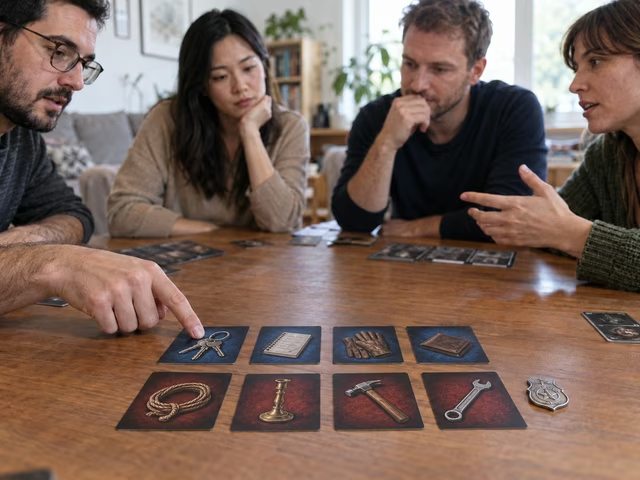
Deal four Clue and four Means cards face up per player, readable from across the table, then secretly deal roles. The scientist reveals their role and removes their own eight object cards. Give every other player one badge. Everyone except the scientist closes their eyes; the culprit opens theirs, silently indicates one of their own Clue cards and one of their own Means cards, receives acknowledgment and closes their eyes. Everyone opens their eyes.
Read the scientist’s limited vocabulary
The scientist lays out Cause of Death, one selected Location of Crime tile and four random ordinary Scene tiles. Place one marker on one printed option of each tile, in any order. Once placed, it cannot move. The others may discuss from the first placement onward. The scientist cannot give extra verbal, gestural or facial hints.
After all six markers, allow a brief discussion, then go clockwise from the scientist’s left. Each non-scientist gives a presentation of about 30 seconds without interruptions except a formal solution attempt. In round two, the scientist draws a new Scene tile, replaces one ordinary tile and chooses its new marked option. Cause of Death and Location stay. Discuss and present again. Repeat once for round three.
At any point before the final presentation ends, a badge holder may announce a formal attempt and name exactly one Clue and one Means card belonging to the same other player. Both must be the selected solution. A correct pair immediately wins for scientist and investigators. Otherwise the scientist says only no and takes that badge. The player stays in discussion but cannot guess again.
If nobody finds the exact pair before the third presentation round finishes, the culprit wins, even if everybody suspects the right person. Reveal the solution and discuss which tile choices helped. One case completes the game.
Give every theory a hearing
The objects’ printed words matter more than decorative details in the pictures. Ask speakers to explain a connection to the marked clues rather than accusing someone for being nervous. Before the final circuit, remind everyone that unused badges expire when that circuit ends.
Already know the game?
Ideas & Twists
Choose a variation together before you start.
Deception: Murder in Hong Kong · See main rules
House suggestionThree objects of each kind
Deal three Clue and three Means cards instead of four to every non-scientist. The culprit still selects one of each. All three clue rounds, badges and outcomes stay the same; the smaller search space helps investigators.
Deception: Murder in Hong Kong · See main rules
House suggestionFive objects of each kind
Deal five of each kind and keep the ordinary round structure. This gives the culprit more neighboring possibilities. Use it only after the group can read and discuss every display without crowding.
Deception: Murder in Hong Kong · See main rules
House suggestionWritten first impressions
After all six initial markers, give everyone except the scientist one minute to write a suspected pair before discussion. Notes have no rules effect and do not spend a badge. Reveal them after the case to see which clues changed people’s minds.
Deception: Murder in Hong Kong · See main rules
House suggestionOne-minute presentations
Give every non-scientist up to one minute per presentation instead of about 30 seconds. A speaker may finish early. Keep the scientist silent and retain the normal immediate ending after the final speaker.
Deception: Murder in Hong Kong · See main rules
House suggestionPublic clue history
When a Scene tile is replaced, move it and its marker to a clearly separated history area instead of hiding it. It is no longer active, but players may consult the old hint. Add a spare marker for each replacement or record the old option on paper.
About this guide
Base roles and three-round investigation follow the published basic rules. The smaller advertised player range avoids optional roles. All five twists are house changes. The official PDF opened but exposed no machine-readable text, so the complete rules transcription was read.
Ready for something different?
Find another game →