

The quick version
Give a clue, mix your picture with the others' decoys, then reveal the numbered pictures. Everyone except the storyteller secretly votes, never for their own card. Some correct guesses give the storyteller and correct voters 3 each; all or none correct gives each voter 2 and the storyteller 0. Add 1 to a decoy's owner per vote it attracts. Finish the full scoring turn at 30 or more; highest total wins and ties share victory.
Saved on this device only — clearing your browser's cache or site data removes them (no account backup).
Check the box and deal the pictures
Use the 2021 Refresh base game, not an expansion deck alone. Its board has a scoring track, eight numbered card positions and a printed scoring aid. Check that every player has a matching-color rabbit and voting dial; leave unused colors in the box. Set the board on a table everyone can see, with room around it for the large pictures, a draw pile and a separate discard pile. Put each rabbit on the starting space.
For 4–8 players, shuffle all 84 cards and deal six face down to each person. Keep hands private and put the remainder face down as the draw pile. The first person ready with a clue for one of their cards becomes the first storyteller. A word or short phrase is enough; a long story or performance is optional.
Exactly three players: deal seven cards each instead. On every turn the storyteller submits one picture and each other player submits two, making five pictures to vote on. The two voters still cast only one vote apiece and may not vote for either of their own pictures. All other main rules below apply.
Give a clue, choose decoys and vote
The storyteller starts
Choose one picture from your private hand and say a clue inspired by it, keeping the picture hidden. Clues can be a word, a phrase, a quotation, a sound, singing or mime. Try an association rather than listing everything in the picture: 'Almost home' might suggest a journey or longing. This is an invented clue example, not a prescribed answer. Give your selected card face down to the collection.
Everyone supplies a decoy
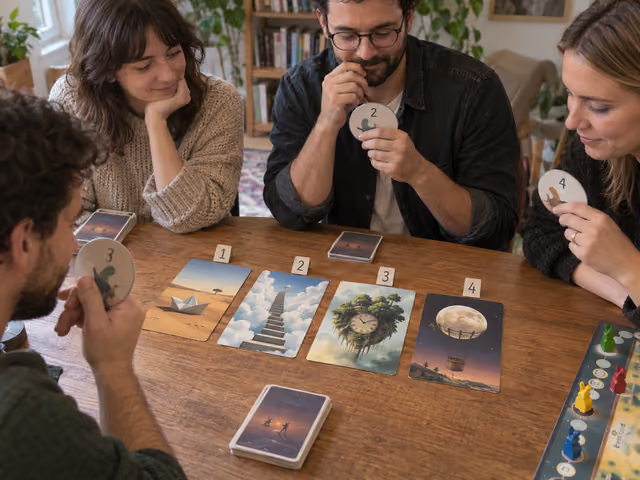
Each other player chooses the picture in their hand that best fits the same clue and hands it face down to the storyteller. With exactly three players, each of the two voters submits two pictures. The storyteller mixes these with their own card without showing ownership, then lays them face up beside consecutive board numbers: 1 through the number of players, or 1–5 for three players. Keep every number visible and remember which picture was yours.
Commit the votes together
Every player except the storyteller secretly sets their dial to the number of the picture they believe is the storyteller's. Choose exactly one picture; your own submission is ineligible, including both of your decoys at three players. Put the dial face down when ready. Once all voters are ready, reveal every dial together and place it beside the selected picture. The storyteller then identifies their card.
Score in two passes
First count correct votes. If at least one voter finds the storyteller's picture but at least one voter does not, the storyteller earns 3 points and each correct voter earns 3. Incorrect voters earn zero in this first pass. If everyone finds it, or nobody finds it, the storyteller earns zero and every other player earns 2 instead.
Then count decoy votes. Every non-storyteller adds 1 point for each vote on their own picture. This bonus also applies when nobody found the storyteller's picture. At three players, count votes on either of your two pictures; only the other voter can vote for them. The storyteller never earns decoy bonuses. There is no three-point decoy-bonus cap in this Refresh rulebook; do not import Odyssey scoring.
For a four-player example, Ana tells the clue. Ben votes for Ana, Cara votes for Ben, and Dev votes for Cara. Ana earns 3. Ben earns 3 for guessing plus 1 for Cara's vote, totaling 4. Cara earns 1 for Dev's vote. Dev earns zero. If instead all three voters found Ana, Ana would earn zero and each voter 2, with no decoy votes to add.
If nobody found Ana and Ben received two decoy votes while Cara received one, Ana would earn zero; Ben would earn 4, Cara 3 and Dev 2. Move every rabbit by its entire turn total before deciding whether the game is over.
Refill, rotate and finish
After a turn, put all displayed pictures into the face-up discard pile. For 4–8 players, each person draws one new card to restore a six-card hand. With three players, the storyteller draws one and each other player draws two, restoring seven each. If the draw pile cannot supply everyone, shuffle its remaining cards together with the discard pile to make a new draw pile, then complete the refill. Running out of draw cards does not end this edition.
The player to the storyteller's left tells the next clue. At the end of any fully scored turn, if one or more players have reached or passed 30, stop. Compare all totals, including bonuses: the highest total wins. If that highest total is tied, those players share the victory. Do not stop halfway through awards, require exactly 30, finish an extra circuit or add a tie-breaker in the main format.
Keep the mystery fair and the explanation easy
Before the real deal, you can lay out a few pictures and demonstrate an obvious clue, a less literal clue and a pretend vote. Explain the two scoring passes aloud, then return every demonstration card and reshuffle all 84. This unscored teaching demonstration is a hosting suggestion. People can use a plain spoken phrase; nobody needs to sing, act or disclose a personal story.
Suggest clues that others have a chance to understand. Private references can be legal but can leave newcomers out; this is a group-fit discussion, not a reason to cancel someone's points afterward. A decoy that seems more convincing than the storyteller's card is part of the game. There is no objective panel judging how well a picture fits a clue: the votes decide.
Keep picture numbers fixed until scoring is agreed. Let players repeat the original clue exactly; as a house hosting agreement, add no new hints or claims about card ownership before everyone has voted. Discuss interpretations after the reveal. Confirm each card's owner and every bonus before discarding. If a rabbit crosses 30, keep the complete total clear, using a written note if helpful, until all awards have been compared.
House remedy for mistakes: if a player notices an invalid dial number or self-vote before the group reveals, let them correct it privately. If it is discovered after votes or card ownership have been revealed, void that turn: leave scores unchanged, return submitted cards to their owners' hands and have the same storyteller choose a new card and clue for a replacement turn. Use this same remedy for an accidental early reveal that spoils the mystery. This replay procedure is a suggested friendly-game agreement, not a printed official penalty. Do not invent point deductions.
Already know the game?
Ideas & Twists
Choose a variation together before you start.
Dixit · See main rules
Suggested house variationOne-word clues
Restrict each storyteller's clue to one spoken word. Remove phrases, singing, sounds and mime for this game; offer no second clue. Keep the pictures, voting, scoring and 30-point finish unchanged. This constraint favors compact associations, but can make a hesitant group feel more restricted. Agree before dealing.
Dixit · See main rules
Suggested house variation · add paper and a penTwo turns as storyteller each
Replace the 30-point finish with two complete clockwise circuits: exactly twice as many turns as players. Mark the first storyteller so you know where each circuit ends, and record running totals on paper because they may exceed the printed track. Continue even if someone passes 30. Keep normal turn scoring, hand refills and the three-player procedure. After the last turn, highest total wins; tied leaders share victory. This gives everyone two clue turns, not a guaranteed session length.
About this guide
Main mechanics follow the English 2021 Refresh rulebook currently linked by Libellud, reviewed October 2, 2026. Its three-player procedure is official. The teaching demo, no-extra-hints agreement, mistake replay and all three twists are explicitly house suggestions. Community discussions inform hosting advice, not rules or popularity claims. This guide does not use the older deck-exhaustion finish, Odyssey voting or Disney components.
Ready for something different?
Find another game →