

The quick version
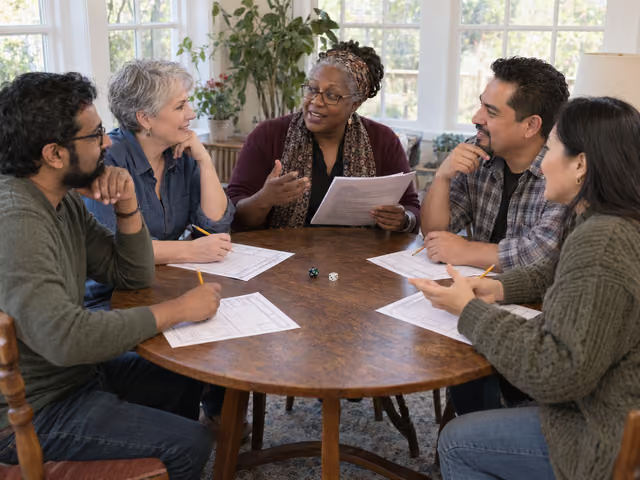
Choose one Dungeon Master and four players. Give each player a different ready-made character from the printed packet. The DM presents the opening, asks what the heroes do and calls for a d20 plus a listed modifier when needed. In combat, players act clockwise from the DM's left, then surviving enemies act. Continue through the packet's encounters and closing conversation. This is a cooperative story, with no individual winner or score.
Saved on this device only — clearing your browser's cache or site data removes them (no account backup).
Print the adventure and prepare the table
This format is five people: one Dungeon Master, or DM, and four players, each controlling one hero. Use Wizards of the Coast's free 2023 Peril in Pinebrook PDF and its own simplified fifth-edition rules. The official article and direct PDF are linked under Sources. Download it before the gathering and print the packet; it is a large file. Give the four different character sheets, PDF pages 17–20, to the players. Keep Appendix A, page 14, ready to hand over when instructed. Keep the player reference, pages 21–22, within reach. The DM retains the rules and adventure pages. Extra reference copies are optional.
The DM reads the complete adventure ahead of time, especially the rule explanation, scene transitions, two combat sections and conclusion. Mark the encounter pages so you can find their instructions quickly. Keep the story, hidden answers and enemy statistics on the DM's side of the table. Players can read their sheets and reference; they should leave the adventure pages to the DM.
Put out pencils and note paper. One twenty-sided die, called a d20, and one six-sided die, called a d6, can be shared by everyone. For a two-die roll, roll the shared die twice and record both results. Personal dice sets are optional. Use a table with space for all four sheets, the DM's packet and a clear place to roll. Describe locations in words; a battle map, miniatures and a DM screen are optional. Once the packet is printed, play needs no phone or digital device.
Tell everyone this is a cooperative introductory adventure using the packet's rules, rather than character creation from a full rulebook. In particular, it uses clockwise combat and recovery after unconsciousness. Before beginning, agree when to take breaks and how to signal a pause if a topic makes someone uncomfortable. Keep descriptions within the group's agreed comfort level; the imaginary dangers never require acting out physical contact.
Choose a hero and find the useful numbers
Let each player choose one of the four different sheets. Write the player's name, keep or change the hero's name, and pick a few personality details. A player can describe what their hero does in ordinary speech; performing a voice is optional. Introduce the heroes to one another before the opening scene.
Find Armor Class, or AC, which is the target for attacks against that hero, and hit points, or HP, which decrease when the hero takes damage. Write current HP separately so the starting number remains visible. Find the attack choices, skills, equipment and special ability. The equipment on the sheet belongs to the imaginary hero; guests do not bring real weapons, ropes or armor.
Read each special ability together and track its uses in pencil. Shalefire can heal themself for 6 HP once in the adventure, during their combat turn or after combat. Noorah uses 2d6 plus the attack's damage modifier on a hit in the first round of each fight. Gallantine can replace an attack with Magic Missile twice in the adventure: divide three automatic-hit missiles among visible creatures, with 3 damage from each missile. Evandon can use Cure Wounds twice in the adventure, replacing an attack or after combat, to restore 7 HP to themself or another creature. Healing never raises HP above the sheet's starting maximum.
Keep the printed sheets beside you for all attack choices, equipment and ability wording. Gallantine's Fire Bolt, for example, needs an attack roll but deals a fixed 7 damage on a hit; that damage does not need a d6 roll. These ready-made characters need no additional spell selection or full-rulebook character building.
Describe a choice, then roll if needed
The DM describes the current situation from the packet and asks what the heroes want to do. Players ask questions, discuss a plan and state actions: for example, 'I listen carefully before we move.' The DM gives information the heroes would plainly know. An easy action succeeds directly; an impossible action needs a different idea. For a possible action with an uncertain result, the DM chooses the relevant skill and uses the encounter's target number.
For a skill check, roll the d20 and add the modifier beside that skill. The target is the Difficulty Class, or DC. A total equal to or above the DC succeeds; a lower total fails. If the skill is not on that sheet, roll the d20 with no added skill modifier. The DM can set a target for an unexpected action: the packet describes DC 10 as easy and DC 15 as challenging. Explain what a failure will mean before an improvised roll.
For example, in a practice check with DC 10 and a skill modifier of +3, a die result of 7 succeeds because the total is 10. This is only a teaching example, not a replacement for any encounter instruction.
If the DM grants advantage, roll the d20 twice, use the higher result and add the modifier once. With disadvantage, use the lower result instead. If both apply, roll normally. Tell the table why the circumstances help or hinder the action. Follow the packet's consequences for the result, then describe what changes and let the heroes decide their next move. A failed check should lead to its stated consequence and continued play, rather than repeated identical rolls until someone succeeds.
Run the scenes and take combat turns
Begin with the packet's opening
The DM uses Helping the Characters and the Adventure Introduction on PDF page 5, then presents the opening scene on page 6. Read its boxed passages aloud or put them in your own words. Present only the information available to the heroes. Ask each player what their hero says or does; let questions and choices start the story rather than giving a lecture about every possible rule.
Follow each encounter's instructions
Use the adventure's four numbered encounters, PDF pages 7–12, in sequence. Each supplies its situation, checks, consequences and transition. Hand over Appendix A when the text tells you to. Keep any newly found items and current HP on the sheets. Use the specific puzzle, hazard, healing and alternative-route instructions in the PDF; they are not replaced by this hosting guide. Once a scene's challenge is resolved, describe the transition and move to the next.
Start combat with the players
In both written fights, the player immediately to the DM's left acts first, followed clockwise by the other players. There is no initiative roll or tied initiative to settle. Ask each player for an action. A melee attack needs the hero next to the target; a ranged attack can be made from farther away. Describe positions clearly rather than adding a grid, measured movement or extra full-rulebook actions. Use a sheet's special ability according to its printed timing and limits.
Resolve one attack before the next
Choose an attack from the hero's sheet, roll the d20 and add its to-hit modifier. A total equal to or above the enemy's AC hits. On a hit, use that attack's printed damage: roll the stated d6 amount and add its damage modifier, or apply the fixed number if the sheet gives one. A miss deals no attack damage. The DM subtracts damage from that enemy's current HP. Remove defeated enemies at zero HP. Do not automatically add critical-hit, death-save or other full-rulebook procedures that this packet does not supply.
Give surviving enemies their turns
After all four players have acted, each undefeated enemy acts using that encounter's attack and targeting instructions. The DM rolls d20 plus the enemy's to-hit modifier against the targeted hero's AC, then applies damage on a hit. The player subtracts it from current HP. Finish all surviving enemy turns, then begin another clockwise player round. Keep separate HP notes for each enemy so an already defeated enemy never attacks.
Recover and move forward
A hero reduced to zero HP becomes unconscious and cannot act until healed. The sheet abilities and encounter text explain healing; HP cannot exceed the hero's starting maximum. At the encounter's end, an unconscious hero automatically recovers 1 HP. This packet does not use death saves. After a fight, use its follow-up instructions and offered searches before moving on. If the group is struggling, use the packet's supportive DM tips; pause and agree on a house resolution if a situation still has no workable continuation.
Play the conclusion and finish together
After the final encounter, use the Conclusion on PDF page 13. Give players time to explain their heroes' choices and respond to the closing conversation. Record any fictional rewards the conclusion gives, then narrate the return or other ending provided there. Finish this one-shot at that endpoint; a possible future quest is a separate decision. There are no victory points, ranked heroes or ties. Ask each player for one moment they enjoyed and whether they want to try another adventure.
For four heroes, the first combat uses five living icicles; the last uses three egg snatchers. The final encounter's opening descriptive passage mentions two creatures, while its rules specify three. Follow the rules' three-enemy count and describe three when presenting that scene.
Keep everyone involved and settle questions
The DM guides the story rather than competing against the heroes. During discussion, invite someone who has not spoken to offer a choice before settling the party's plan. In combat, advice is welcome, but the player whose turn it is decides their hero's action. A player can say 'My hero asks about the noise' instead of acting out a speech.
Keep the packet open to the current scene. If a rule question arises, check that scene, the rules page and the character sheet. Experienced players should use this simplified version too: spells, damage, turn order and recovery can differ from other D&D games. For an action the text does not cover, the DM explains a reasonable ruling and gets agreement before changing a rule. This guide suggests keeping that ruling consistent for the rest of the session, then discussing alternatives afterward.
A total that exactly meets AC or DC succeeds. Outside combat, simultaneous suggestions are a conversation, not an initiative contest: clarify the party's plan, then resolve any individual checks the scene requests. Treasure is fictional shared story material, not a competitive score. Discuss who carries an item and record the choice; use the packet for what it does.
If every hero is unconscious and the scene cannot continue, pause. This guide suggests a house fallback: agree that help arrives and ends the encounter, restore unconscious heroes to 1 HP as usual, and narrate a setback before proceeding. This changes the encounter's outcome and is not a printed automatic rescue. If the group instead stops early, describe what remains unresolved and preserve the sheets for a later finish; do not call an unfinished adventure completed.
Give a reluctant player a simple choice, a question or a quiet moment to think. Offer breaks between scenes. The packet contains threats and combat, so agree on how vivid those descriptions should be. Talking softly and rolling onto a folded cloth can keep the table quiet. Seated play still involves listening, reading and shared decisions; arrange those details with the actual group.
Already know the game?
Ideas & Twists
Choose a variation together before you start.
Dungeons & Dragons one-shot · See main rules
House participation suggestionA different voice each scene
Before starting, agree that each new noncombat scene begins with a different player offering the party's first idea, rotating clockwise. That person opens the discussion; everyone still chooses their own hero's actions, asks questions and rolls any required checks. Passing is allowed, in which case the next player opens. Rotate only after a scene ends, and keep the packet's ordinary clockwise turns during combat. Rules, gear, headcount and the adventure ending stay the same.
Dungeons & Dragons one-shot · See main rules
Packet-supported shorter sittingsPause at a scene boundary
Play the same adventure over more than one gathering. Stop after a completed scene, before presenting the next, and note the next page, current HP, carried items and remaining special-ability uses. Keep the same four heroes and DM. When you resume, recap the last decision, restore nothing merely because time passed, and apply only recovery explicitly earned in the packet. Continue from the saved scene to the same conclusion; a pause is not an adventure finish or a new set of ability uses.
Dungeons & Dragons one-shot · See main rules
Packet-supported approach; improvised details are house rulingsMake room for a peaceful solution
Agree before play that the DM will offer a chance to attempt conversation, distraction or avoidance before a written fight begins. Players explain a plausible plan; the DM states whether it is easy, impossible or requires a check, and announces the check and consequences before any roll. Use scene information rather than inventing a universal persuasion target. If the plan resolves the danger, move to that scene's follow-up without combat damage or combat rounds; otherwise run the written fight. The packet encourages alternatives, but any new NPC response, check or encounter outcome is a table-agreed house ruling. Keep the same characters, supplies, scene sequence and conclusion.
About this guide
Use the official 2023 Peril in Pinebrook simplified rules and its four ready-made characters. This guide's exact main group is four players plus one DM; the packet describes other counts, which are outside this format. The required PDF supplies the copyrighted story, encounters, handout, sheets and ability details; they are linked rather than reproduced here. Conversation rotation and the all-unconscious fallback are house suggestions. Split sittings and nonviolent approaches are supported by the packet, with improvised encounter changes agreed at the table. No 2024 full-rules or Adventurers League conversion is included.
Ready for something different?
Find another game →