

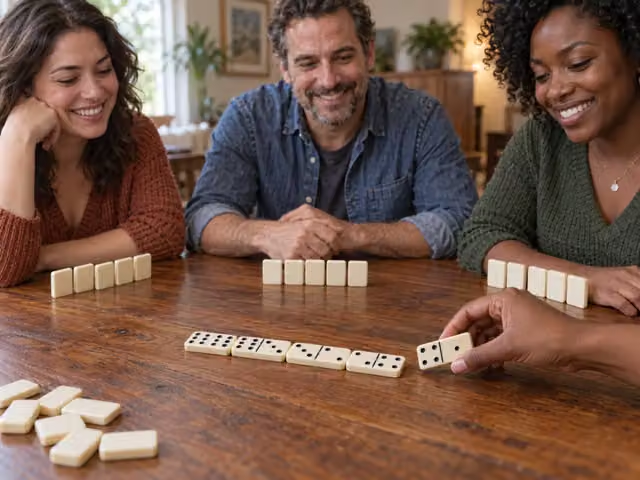
The quick version
Use a 28-tile double-six set. Match one end on each turn, drawing until you can play. The first empty hand wins; if everyone is blocked, the lowest remaining pip total wins.
Saved on this device only — clearing your browser's cache or site data removes them (no account backup).
Draw tiles and know the result
Check that your set contains every pair from blank-blank through six-six, once each: 28 tiles. Shuffle face down. With two players, take seven tiles each; with three, take five; with four, take four. Keep them hidden, standing on edge or behind a screen. The leftover face-down tiles form the boneyard.
The hand stops immediately when someone plays their last tile. If the boneyard is empty and everyone passes consecutively, reveal your hands and count every remaining dot; blanks count zero. Lowest total wins. This guide shares a tied blocked result. Play another hand by mixing all 28 tiles face down and drawing afresh.
Build a chain with two open ends
Choose the opening double
The holder of the highest double starts by playing it: six-six, otherwise five-five, and so on down to blank-blank. Show only the double you need to establish the opener. If nobody holds any double, reshuffle and draw again. Play continues clockwise.
Match one exposed number
Lay one tile with its matching half against either open end. If the chain shows two at one end and five at the other, a two-four can join the two; its four becomes that end's new exposed number. The opposite five stays open. You may bend the chain to fit the table.
Treat doubles as ordinary ends
Lay a double sideways for visibility, but it does not create extra branches. Continue outward through its middle with the same matching number. There are always just two places to extend this version, including after the starting double.
Draw only when blocked
If you hold a matching tile, play one. Otherwise draw one hidden tile at a time until you obtain a playable one, then play it and end your turn. Retain the unusable tiles. This selected format empties the boneyard completely; no tiles are reserved.
Pass when drawing is impossible
With an empty boneyard and no match, say pass. Count consecutive passes; any tile played resets that count to zero. A full table of consecutive passes ends the hand. Count pips across both halves of every remaining tile, not the number of tiles.
Make the layout easy to read
Leave room at both ends before starting. Say the two available numbers after each turn while people learn. Keep the boneyard separate from tiles in play, and avoid turning unused tiles face up while drawing.
After a blocked finish, let everyone compare their remaining tiles before mixing them. The useful discussion is which number ran out and which placement closed the chain. Different domino traditions use different opening deals and reserve tiles, so explain this version before anyone draws.
Already know the game?
Ideas & Twists
Choose a variation together before you start.
Draw dominoes · See main rules
Suggested house variationBlock dominoes
Keep this guide's opening hand sizes and two-end layout, but leave all leftover tiles unused. A player who cannot match passes instead of drawing. Emptying your hand wins; a full circuit of consecutive passes ends a blocked hand, won by lowest remaining pips, with tied lows shared. Hidden unused tiles make counting the missing numbers less certain.
Draw dominoes · See main rules
Suggested house variationPip race to 50
Play repeated draw hands. A player going out earns the sum of everyone else's remaining pips. For a uniquely lowest blocked hand, award the sum of the differences between each opponent's pip total and the winner's total; tied lows earn nobody points. For example, totals 4, 9, and 12 award the player with 4 a total of 13. First to at least 50 wins; reset tiles, not match scores, between hands.
About this guide
This selects one two-to-four-player individual draw format. Opening deals follow Masters Traditional Games; draw-through play is also described by Cardinal. Shared blocked ties and the optional 50-point calculation are stated house choices, rather than universal domino rules.
Ready for something different?
Find another game →