

The quick version
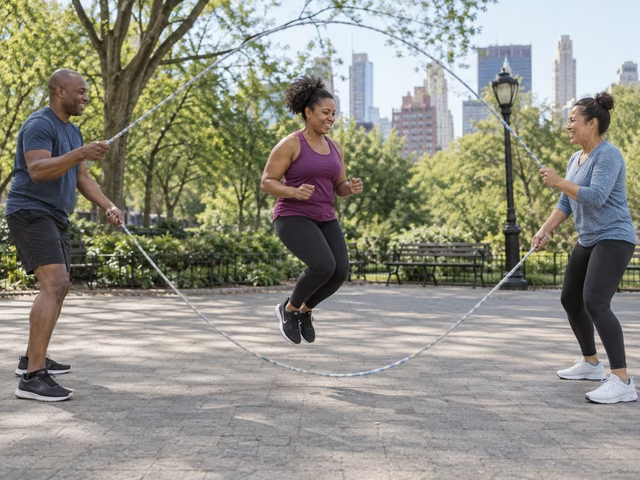
Two turners face each other, holding one end of each rope in each hand, and turn the ropes inward in alternating circles. A jumper enters on the demonstrated opening and makes small jumps as each rope passes. Stop immediately on a catch. Each willing jumper gets three attempts; record the longest clean run and one successful entry-and-exit for the group.
Saved on this device only — clearing your browser's cache or site data removes them (no account backup).
Start with turners who can hold the rhythm
Use a pair of equal Double Dutch ropes sized for the space and group, commonly around 14–16 feet for one jumper. Follow the rope maker or instructor's sizing advice. Choose a dry, level surface, with clear space around the full rope arcs and a waiting line well outside them. Avoid concrete edges, branches, loose clothing and jewelry that could catch.
Two experienced turners stand opposite one another with relaxed knees. Each holds the end of one rope in each hand. They turn inward circles alternately, so the ropes touch the ground one after the other, not together. Have the instructor demonstrate and correct the rhythm before anyone enters. People who prefer turning or counting can keep those roles.
Enter a shared rhythm
Watch a demonstration
The experienced jumper demonstrates where to stand near a turner's shoulder, how to follow the opening rope toward the center and how to exit beyond the opposite turning arc. Watch several full turns first. The instructor chooses the entry side and gives the cue; do not run blindly into two moving ropes.
Make a first attempt
Begin with the instructor's agreed entry. Use small, relaxed jumps in the center, lifting both feet just enough to clear each approaching rope. Turners keep a steady rhythm and adjust together rather than tugging the jumper through a mistake. Count each clean rope passage aloud.
Stop on any catch
If a rope catches a foot or anybody loses balance, both turners stop and lower the ropes immediately. Untangle at rest, then restart. Do not pull a trapped rope or keep turning around someone on the ground. A catch ends that attempt.
Exit or reset
A jumper may choose an exit as demonstrated or ask for the ropes to stop. Record the clean count and let the next jumper try. A planned stop is welcome but does not count as a moving-rope exit. Rotate through the willing jumpers three times, giving rest between attempts.
Keep a shared achievement
After three attempts per willing jumper, record the group's longest clean run and how many people managed an entry and moving-rope exit. These are shared results, not a ranking of people. Stop earlier if the turners tire or the surface becomes unsafe. This session includes instruction and rests; rope counts do not predict its duration.
Treat turning as part of the play
Beginners can learn the hand motion with empty ropes under guidance before taking a live turning role. Keep an experienced person in charge of first entries and any variation. Adult groups such as the 40+ Double Dutch Club and Double Dutch Aerobics demonstrate the activity's social appeal; their membership rules and services are specific to those groups, not requirements for your own gathering.
Already know the game?
Ideas & Twists
Choose a variation together before you start.
Double Dutch · See main rules
Suggested house variationEight-and-exit relay
Each jumper aims for eight clean rope passages, then the demonstrated exit. Stop and reset before the next jumper enters. Score one shared relay point for every completed entry-eight-exit; a catch scores zero for that attempt. Everyone gets three attempts. The group succeeds when each willing jumper has contributed at least one point.
Double Dutch · See main rules
Suggested house variationFootwork call
Under the instructor's supervision, a confident jumper chooses two simple patterns, such as four ordinary jumps followed by four jogging steps. Repeat that eight-count sequence once. Score one completed sequence, not speed. Keep three attempts each; a caught rope or wrong sequence ends the attempt. No acrobatics, crouching tricks or blind entries.
Double Dutch · See main rules
Suggested house variationMusic phrase
Use a speaker and a steady, comfortable song approved by the turners. Agree an eight-count musical phrase. A jumper enters on the instructor's cue and stays through two phrases, then exits. Score completed two-phrase runs across three attempts each. Turners maintain a manageable rhythm; change the song instead of rushing to keep up.
Double Dutch · See main rules
Suggested house variationTurner swap set
Once an instructor has taught the required turning skill, form two experienced or instructor-approved turning pairs. Each willing jumper gets one attempt with each pair. Compare the two shared totals of clean rope passages, with no individual winner. Stop completely to swap turners. This makes consistent turning, rather than only jumping endurance, part of the challenge.
Double Dutch · See main rules
Suggested house variationPaired rhythm
Only after the instructor approves the space, rope length and both jumpers' readiness, two confident jumpers start inside stationary ropes side by side. Turners begin slowly on a shared count. Aim for ten synchronized clean passages, then stop. Each pair gets three attempts; count completed tens. No simultaneous running entry is needed, and either jumper's stop call ends the attempt.
About this guide
Adult community pages establish participation routes. The contest page supports the two-turner, one-jumper structure; this guide is a coached recreational format, not competition scoring. All attempt limits and variations are editorial suggestions subject to the instructor's judgment.
Ready for something different?
Find another game →