

The quick version
Choose one host and settle the volume and stop signal. Practice a gentle shared pulse. Then go around the circle: each willing person plays a four-beat call alone, and the group echoes it. Repeat that exchange once, then move on; passing is welcome. End with eight groups of four beats together and a counted stop. There are no scores or winners.
Saved on this device only — clearing your browser's cache or site data removes them (no account backup).
Bring instruments and make space
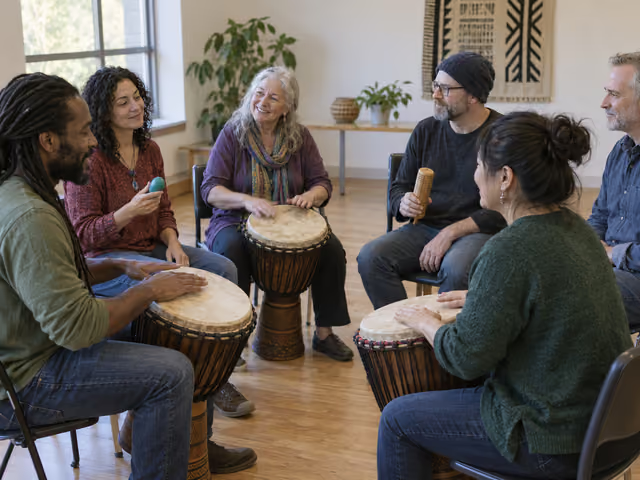
This is a suggested recreational format for 4–12 adults, including one host. It uses real percussion instruments and simple improvised rhythms, rather than a purchased game edition. Choose a host who can keep a steady beat and explain the cues. The host participates and keeps track of the round.
Bring at least one hand drum for the host and a hand drum or shaker for each person who wants to play. You can borrow instruments, but get their owners' permission and learn how each should be played and supported. A listener does not need an instrument; do not make someone wait for a turn on the group's only drum. Use hands on hand drums, and any stand or support specified for that instrument. Remove jewelry that could strike the drumhead. Have the host demonstrate gentle playing before handing instruments around.
Choose a room with enough space for the selected group to sit in a circle, or a dry, sheltered outdoor spot where percussion is welcome. Check permission to use the space and agree when the session will end. Leave a clear entrance and room for instruments without crowding knees. Everyone should be able to see the host and each other. Use stable seats; arrange a reachable supported drum or light shaker for anyone who prefers it. Ask what position and role feels comfortable, and let people rest or step out.
Agree to begin softly, hear other players, and lower the sound whenever anyone asks. Drums can become loud even outdoors. Try the combined sound before starting; if it is uncomfortable or bothers others, reduce it or pause and change the space or instruments. Explain that listening, playing one gentle beat at a time, and passing a leading turn are all welcome. Ask permission before photographing or recording anyone.
Practice the signals before the music
Start together
The host counts 'one, two, three, four' at a comfortable pace while showing the beats with one hand. Begin playing on the next 'one'. Keep that same pace; speed is not the challenge.
Separate call from response
For a call, the host points to the caller and says 'your call'; everyone else stays silent. After the caller's four beats, the host sweeps a hand toward the circle and says 'echo'; everyone except the caller copies those four beats. The caller listens. These cues apply to the host's demonstration too.
Lower the sound
A palm moving downward means play more softly while keeping the same beat. Anyone can say 'softer, please'. This changes volume, not tempo. For a spoken explanation, use the stop signal first.
Stop clearly
The host holds both open palms up and says 'stop'; everyone stops immediately. Anyone may also say 'stop' for discomfort or a problem. Practice starting, lowering the sound, and stopping once before the warm-up. If someone cannot see a cue, agree a spoken cue they can follow.
Find the pulse, then trade short calls
Begin with one simple beat
The host counts everyone in, then taps one gentle sound on each beat while counting groups of 'one, two, three, four'. Other players join with the same pulse on their drums or shakers. Play four groups of four beats, then stop using the practiced signal. A person may listen first and join when ready. If the pace feels rushed, restart slower.
Show one call and echo
With the circle silent, the host demonstrates a four-beat call: tap on beat one, rest on two, tap on three, rest on four. Keep showing the four beats through the rests. Cue 'echo' and let the group copy it over the next four beats. Copy the timing, not the drum's tone: a shaker makes a short shake where the drum taps. Repeat the same call and echo once. Stop before explaining the round. A rest means leave that beat empty, not move on early.
Offer a turn to each person
Go clockwise, starting beside the host. Ask whether the person wants to lead or pass. A volunteer makes a four-beat pattern using their instrument; one sound per beat, with rests if wanted, is enough. The host shows a steady count and cues the group to echo for four beats. The volunteer repeats the same call, and the group echoes again. Stop and offer the next person a turn. If they pass, simply continue clockwise. The host already had a turn in the demonstration.
Keep mistakes easy to recover from
An echo does not have to match perfectly. Nobody loses a turn or leaves the circle for a mistake. If the group cannot follow, stop, let the caller simplify or demonstrate once more, and restart that exchange. Keep the pace and agreed volume; do not turn a leading turn into an extended solo. A listener may join at the next count-in.
Play a shared closing groove
After everyone has been offered one turn, ask whether the group wants the closing groove or a break. To close, count in and return to the warm-up pulse. Players can keep that pulse or add a simple repeating pattern that leaves room for others. Play eight groups of four beats. The host counts the groups aloud at their start: 'one, two, three, four', then 'two, two, three, four', through 'eight, two, three, four'. During group seven, cue softer playing; during group eight say 'last four' and give the stop signal just after its fourth beat. Do not add a final strike after the stop.
Finish and put instruments away
Let the last sound fade, thank the circle, and check how the volume and pace felt. There are no points, rankings, winners, losses or ties. Return borrowed instruments to their owners and follow their care instructions. Another session begins only if the group agrees; choose a new host if someone volunteers, confirm the cues, and repeat the sequence.
A steady single beat helps other people find their place. Adding more notes is optional; listening and leaving space are part of making the music.
Help people hear and take part
Offer a shaker, supported drum, steady-pulse role or listening role according to what a person wants to do. Do not promise someone a solo on their behalf. Keep leading turns in circle order so a confident player cannot keep taking them. Swap instruments only during a stop, with permission; keep each person's seat available when they take a break.
If two people start a call, stop and name the person whose turn it is. If the pulse falls apart, return to one sound per beat and count in again. If one instrument covers the others, cue everyone softer, then pause to adjust that instrument or role rather than asking the circle to compete with its volume. For an instrument problem or discomfort, stop and let the person choose a different part or a rest.
Use the stop signal before discussing a disagreement. This is cooperative music: settle questions by agreeing how to continue, not awarding a penalty. End early if anyone needs the sound to stop. The session has no compulsory length or requirement that everyone lead.
The example rhythms here are simple invented patterns. A djembe does not make this a lesson in a particular musical tradition. If you want to learn a named traditional rhythm, choose an appropriate teacher or source and credit it; do not label this improvised round as that tradition or as music therapy.
Already know the game?
Ideas & Twists
Choose a variation together before you start.
Drum circle · See main rules
House suggestion · split the listening rolesTwo sides answer
Keep the setup, pace, cues and ending. Split seated players into two roughly equal neighboring halves; the host belongs to one half. One half chooses a willing caller. That person plays a four-beat call alone, then only the opposite half echoes for four beats while the caller's half listens. Repeat once. Swap halves and choose a new willing caller. Alternate until every volunteer has had one turn; a half with no willing callers may pass. Then reunite the whole circle for the usual closing groove. No scores or comparison between halves.
Drum circle · See main rules
House suggestion · replace the leading roundOne beat travels
After the warm-up, replace calls and echoes with a traveling beat. Starting with the host and moving clockwise, each willing person makes one gentle sound on the next beat; a person who passes leaves their beat silent. Everyone else listens. The host points to the next seat and counts steadily, so rests still take their place. Make two complete circuits, including each seat on both circuits. If the sequence breaks, stop and restart that circuit more slowly; no one is eliminated. Then play the usual shared closing groove. Instruments stay with their players; nothing is thrown or physically passed.
Drum circle · See main rules
House suggestion · build a longer ensemble endingLayer the groove
Keep the warm-up and call-and-response round. Replace the eight-group closing groove with three stages: the host plays a steady pulse alone for four groups of four beats; drum players join for the next four groups; shaker players join for the last four groups. Anyone may keep listening, and a person with either instrument may use the simple pulse. Keep each added layer soft enough to hear the existing ones. In the final two groups cue softer playing, announce 'last four' in the final group, and stop after its fourth beat. The host counts the four groups afresh in each stage and announces each entrance. A missed entrance can join on the next group; the finish stays cooperative and unscored.
About this guide
Remo describes several circle formats and instrument choices. Arthur Hull's Village Music Circles guidance supports shared cues, listening, simple pulse playing and instrument permission. The 4–12 group range, exact gestures, four-beat exchanges, round order, counted ending and all three twists are this guide's suggested recreational format, not universal drum-circle rules or a certified facilitation program.
Ready for something different?
Find another game →