

The quick version
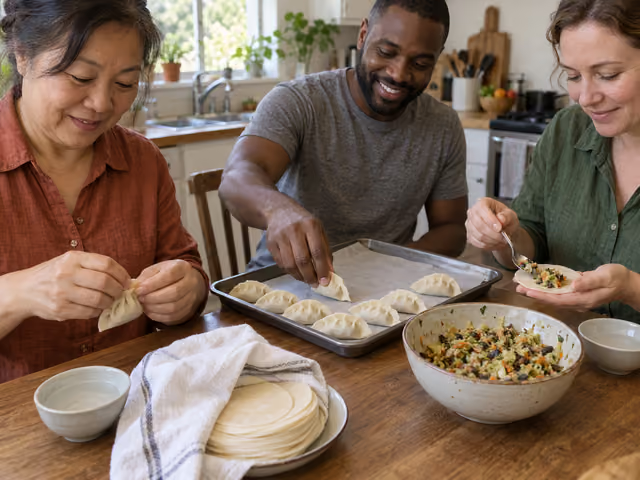
Prepare and cool the vegetable filling. Set out round wrappers, water and a lined tray. Show one sealed dumpling, then let everyone fold at their own pace. One cook handles the skillet while the others finish the tray. Eat together and put away the food before clearing the kitchen.
Saved on this device only — clearing your browser's cache or site data removes them (no account backup).
Bring the ingredients and make room
This is a cooperative Chinese vegetable-potsticker session for two to six adults, using store-bought round wheat dumpling wrappers. Choose wrappers sold for dumplings or potstickers, not square wonton skins or rice-paper sheets. Read their thawing and cooking directions before opening them. The filling below is a half batch of The Woks of Life's vegetable recipe, using vegetable stock in place of its cooking wine. That substitution changes the flavor. Plan roughly 30 dumplings and buy at least 36 wrappers to allow for repairs; actual yield depends on their size and your spoonfuls. This is a shared snack-sized batch, not a promised meal for six. Double the filling and wrapper supply if everyone wants more.
For one batch, gather: 1½ tablespoons neutral oil plus 2 tablespoons to finish the filling; ½ tablespoon minced ginger; ½ large onion, chopped; 1 cup chopped shiitake mushrooms; ¾ cup finely shredded cabbage; ¾ cup finely shredded carrot; ½ cup finely chopped Chinese garlic chives; ¼ teaspoon white pepper; 1 teaspoon sesame oil; 1½ tablespoons vegetable stock; 1 tablespoon soy sauce; ½ teaspoon sugar; salt to taste. Also have frying oil and clean water. Plain soy sauce can be offered at the table as an optional dip.
Ask about ingredients before shopping. Keep packages available, including wrappers, stock and sauces; wheat, soy and sesame are part of this version. Do not improvise a substitution for someone with an allergy at the folding table. Agree a suitable recipe and separate preparation arrangement beforehand, or choose another activity. Nobody has to taste to participate.
Set up a clean indoor table near the kitchen with a working space for each person. Bring a knife, board, measuring cups/spoons, mixing bowl, small water bowls, filling spoons, a clean damp towel, parchment-lined tray, non-stick skillet with a fitted lid, spatula, plates and shallow storage containers. Choose one person comfortable with the stove to be the cook; they also join the folding. Keep the hot-pan area clear. Wash hands and produce before preparation.
Prepare the filling before folding
In 1½ tablespoons oil, briefly cook ginger, then onion until translucent. Add mushrooms; cook until tender and their liquid evaporates. Add cabbage and carrot; cook until tender and dry. Transfer to a bowl and cool. Mix in chives, pepper, sesame oil, stock, soy sauce, sugar and the remaining 2 tablespoons oil; adjust salt.
One person can do this before friends arrive, or the group can divide washing, measuring and chopping. Keep knives with people comfortable using them. Taste a clean spoonful of the cooked vegetable filling and agree its seasoning before wrapping. Divide only the filling needed now into small working bowls and refrigerate the rest. Use the refrigerator while waiting for the group; do not leave a prepared bowl out all afternoon.
Show one, then fold together
Start with one wrapper
The host demonstrates while everyone watches, then each person tries one. Cup a round wrapper in a hand, dampen half its rim and add a small spoonful of cooled filling at the center. Start below a tablespoon if it is hard to close; the wrapper needs a clean border.
Seal a simple crescent
Fold in half, press the whole curved edge closed and gently flatten the base so it can stand. Keep filling off the seam. Put it on the lined tray without touching its neighbors. Cover unused wrappers with the damp towel.
Continue at your own pace
Everyone may fill and seal their own dumplings simultaneously. There is no turn order or quota. Work in pairs if helpful: one portions filling, the other seals, then switch when both want to. Ask before giving hands-on help. A smaller closed dumpling is useful; an open, overfilled one needs attention before it reaches the pan.
Feed the cooking station
When there are enough to fill one uncrowded pan, the cook takes that batch. Others keep folding or stop to watch from clear of the stove. Pause folding when the tray fills; move waiting dumplings to the refrigerator rather than stacking or crushing them. Continue until the filling or wrappers run out, or everyone agrees to stop.
Fry, steam and crisp
Heat the non-stick skillet over medium heat. Add about 2 tablespoons oil and stand an uncrowded layer of dumplings on their bases. Fry until the bases begin to turn golden. Hold the lid between you and the pan as a splash shield; carefully add about ½ cup water and cover immediately. Steam until the water cooks away, about seven minutes. Uncover and continue until dry with crisp bottoms. Check that the wrapper and center are cooked before serving; follow any longer cooking requirement on your wrappers.
The cook alone handles the hot skillet, water and lid. Lift the lid away from your face and keep others away from steam and splashes. If the water has gone but a wrapper remains doughy, add a little more water carefully, cover and continue; browning the base alone is not the finish. Transfer with the spatula to a clean serving plate. Let the first dumpling cool enough to taste, then check it before cooking the rest. Never taste uncooked wrapper dough.
Share the plate and close the kitchen
Serve each finished batch while the next cooks. Everyone chooses how much to eat or can pass. There are no points, winners or ties in this format, and no need to count whose dumplings looked best. If people disagree about folds, test a closed example in the first batch rather than insisting on one decorative shape.
The session ends when the group stops folding and every remaining dumpling is cooked or put away for later. Divide the shared food by agreement, refrigerate cooked leftovers in shallow containers promptly and clean the work surfaces, utensils and skillet. Refrigerate perishable food within two hours of leaving cold storage, or one hour above 90°F/32°C; track the whole preparation period, not just the last tray. For an unfinished batch, use the freezer-session variation below instead of leaving filled wrappers on the table.
Keep the first tray manageable
Begin with the plain crescent and let people decide whether to attempt pleats. Cook the first small batch before everyone commits to the same filling amount. It shows whether your particular wrappers seal and cook well. People can stay at the table to fold while the cook works; the full session still needs someone to move between table, refrigerator and stove.
For a leaking dumpling, stop and remove some filling. Press a clean, damp rim together again. If a wrapper is badly torn, transfer the filling to a fresh one rather than hiding the tear under another layer. A wrapper that is already dry and brittle is a poor candidate for repeated repairs. Replenish working supplies in small amounts so everyone has room to see and handle their own food.
If the group finishes the wrappers first, refrigerate the remaining cooked filling and use it separately. If it finishes the filling first, close and store unused wrappers according to their package. Do not create a meat version by swapping raw mince into these instructions: the filling preparation and doneness checks would change. Use a complete recipe for that choice on another occasion.
For a larger gathering, arrange additional workstations and cooks with sufficient refrigeration and stove capacity rather than squeezing extra hands around this one tray. Copy the ingredient list and instructions to paper before starting if you want phones put away. A printed recipe and physical kitchen timer are enough for the instructions; check the actual kitchen appliances if avoiding electronic devices matters.
Already know the game?
Ideas & Twists
Choose a variation together before you start.
Dumpling making · See main rules
A next step after the simple crescent.Try a two-pleat tray
Host suggestion using The Woks of Life's two-pleat technique: reserve the next tray for anyone who wants to try it. After dampening and filling, bring the edges together and pinch the midpoint. Fold one small pleat on each side of the far edge toward the middle, keeping the near edge smooth. Press every seam closed. Portion, tray spacing, cooking and finish stay the same. Leave plain crescents available; a different fold is not a scoring contest.
Dumpling making · See main rules
Finish with a plate now and a labelled batch for later.Fold some for the freezer
Host suggestion: before starting, agree how many dumplings to eat now and who takes the rest; add freezer space, freezer bags, labels and a pen to the supplies. Cook the eating batch as usual. Place the uncooked take-home dumplings apart on parchment-lined trays, cover and freeze until solid, then bag with ingredients, date and cooking directions. The gathering finishes when the food is cooked or in the freezer and cleanup is done. If the tray is not solid before guests leave, the host bags it later and arranges frozen pickup. For transport, keep them frozen in an insulated cooler with ice packs. Cook directly from frozen, allowing longer than the fresh batch and checking the center and wrapper; do not thaw them loose on the counter. Sharing is by agreement, with no winner.
Dumpling making · See main rules
Change the cooking texture while keeping the same filling and folds.Steam a soft-wrapper batch
Host suggestion: replace the pan-fry step with steaming and add a steamer with lid, pot or wok, and suitable non-stick steamer liner. Keep water below the dumplings and enough in the vessel to avoid boiling dry. Arrange dumplings apart on the lined rack. Bring the water to a boil, cover and steam the fresh vegetable dumplings for 15–20 minutes, checking that the wrappers and centers are cooked; follow longer wrapper instructions if needed. The cook handles the hot lid and steam. Serve with no crisp-bottom requirement; preparation, shared folding and the unscored finish stay unchanged.
About this guide
Cooking and folding methods come from The Woks of Life. The half-batch stock substitution, 2–6 hosting range, shared roles and variations are this guide's hosting choices. No competition or fixed session time is claimed. The sources' other fillings and homemade dough are separate recipes.
Ready for something different?
Find another game →