

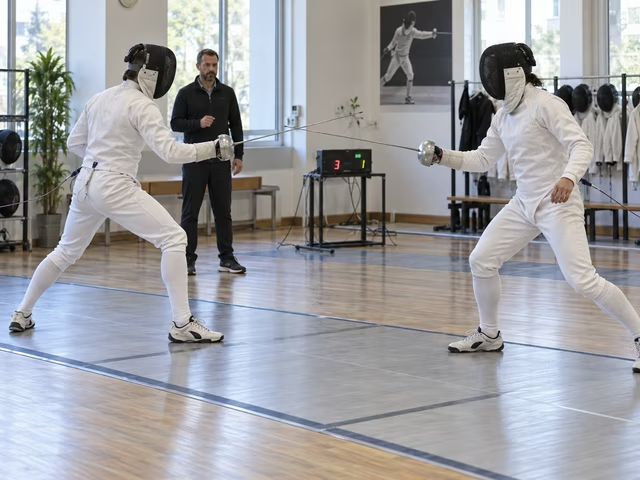
The quick version
After the instructor’s introduction, fence to five touches or three minutes of active fencing. Begin only on the referee’s command and stop immediately at halt. Épée uses the whole body as target; the scoring box and referee decide touches. Reset after every exchange.
Saved on this device only — clearing your browser's cache or site data removes them (no account backup).
Get the game ready
Confirm that the booking includes épée instruction, protective equipment in everyone’s sizes and supervised bouts. Wear the clothing the club requests. The instructor checks masks, weapon tips, clothing closures and scoring connections before anyone faces an opponent. No improvised blades or unprotected practice.
The referee explains the strip boundaries, start lines and commands, then demonstrates a gentle touch and a controlled retreat. Each fencer must be able to stop on command before the bout begins. Toss a coin for initial ends; start 0–0.
Play the first game
Wait for the command
Take the on-guard position indicated by the referee. Start only after the referee checks readiness and says fence. Keep movements controlled; this beginner format excludes running attacks and body contact.
Make a touch and stop
Use the weapon tip to touch a valid target. A single valid scoring light earns one touch. When both register within the equipment’s double-touch interval, each receives one; at 4–4, a double changes neither score. The referee halts the action and confirms the result.
Reset under supervision
Return to the positions the referee indicates. Never turn away with a raised weapon or remove a mask while fencing remains live. A foot off the strip or an equipment problem prompts halt; the referee applies the club’s normal boundary and penalty rules and explains the decision before restarting.
Keep time accurately
Run the three-minute clock only during live fencing. The instructor handles faults rather than asking beginners to improvise penalties. Stop for discomfort, loose equipment or a damaged blade immediately.
Five touches or three active minutes
The first fencer to five wins. If time ends first, the higher score wins; an equal score is a draw in this house session. Thank the opponent, lower the weapon and wait for the instructor before removing equipment. A rematch starts at zero with ends exchanged.
Help everyone get started
Tell the instructor this is a social introduction and ask for partners of compatible experience. The first successful exchange may be a controlled defense rather than a point. Spectators stay behind the club’s marked viewing boundary. Every variation needs the supervising coach’s agreement; protective equipment and halt commands stay compulsory.
Already know the game?
Ideas & Twists
Choose a variation together before you start.
Fencing at a club · See main rules
Suggested house variationTeam relay
Use four fencers in two pairs, with only two on the strip. Each pair names an order. Fence four legs in the order A1–B1, A2–B2, A1–B2, A2–B1. Each leg lasts one active minute. Keep cumulative scores; every valid double earns one point for each team, including while tied in the final leg. There is no touch target. Highest total after four legs wins; ties stand.
Fencing at a club · See main rules
Suggested house variationSingle-light duel
Play the normal five-touch bout, but a double scores nothing at any score. Reset after it. Keep the three-minute limit and allow a draw. Both people must choose when a risky simultaneous hit is less useful than defending first.
Fencing at a club · See main rules
Suggested house variationOne-touch round robin
With three or more supervised fencers, pair everyone once. Each bout ends at the first single-light touch or after one active minute; doubles are replayed. Award two standings points for a win and one each for a timed draw. Highest total after all pairings wins; tied totals share the result.
Fencing at a club · See main rules
Suggested house variationAgreed head start
Before a rematch, the instructor may give the less experienced fencer a 1–0 or 2–0 starting score. Both still finish at five under the normal clock. Record the starting advantage separately. Change it only between bouts, so the trailing player must plan attacks while the leader weighs safer exchanges.
Fencing at a club · See main rules
Suggested house variationDefense earns the bonus
Ask the referee to count a clearly completed blade parry followed immediately by a valid single-light reply as two points. Other single touches earn one and doubles earn one each except at a tied potential winning score, when they earn zero. First to at least seven or highest score after three active minutes wins. Use only if the coach can identify the action reliably.
About this guide
Club instruction is essential to this invitation. The draw, no-running-attack restriction and all variations are editorial recreational formats. Nova is a concrete entry-route example, not a promise that every club supplies equipment. Failed USA Fencing HTML and Tidewater/Wasatch pages were not treated as evidence.
Ready for something different?
Find another game →