

The quick version
Start each drive at your own five-yard line. You get four plays to cross midfield, then four more to score. Snap, throw within seven seconds and run after a catch until a flag comes off. Most points after both halves wins; a tie stays a draw unless you chose the overtime variation.
Saved on this device only — clearing your browser's cache or site data removes them (no account backup).
Prepare a field and ten players
Use a permitted, level grass or sports-turf field free of holes and obstacles. Measure 50 yards between goal lines and 25 yards across, with a ten-yard end zone beyond each goal line. Keep three more yards clear outside every boundary: the whole clear rectangle is 76 by 31 yards, about 69.5 by 28.3 metres. This needs a field, rather than a small garden.
Place eight flat markers at the intersections of the sidelines with the two goal lines and two back lines. Add a pair at midfield and a pair five yards inside each goal line: 14 markers altogether. Keep one spare movable marker beside the current ball spot, outside the playing lane. The five-yard marks identify drive starts; this pass-only house format needs no separate no-run-zone rule. Boundary lines are out; goal lines count as the end zone. Agree the imaginary lines between markers before play.
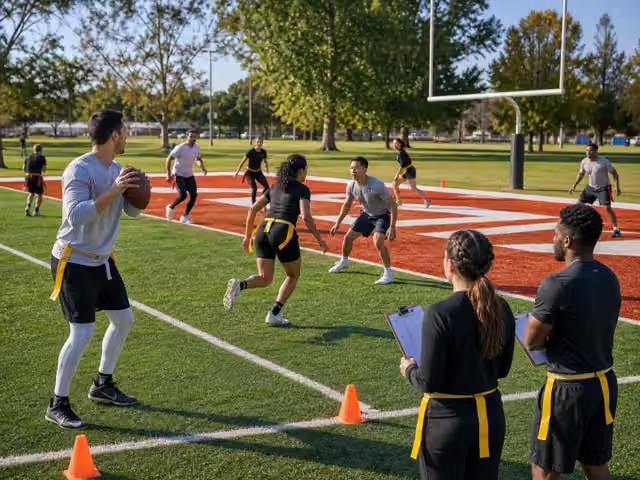
Make two balanced teams of five. Use contrasting team flag colors, with two detachable flags per person, one at each hip. Everyone uses the same belt system and unaltered attachments. Check that each flag releases cleanly, contrasts with clothing and hangs freely. Tuck shirts above the flags. Wear a fitted mouthguard, pocket-free shorts or trousers, and shoes appropriate to the surface; remove jewelry and exposed hard fittings. Use one football everyone can grip and throw, inflated to its maker's instructions. These house equipment choices do not certify tournament compliance.
Choose a captain on each side. Keep a visible score on paper. A captain can keep time on a physical watch; no phone or additional referee is required. Toss a coin: the winner chooses possession or defense, and the other side chooses an end. Play two 15-minute halves with a five-minute break. The other team receives first in the second half and teams switch ends. The clock runs through normal plays and restarts; pause it for injury, equipment repair, outside interference, disputes or deliberate delay. These clock and draw rules are house choices, not a promise about total visit length.
Snap, pass and work toward the goal
Take the first snap
The opening offense puts the ball centrally at its own five-yard line. Its five players are a center, a quarterback and three receivers. The center snaps the stationary ball backward between their legs to the quarterback, then may become a receiver. Keep everyone behind their own side of the ball's imaginary line across the field until the snap; start with a one-yard gap between center and defenders. All offense stands still before the snap in this house format. Say 'first down, midfield to gain' before starting.
Throw before the count ends
One designated defender counts seven seconds aloud at a steady 'one-one-thousand' pace from the snap. The quarterback must release one forward pass while entirely behind the snap line, with the pass reaching beyond that line. Defenders may cover receivers and intercept but must stay on their side of the snap line until the pass is released: no rushing or sacks. The quarterback cannot run across the line, hand off, pitch or pass backward. At seven with the ball still held, stop, spend the down and return to the old snap spot. These pass-only and no-rush restrictions apply everywhere.
Catch, then carry
A catch needs control and at least one foot inbounds before stepping out. The center and all other teammates may catch. A simultaneous offensive and defensive catch belongs to the offense. A receiver may run after catching; 'pass-only' does not mean stopping at the catch. No further passes or handoffs are allowed. Teammates must stay out of defenders' paths rather than block, screen or accompany the runner as a shield. Defenders reach for a flag, never the ball, clothing or body.
Stop and spot the ball
The play ends when a flag is pulled or falls off the carrier, the carrier steps on or beyond a boundary, a knee or other body part except hands or feet touches the ground, or the ball is dropped. Spot at the ball's position when the play ended, not where the defender finished running. A dropped forward pass is incomplete: return to the previous snap spot and spend a down. A bad snap or carrier's fumble is dead where it first hits the ground, with no recovery; a forward fumble gives no gain beyond where control was lost. A receiver already missing a flag is down at the catch. Restore both flags before another snap.
Count the downs
A down is one play. Each ordinary drive starts with four downs to get the ball beyond midfield. Reaching midfield exactly is not enough. Once a completed play ends beyond midfield, announce first down and give four downs to score. You earn this reset only once in that drive; retreating and crossing again does not refresh it. An incomplete pass or a stopped short gain still uses a down. After an unsuccessful fourth down, the other team starts centrally at its own five-yard line, not at the old ball spot. There are no kicks or punts.
Score or change possession
A touchdown is a controlled ball reaching the opponents' goal line while its carrier is inbounds and the play is still live. In this house format it earns one point, with no extra-point play. The conceding team then begins at its own five-yard line. An interception ends the play immediately; the intercepting team begins a fresh drive at its own five-yard line, wherever the catch happened. There are no interception returns or defensive touchdowns here. If the offense is down with the ball in its own end zone, or a snap or fumble lands in or behind it, award the opponents one safety point and the next five-yard-line possession. An incomplete forward pass alone is not a safety.
Finish the half and match
At the timer, finish a play only if the snap occurred before the signal. Its catch, flag pull or score counts normally; do not start another ordinary play. If that final play requires a replay under the house foul or dispute rules, take the replay without restarting the clock; finish after a resolved play. After the first half, keep the score, take the break, switch ends and start the second half with the team that defended first. An unfinished drive does not carry over. After the second half's final play, the higher total wins. Equal totals are a draw under the main rules. For a rematch, reset score and toss again.
Your third down ends with the ball beyond midfield: the next play is first down toward the goal. If your fourth down stops exactly on midfield, possession changes. If your first play after the reset loses ground behind midfield, you still have only the remaining three downs to score.
Check three edge calls
A seven-second pass-clock expiry is treated like an incomplete pass, even if the quarterback retreated into the end zone: spend the down and return to the old snap spot, with no safety point. A canceled offensive foul also uses the old snap spot and spent down, rather than creating a separate safety penalty. A normal bad snap or fumble in the offense's end zone still awards the safety point.
A forward fumble cannot move the next snap nearer the goal than the spot where control was lost. It cannot score by rolling over the goal line. A backward fumble loses ground to where it first hits the turf. Neither team picks a loose ball up to continue play.
The goal line counts as the end zone; the sidelines and back line are out. A receiver catching in the end zone needs control and an inbounds foot, just like any other catch. A ball beyond the goal line is not enough if the carrier was already out, down or missing a flag. Check when the play stopped before awarding the point.
Show a flag pull and settle close calls
Before the clock starts, demonstrate a gentle flag pull with a stationary partner, then rehearse one unscored snap and short pass for each team. Point out the start, midfield and goal lines. A receiver can begin with a simple route: run forward a few yards, turn toward the quarterback and show both hands. Explain the next destination before each snap, rather than assuming everyone knows football vocabulary.
No tackling, pushing, holding, stripping, blocking or deliberate collision. Carriers cannot cover flags with a hand or the ball, stiff-arm a defender, jump over a flag attempt or dive to advance. For an offensive infringement after the snap, cancel the gain, return to the previous snap spot and spend that down. For a defensive infringement, the offense chooses either the valid result with the down spent or a replay from the old snap spot with the same down. These are house remedies replacing official yardage penalties. If both sides infringe, replay the down. A pre-snap false start or offside resets the formation with no down spent. Pause the clock for corrections; intentional or repeated infringements stop the game until the conduct ends. Never use a replay system to excuse dangerous play.
Agree the spot, score and next down before anyone snaps. Only the two captains resolve an uncertain call; if they cannot agree, replay the same down from the old spot with unchanged scores and no time charged for the discussion. An accidental early 'stop' call uses that same replay remedy. A flag pulled before someone catches the ball is a defensive infringement, not an automatic down at the catch. Incidental contact still warrants checking that everyone can continue; rules against contact cannot prevent every collision.
With ten players, there are no substitutes. Pause if someone needs a break; resume only with the agreed teams ready. Extra friends can watch outside the clear border or play the next match. For eight players, choose the four-a-side variation first rather than silently changing the main format. Keep drinking water available beside the field and stop when surface, weather or visibility makes play unsuitable.
Already know the game?
Ideas & Twists
Choose a variation together before you start.
Flag football · See main rules
Suggested house variation · eight playersFour a side
For exactly eight players, use two teams of four: a center, quarterback and two receivers. Keep the same field, pass-only plays, seven-second count, no rushing, downs, score and halves. Supply eight belts and mouthguards instead of ten. This changes the main game's player requirement; it does not support an uneven five-against-three game.
Flag football · See main rules
Suggested house variation · choose before kickoffPaired goal-line overtime
Replace the main game's draw with paired attempts. Toss for which team attacks first; each team gets one pass play from the opponents' five-yard line toward the same end zone. A touchdown earns one; any other lawful outcome earns zero, including an interception, with no return or safety point. Apply the same foul/replay remedies. Both teams must take their attempt before comparing: a one-to-zero pair wins. If equal, repeat a pair with the opening team reversed. There is no running match clock in overtime. If the group prefers a draw to more attempts, agree that change together.
About this guide
Recreational house format, reviewed October 2, 2026. USA Football supplies the four-down framework; IFAF supplies the field and clear border. House changes are pass-only/no rushing, stationary formation and one-yard gap, one-point touchdowns and safeties, no conversions or interception returns, forward-fumble gain limit, two 15-minute halves, draws, self-officiating and the stated simplified foul/replay remedies, including an untimed required final replay. Belt and ball selection are recreational. Organized leagues use their own rules. Community accounts inform the demonstration and plain-language explanations; they are not rule authorities or evidence of universal safety.
Ready for something different?
Find another game →