

The quick version
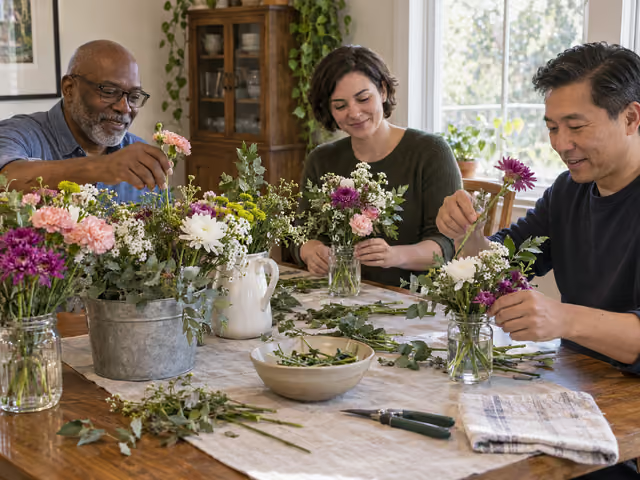
Give everyone a clean vase, water and snips. Share the flowers in rounds so everyone has a starting selection. Remove leaves that would sit underwater, trim a stem to suit your vase and place it in water. Add greenery, larger blooms and smaller flowers a stem at a time, turning the vase to check the shape. Finish when everyone has made their arrangement or chosen to stop; share voluntarily, check water and tidy together. There are no points or winner.
Saved on this device only — clearing your browser's cache or site data removes them (no account backup).
Prepare the flowers and the table
This suggested home format hosts 2–8 makers, including the host. Each makes one small, freestanding vase arrangement indoors. Before inviting everyone, check that the table gives each person a seated place with space for their vase, tools and loose stems. Put shared flower containers within reach, or divide them between the ends of a longer table. A small room can work for a smaller group; it does not automatically fit eight work places.
For every maker, provide one clean, watertight, stable vase or jar and one pair of clean, sharp floral snips or scissors suitable for the supplied stems. Choose small containers with openings narrow enough to help support a modest arrangement, but wide enough to receive the stems comfortably. As a starting host inventory, set aside three larger flowering stems, four smaller flowering stems and three greenery stems per person, plus a few shared spares. These quantities are a packing suggestion for this format, not a design law; inspect the actual vase and bunch sizes before buying. A branched stem may carry several blooms. Use supple stems the provided tools can cut, rather than woody branches.
Also bring clean holding buckets or jars, enough fresh water for those containers and all the vases plus refills, commercial cut-flower food sufficient for that water according to its packet, a measuring jug, a washable table cover or mats, absorbent towels, a scrap bowl or bin, and access to a sink, dish soap and handwashing. Wash and rinse containers first. Mix flower food exactly as labeled; do not improvise additives. Unwrap flowers, discard damaged material and keep usable stems in water before the session. Purchased bunches are fine; use garden flowers only with the grower's permission. Confirm that the supply is acceptable for anyone with sensitivities before selecting it.
Vases hold these arrangements directly in water. Floral foam, wire, pin frogs, tape grids, ribbons and wrapping are not required. Keep tools closed when resting on the table, pass them handle first, and keep fingers clear while cutting. Arrange any requested cutting or lifting help beforehand rather than assuming seated work suits everyone. If guests are taking vases home, ask them to bring an upright carrier or provide a sturdy box with padding around each vase; that transport material is additional to the making supplies.
Share the stems, then make the first cut
Explain: 'We are each making our own vase arrangement. We will share the flowers so everyone has enough; after that we can trade spare stems. You decide what your arrangement looks like and whether to show it.' Agree on a closing cue: the host checks that everyone is finished or has chosen to stop, then invites sharing and cleanup. If people have a departure deadline, set a stop-making time and leave time for packing. That is the group's schedule, not a promised activity length.
Make a starting selection fairly. Go around the table, each person taking one flowering stem, until everyone has three; reverse the order for the next selection round. Repeat for four smaller flowering stems each and then three greenery stems each. The host may pre-divide an equivalent supply instead if the flower types do not fall neatly into those roles. After the initial allocation, offer spares and agree on trades; do not take stems from another person's selection without asking.
Fill each vase with the prepared water. First, hold one greenery stem beside the vase to judge its height. Remove any leaves that would end up beneath the waterline. With fingers away from the blades, cut the lower stem at an angle and put it straight into the vase. Trim conservatively: you can shorten it again, but you cannot restore a cut stem. The host can demonstrate on their own vase before everyone starts.
Build your arrangement a stem at a time
Make a loose framework
Work simultaneously after the supply rounds. Add your other greenery stems to suggest the width and shape. Cross the stems naturally in the vase so they help support one another, keeping their ends in water. Leave room for blooms rather than filling the opening immediately. You can change the shape as you go.
Place the larger flowers
Choose a bloom you want to draw attention to. Hold it alongside the vase, trim and clear its lower leaves, then place it. Add the other larger flowers at heights that let you see them. Turn the vase and look from the position where it will be displayed. A clustered shape or an airy shape can both work; you are choosing a composition rather than following a mandatory pattern.
Use smaller flowers to connect the shape
Add the smaller flowering stems where you want color, texture or a gentler transition between the larger blooms and greenery. Prepare each stem before inserting it. Leave some open space if you like. Move a stem or remove one if the vase feels crowded; using every supplied stem is not a requirement. Return usable unwanted stems to the shared water containers.
Check the whole vase
Turn the vase slowly and look at it from several sides. Check that it stands securely, the stem ends reach water, and no leaves sit below the waterline. If flowers flop outward, try shortening a stem or repositioning it among the existing stems before adding more. Ask for a suggestion if useful; other people should ask before touching or changing your work.
Finish, share and clear up
At the agreed closing cue, each person says whether their arrangement is finished or they are stopping there. Invite each maker to show a favorite detail or pass. There is no judging, scoring, winner or tie to resolve. Top up water as needed, put leftovers in water, collect offcuts, close and put away tools, wipe surfaces and spills, and wash hands. Each maker keeps their own arrangement unless they freely agree to give it away.
If someone feels stuck, begin with a single bloom and a little greenery. Look at the shape before adding another stem. A small arrangement is a complete result; you do not need to copy a florist's full bouquet.
Get it home and keep it watered
If taking an arrangement home, reduce the water enough to limit spills while keeping cut ends wet. Carry the vase upright, supported in its padded carrier, and refill when you arrive. Do not leave it loose where it can tip over. At home, choose a cool place away from direct sun and heat. Check the water daily, remove fading blooms or leaves, and change water every two to three days or sooner if cloudy, using flower food at its labeled dilution. Different flowers last different lengths of time; this session does not promise a fixed vase life.
Help without taking over
Different tastes are part of the activity. Advice about odd numbers, tall stems or a particular color combination can be useful, but it is not a rule everyone must obey. Offer a specific choice such as 'Would you like to move that bloom where it is easier to see?' rather than silently rebuilding someone else's arrangement. A show-and-tell is optional, and photos of people or their work need their agreement.
For a shortage of a desired flower, finish the initial allocation before distributing spares. If two people want one remaining stem, ask whether one wants another kind; otherwise use the next person in the current selection order. This is a supply decision, not a contest result. If tools or table space are insufficient, reduce the confirmed group or obtain the missing supplies before starting, rather than making a guest watch while everyone else creates.
If a stem is cut too short, use it lower in the vase if its end still reaches water, or offer it for a smaller spare container. If a vase tips, stop nearby cutting, clear tools, wipe the spill and reset it before continuing; the result is not ruined just because you need to rearrange it. Return a borrowed vase only by prior agreement. Keep a gift plan voluntary so everyone knows who will take each arrangement.
Already know the game?
Ideas & Twists
Choose a variation together before you start.
Flower arranging · See main rules
House suggestion · individual arrangementsOne palette, many shapes
Before buying flowers, choose one color family together, such as whites and greens or warm pinks. Supply the same approximate stem quantity and the ordinary vases and tools. Everyone still makes their own arrangement, but uses that shared palette; shapes, heights and open space remain individual choices. Follow the usual allocation, making, voluntary sharing and care. No votes or points are added.
Flower arranging · See main rules
House suggestion · even groupsTwo-person table display
Use 2, 4, 6 or 8 makers in pairs. Each retains their own vase, tools and normal flower allocation. Before arranging, agree on one connection between the pair's two vases: a repeated flower, a shared color or a height relationship. Make the two individual arrangements alongside one another, asking before modifying your partner's work. At the finish, display the pair together and let each person keep their own vase. Ordinary cleanup and care apply; there is no winning pair.
Flower arranging · See main rules
House suggestion · a fresh lookPermission-to-suggest pause
After placing your larger blooms, pause at a cue agreed before making. Pair neighbors; with an odd group, make one group of three. Each person turns their vase and asks for one suggestion, or passes. Comment on one visible choice, such as height or spacing; do not touch another person's arrangement. Its maker may accept, adapt or decline the suggestion. Resume your own arranging, add smaller flowers, then use the normal finish and care. The pause adds feedback, not a swap, compulsory revision or score.
About this guide
Extension sources explain cut-flower preparation and care; community hosts inform sharing supplies and helping beginners. The stem allowance, small-group format and variations are suggestions. Follow the flower-food label and the needs of your actual flowers.
- University of Minnesota Extension · fresh flowers and fair-design guidance (July 29, 2025) ↗
- Illinois Extension · cut-flower preparation and care (February 10, 2023) ↗
- Iowa State Extension · commercial flower food and daily water checks (updated March 20, 2024) ↗
- r/AskSeattle · a host pooling flowers for individual vase arrangements ↗
- r/FloralDesign · beginner placement advice and tool tradeoffs ↗
Ready for something different?
Find another game →