

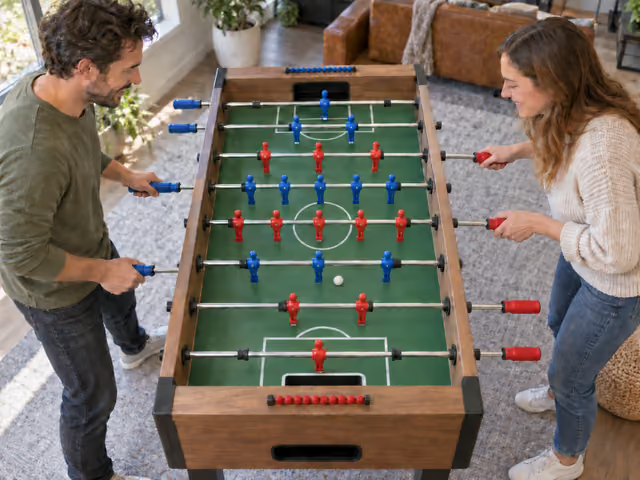
The quick version
Choose sides and a first kick-off with a coin toss. Begin with the ball at the middle figure of the serving team's five-player row. Ask 'Ready?' and wait for 'Ready.' Move it to another figure on that row and back before sending it forward. Play continuously, keeping control of the handles. Each goal is one point; the side that conceded restarts. First to five wins, including at 5–4. Use the social restart and dispute rules below.
Saved on this device only — clearing your browser's cache or site data removes them (no account backup).
Check the table and choose your roles
This is a beginner social house format informed by ITSF's Table Soccer Basics and checked against Standard Matchplay Rules 2024, version 2.0 dated December 2023. It deliberately simplifies tournament timing, passing restrictions, restarts and penalties. Use these rules together; Classic, Rollerball and a venue's tournament rules are different formats.
Use a table with four rods for each team: goalkeeper, two defenders, five midfielders and three attackers. The goalkeeper row may have one or three figures, depending on the table. Use the ball specified for that table, rather than a toy ball that happens to fit. Check that the table is level, figures secure, handles intact and rods move freely. Have its owner fix a fault before playing; do not add lubricant or modify a borrowed table.
Leave room for players and the rods at their full extension. Keep the opposite ends of rods clear of bodies and passing people. A table fitting through a doorway does not prove the room is large enough to play. Use the score markers already on the table and reset them to zero.
With two, each person controls all four rods of one color. With four, the defender controls the goalkeeper and two-defender row; the attacker controls the five- and three-player rows. Teammates stay at those handles during a rally. Balance experience across the pairs where possible. The coin-toss winner chooses either the first kick-off or which side to use; the other team gets the remaining choice.
Try an unscored start
Before setting the score, try one gentle pass and shot each. Slide a row until a figure is beside the ball. Turn its foot through the ball with a controlled handle movement, then stop the rod. Try receiving the pass with another figure instead of hitting every ball immediately. Leave defending feet down when guarding a lane. In singles, change handles as the ball moves; you do not have to hold all four at once.
For every midfield restart in this house format, everyone first stops moving the rods so the server can place the ball beside their middle five-row figure. Once hands are out of the table and everyone has their handles, the server asks 'Ready?' The opposing player confirms for their side. Move the ball from the middle figure to another figure on the same row, then to a different figure again; returning to the middle works. Only then pass to another row or shoot. This three-contact start prevents an immediate surprise shot.
Reset the practice score and make the first real kick-off. Both teams can now move, block and shoot whenever the ball is live; there are no alternating turns.
Play the rally and count goals
Move, pass and defend
Slide and rotate only your own rods. A controlled wrist movement gives a shot direction; freely spinning a handle sends the figures around without control. For this house game, keep the handles under control and do not spin any rod. Passes may be made from a stopped ball: the tournament's restricted-pass and wall-contact rules are not enforced here. Keep play moving; do not hold the ball merely to prevent anyone else playing.
Award one goal
A legally played ball completely crossing the goal line scores one point for the team attacking that goal, even if it comes back out. A ball hitting the rim and staying outside is not a goal. Deflections, shots from the five-player row and goalkeeper shots all count one. An own goal scores for the opponent, including one caused by your own spin. Announce the new score and move one marker immediately. The side that conceded makes the next midfield restart, unless the goal finished the game.
Recover a dead ball
If the ball has stopped where no figure can reach it, both sides agree it is dead and stop all rods before a hand goes in. Do not bend a rod or shake the table to free it. House rule: the team that made the most recent midfield restart makes another midfield restart, with the ready check and three contacts. This differs from tournament dead-ball restart locations.
Recover a ball off the table
If the ball leaves the cabinet and lands outside, or rests on top of the cabinet, stop play and retrieve it. House rule: the opposite team to the last figure that touched it gets a midfield restart. If neither side can identify that last touch, the team that made the previous restart serves again. An airborne ball still above the playing area remains live if it returns without touching anything outside it.
Finish at five
The first side to five wins immediately. At 4–4, the next valid goal wins: there is no win-by-two extension or equal-turn reply. For another game, switch table sides, reset the score and give the opening restart to the previous losing side. Doubles partners may change defender/attacker roles before the new game.
Settle interruptions without an argument
Do not slam the rods, lift or shift the table, reach into live play, grab an opponent's rod or distract someone taking a shot. Anyone can call 'Stop' for a person or equipment hazard; all players stop the rods before anyone reaches in. Safety comes before recovering the ball or preserving a rally. After an external interruption is resolved, the last side to control the ball restarts at midfield; if there was no clear possession, the previous serving side restarts. An agreed player foul uses the remedy below instead.
House foul remedy: stop at an agreed spin, table shake, early restart or other prohibited action. Cancel any goal the offending side scored from that action. Give the other side a midfield restart; if the offending action put the ball into its own goal, count that goal instead and let the conceding side restart. Use the same remedy after a reminder if someone deliberately stalls. This is a single social penalty, not the ITSF tournament penalty schedule.
If someone needs a break, call it while they control a stopped ball or between goals. Agree that play has stopped, then release the handles. For this house game, the side with possession before the break resumes at midfield. Between goals the conceding side retains its restart. Partners change roles during this break or between games, never by reaching across one another during live play.
For an uncertain goal or disputed foul, pause before the next restart. If the sides cannot agree, cancel the disputed goal, retain the last agreed score and let the team that made the preceding restart serve again. Do not reopen earlier agreed points. If someone cannot continue, stop and record the current game as unfinished rather than awarding an invented win.
Let a newcomer practice the ready start and a catch before explaining advanced shots. In doubles, the attacker can lift their own figures briefly to let a teammate's clearance through, then return the feet to useful defending positions. Keep advice short and invited. Confirm comfortable reach and standing space with your group; a stationary table game is not a promise of seated or universal access.
Already know the game?
Ideas & Twists
Choose a variation together before you start.
Foosball · See main rules
House format · exactly fourPartner carousel
Play three games to five so each person partners each other person once. Name the players A, B, C and D: AB versus CD, AC versus BD, then AD versus BC. No one is eliminated. Reset the score and toss for the opening choice each game. Partners decide defender and attacker before each game; give everyone a chance at the role they want to try. Each win earns both partners one personal win, recorded on optional paper or remembered after each game. After all three games, most personal wins is the result; tied leaders share it. Main scoring, fouls and restarts remain unchanged. This fixed rotation does not require a tournament app or a larger bracket.
Foosball · See main rules
House variation · two or fourBuild the attack
Before a team can score an attacking goal, it must complete a pass from its five-player row to its three-player row during the current possession. A completed pass means the three-row catches and controls the ball; a glancing touch alone is insufficient. Say 'Built' when that happens. The permission lasts until the opponents control the ball, a goal is scored or play stops for any restart. A mere opponent deflection does not reset it. An attacking goal without permission is disallowed and the other side restarts at midfield; own goals always count for the opponent. Once permission is earned, any of your rows can score. Play to five using the main foul rules. This adds a visible passing goal while keeping both defenders involved; it is not an official restricted-pass rule.
About this guide
A complete social house format for two or four, not a tournament rules digest. ITSF Basics supplies singles/doubles, five-goal play and beginner practice; Standard Matchplay Rules 2024 supplies the checked ready/opening sequence and scoring boundaries. Main house departures explicitly allow stopped-ball passes, omit possession clocks and wall-contact counts, restart dead/off-table/paused balls at midfield, prohibit deliberate spinning of any rod and use one foul/dispute remedy. Both twists are original house suggestions. See research.md for source sections and community needs; no purchased edition is required.
Ready for something different?
Find another game →