

The quick version
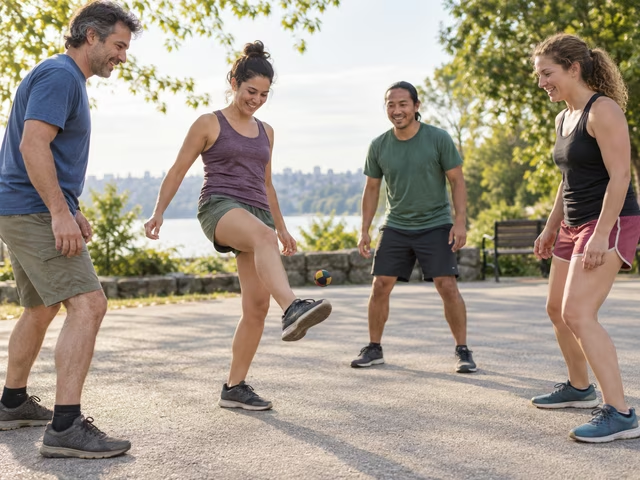
Stand in a loose circle. One person gently tosses the bag to someone else, who keeps it airborne using feet and legs and passes it onward. Hands are only for starting or resetting. Count a shared success if every person touches the bag before it drops. Play ten rallies, changing the starter each time, and record how many included everyone.
Saved on this device only — clearing your browser's cache or site data removes them (no account backup).
Make a circle that welcomes a pass
Use a soft fabric footbag rather than a hard ball. Choose flat grass or a suitable court with no holes, fragile objects or passing traffic. Space yourselves so nobody's foot can reach a neighbor in a normal kick, yet a gentle pass can cross the circle. Three to eight players share one bag.
Choose a starter and a clockwise starter order. The starter names a ready recipient and gives a soft underarm toss toward their feet. The hand toss itself does not count as a touch. Start a new rally whenever the bag touches the ground, a hand or an arm.
Lift, control and include
Make a soft first touch
Bend the standing knee slightly and use the inside of the other foot to lift the bag upward rather than kick it forward hard. Knees and the outside or top of the foot are also allowed in this house circle. Keep kicks below another person's face.
Find the next person
Take as many foot or leg touches as needed to control the bag, then pass to a ready person. A player says their name on their first successful touch in the rally. Once everyone has touched it, the group calls 'circle' and earns one success for that rally.
Keep the same rally going
After earning a success, keep passing if you like, but that rally cannot earn a second success. A missed pass is a shared reset, not a personal penalty. The person nearest the grounded bag picks it up by hand.
Change the starter
Move to the next person in the starter order, even after a very short rally. They toss to someone who was left out previously. Mark one completed rally and whether it included everyone.
Count shared circles
Stop after ten rallies. Your result is successful whole-group circles out of ten. A first session may finish at zero; also remember the largest number of different people reached in one rally, so there is a useful next target. No one is eliminated or made to perform a penalty.
Keep the pass useful
Let the intended receiver try a pass instead of taking it away. Call 'yours' if two people move for the same bag and allow it to fall if a collision is possible. Long solo displays work better outside the shared game. The community's circle guidance emphasizes courtesy and including people who have been watching; the scoring here is an original way to support that purpose.
Already know the game?
Ideas & Twists
Choose a variation together before you start.
Footbag circle · See main rules
Suggested house variationOne touch each
Allow only one foot or leg touch before the bag must reach someone else. A second touch ends the rally. Keep ten attempts and the whole-group success rule. Players must set a reachable height and direction with their first contact.
Footbag circle · See main rules
Suggested house variationFollow the circle
Every pass goes to the next person clockwise. A skipped person or reverse pass ends the rally. After everyone has touched the bag, pass it back to the first receiver to complete a full circuit and score one. Try ten rallies, then reverse the direction for another set.
Footbag circle · See main rules
Suggested house variationTwo feet before passing
Before passing, each receiver must touch the bag once with each foot in either order. Extra control touches are allowed, but both feet must contribute. A knee touch does not satisfy either foot. Keep ten rallies and award a success when everybody completes their two-foot sequence.
Footbag circle · See main rules
Suggested house variationCatch-assisted chain
Each receiver may catch one incoming pass by hand, then release the bag to make at least one foot touch before passing. A ground contact or a second hand catch by the same receiver before passing ends the rally. Keep the normal ten-rally goal. This gives mixed-skill circles a recoverable handoff without turning the whole game into catch.
Footbag circle · See main rules
Community-inspired house formatCopy a small sequence
One player demonstrates one or two simple touches, such as inside-right then left knee. Each person gets two self-toss attempts to copy them. Score one shared point for each person who succeeds, then let the next person choose a new sequence. Stop after everyone has led once; no acrobatic moves or kicks toward other people. This adapts community Copy Cat into a non-elimination group game.
About this guide
Long-running community pages support circle etiquette and the Copy Cat idea. This guide's ten-rally score, feet-and-legs allowance and other variations are house formats. Source games involving hitting people or punishments were deliberately not adopted. No current popularity ranking is claimed.
Ready for something different?
Find another game →