

The quick version
Reveal one property per player. Raise the current bid or pass, taking the lowest remaining property and paying half your bid rounded up. Last bidder pays all and takes the highest. After all properties are bought, simultaneously sell one per round for ranked cheques. Most total money wins.
Saved on this device only — clearing your browser's cache or site data removes them (no account backup).
Prepare this edition's money and cards
This guide uses IELLO's 2020 bill-card edition. Other publishers use different starting funds and sometimes different pass-rounding rules; use one edition consistently. Shuffle houses and cheques separately. At four players remove two unseen cards from each deck; at three, five or six use all 30.
Give each player 28 bills at three players, 21 at four, 16 at five or 14 at six. Unused bills go to the box. Keep money private. Choose a starting player randomly.
Buy one house per auction
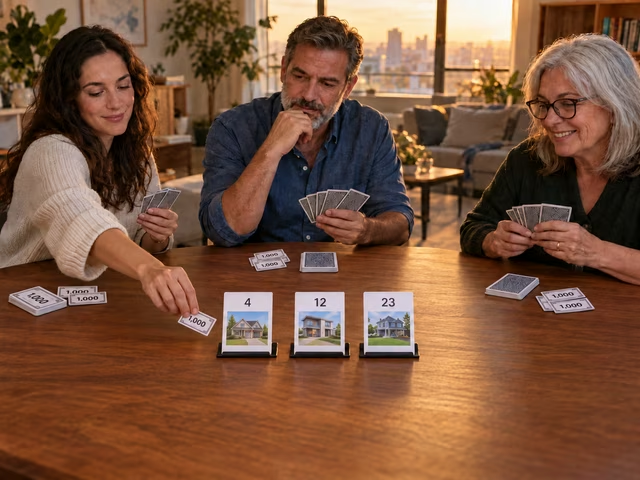
Reveal as many houses as players. Starting with the current starter, act clockwise. Bid by placing bills face up; your total must exceed the current high bid. On later turns add bills to raise your own total, or pass.
When you pass, take the lowest-valued house still available. Recover HALF of your bid rounded DOWN, returning the rest to the box. Thus a bid of five returns two and costs three. Passing with no bid costs nothing. You leave that auction.
When only one bidder remains, they pay their ENTIRE bid and take the last, highest house. That player starts the next auction. Repeat until the house deck is gone; everyone now holds the same number of houses.
Sell into the visible cheque market
Reveal one cheque per player. Everyone secretly selects one owned house and places it face down. Reveal together. The highest house gets the highest cheque, the next gets the next, through the lowest. Equal cheques are interchangeable; houses have unique values.
Discard the sold houses and keep cheques face down. Reveal the next cheque market and repeat until all houses are sold. You cannot save a house by skipping a round.
Add cheques and unspent bills
Add every cheque value, including zero cheques, and all bills you kept from the buying phase. Highest total wins; ties go to more unspent bills, then a shared victory.
Explain the cost of passing
Demonstrate the five-bill example before the first auction. The second phase makes the difference between a good house and a good sale visible; do not judge the first phase by house values alone. Auction-game community comparisons identify For Sale as a compact option, but preferences differ, so explain its two distinct phases rather than promising universal appeal.
Players comparing small auction games value its two distinct bidding phases. Teach the later cheque exchange before the first house auction.
Already know the game?
Ideas & Twists
Choose a variation together before you start.
For Sale · See main rules
Original STUDplay house twistOpen wallets
Keep all unspent bills visible. Bids, refunds and sale choices remain normal. Players can price a contest with complete money information.
For Sale · See main rules
Original STUDplay house twistPreview the next lot
During buying, reveal the NEXT auction's property cards beside the current lot whenever enough remain. They cannot be bid on yet. After the current auction finishes, move the preview into play and reveal the next preview. This changes planning information only.
For Sale · See main rules
Original STUDplay house twistProperty showcase
After buying and before the first cheque lot, each player selects one house to keep face up in front of them. It remains their property and can be chosen in any sale. If chosen, turn it face down with the others and reveal simultaneously. All other unsold houses remain private.
For Sale · See main rules
Original STUDplay house twistOne market veto
Give each player one paper token. Before anyone chooses a house in a sale round, invite vetoes clockwise from the original first player. The first veto spends its owner's token and sends the whole revealed cheque lot to the bottom of the cheque deck in a shuffled order, replacing it from the top. Allow only one veto per round and only when enough undealt cheques remain to replace the full lot. Then everyone sells normally.
For Sale · See main rules
Original STUDplay house twistVisible last two
When every player has exactly two unsold properties, reveal both remaining houses. Sale choices are still simultaneous and face down. The normal two final cheque lots remain unknown until their respective rounds.
About this guide
Use the named physical base game and its supplied cards, boards and rules. Rules below are paraphrased teaching guidance. Original STUDplay house twists are optional suggestions, not publisher rules or balance-tested claims; agree one before setup.
Ready for something different?
Find another game →