

The quick version
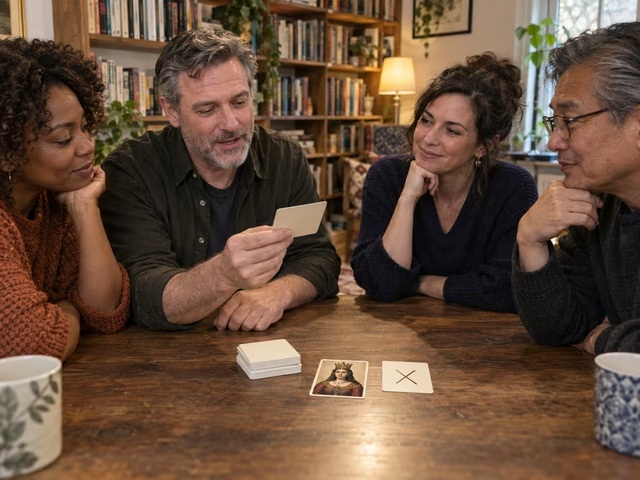
Read the instruction cards around the table, choose a queen image if desired and prepare a screened prompt deck with its ending card near the middle. Take clockwise turns drawing prompts. Answer as your character, pass the prompt to the next player or remove it with the X-card. When the ending card appears, everybody answers its final decision in turn and the story ends.
Saved on this device only — clearing your browser's cache or site data removes them (no account backup).
Discover the travelers through questions
Use the actual For the Queen deck. Before play, select prompts appropriate for a non-romantic, non-explicit story and remove unwanted themes. Choose a broad journey, such as crossing a mountain region to seek help for a damaged town. No one plays the queen; every player develops a different member of her traveling party.
Read the numbered instruction cards aloud in order, taking turns. Optionally choose one illustrated queen together. Shuffle the suitable question cards and place the ending card around the middle for a shorter session, as the system permits. Put the X-card within everybody’s reach and explain that it can remove a prompt or story detail without a required explanation.
One answer adds to the shared world
On your clockwise turn, draw and read a prompt. Answer from your character’s perspective, inventing only what is needed now. You may instead pass the question to the next player, ending your turn. That player may answer or pass onward, with the same effect on their turn. If it travels around without an answer, remove it and draw a fresh prompt as a house pacing convention.
Any player may indicate the X-card to remove unwanted material, whether it came from a card or an improvised answer. If a prompt is removed on your turn, draw another without losing that turn. Revise removed story material and continue without debating why it was removed.
Others may ask follow-up questions or suggest connections, but the answering player decides what to accept about their character. Listen for established facts and connect your answer to them. Characters may disagree about the queen; players are cooperating to discover why.
When the ending card is drawn, stop drawing ordinary prompts. Each player answers the final question about whether they will defend the queen in her moment of danger. Keep danger non-graphic in this chosen tone. Those decisions conclude the story. There is no score, winning faction or requirement that characters agree.
Give an unfinished idea room to grow
A character does not need a name, profession and biography before the first question. Add a name when useful and jot it down if the group wants help remembering. Ask a quieter player whether they want a follow-up rather than filling their answer for them. After the final decisions, share one detail from another player that changed your understanding of the story.
Already know the game?
Ideas & Twists
Choose a variation together before you start.
For the Queen · See main rules
Published pacing optionLonger journey
Shuffle the ending card into the bottom half of the suitable prompt deck rather than placing it around the middle. Keep all other rules and finish when it appears. Allow a longer session before starting.
For the Queen · See main rules
Published presentation optionNo portrait
Choose no queen illustration. Let her appearance emerge through the travelers’ descriptions, leaving different impressions possible. Keep the same prompt deck and final decision.
For the Queen · See main rules
House suggestionOne-sentence opening
For each player’s first two answered prompts, use one sentence and allow no follow-up questions. Then return to normal answers. Passing and removing content remain available throughout.
For the Queen · See main rules
House suggestionOne follow-up each
After an answer, allow at most one follow-up question from another player before moving clockwise. The answering player may decline it. This keeps a larger group moving without changing prompt or ending rules.
About this guide
Core turn choices, shared authority, X-card and ending structure follow the designer SRD. Prompt selection, non-romantic journey, passed-around prompt remedy and last three twists are house hosting choices. No proprietary prompt deck is reproduced.
Ready for something different?
Find another game →