

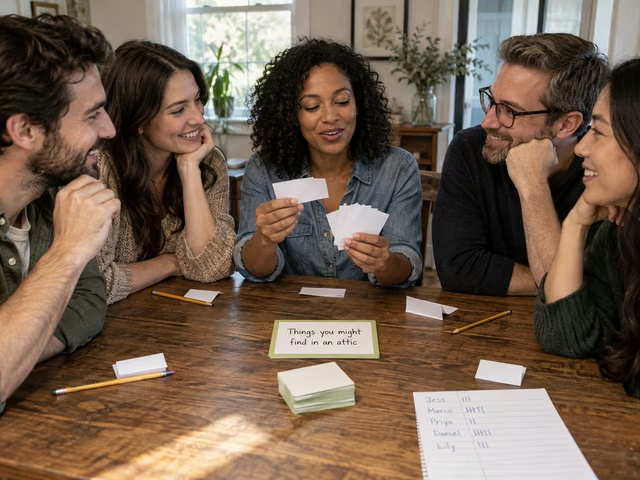
The quick version
Read a topic. Everyone writes one response, folds it and mixes it in a bowl. The reader reads all responses twice. Starting left of the reader, guess a response’s author: correct earns a point and another guess; wrong passes the turn. A matched author stops guessing for that round. The last unmatched player earns two bonus points. Rotate the reader once around; highest total wins.
Saved on this device only — clearing your browser's cache or site data removes them (no account backup).
Mix responses without mixing people up
Choose a scorekeeper and first reader. Give everyone identical slips and a pencil. Select suitable topic cards before play. Everyone, including the reader, writes one brief response to the chosen topic without signing it; fold slips identically and mix them in a bowl before the reader collects them.
Read every response aloud twice in a mixed order. The reader may reread them later on request, but should not quietly inspect handwriting while others are guessing. If handwriting makes authors obvious, everyone prints in simple capitals next round.
Match an answer, keep your turn
The person left of the reader selects any still-unmatched response and names another still-unmatched player as its author. That player answers honestly. Correct earns 1 point, returns the slip to its writer and gives the guesser another attempt. The identified author cannot guess again this round. Incorrect ends only the guesser’s current turn, passing to the next unmatched player clockwise.
Nobody may claim their own answer for an easy point. For this guide’s house duplicate procedure, identical responses remain separate slips: identifying one actual writer correctly removes only that writer’s slip, leaving the other copy in play. The reader says how many copies remain without identifying their authors.
When one player remains unmatched, they earn 2 bonus points and the round ends. Reveal their response, add points and pass the reader role clockwise. Play until everybody has been reader once. Highest total wins; tied leaders share the win.
A player whose answer is matched remains at the table and enjoys the remaining guesses, but cannot hint, guess or confirm anybody else’s authorship. The reader continues reading requests even if their own answer has been matched.
Play with voices, not private disclosures
Choose topics that invite opinions or invented ideas rather than expose personal information. An original example is “Things a robot might pack for a picnic.” If someone requests a new topic, replace it before writing. Keep a round moving by making a guess rather than repeatedly relisting every possible author.
Already know the game?
Ideas & Twists
Choose a variation together before you start.
The Game of Things · See main rules
Published original-rule optionMemory version
Read the responses twice at the beginning, then provide no rereads. Players must remember which answers remain. Keep the usual points and reader rotation.
The Game of Things · See main rules
House suggestionFive-word replies
Limit each response to five words. The reader rejects an overlong submission privately before mixing and allows a rewrite. All guessing and scoring remain normal.
The Game of Things · See main rules
House suggestionFictional voices
Before play, everyone announces a familiar fictional character. Write each response as that character, but still guess the real player who wrote it. Keep character assignments for the whole reader rotation.
The Game of Things · See main rules
House suggestionOne guess per turn
After a correct guess, award 1 point and pass clockwise instead of letting the guesser continue. Matched authors remain out of the round, and the final unmatched player still gets 2.
The Game of Things · See main rules
House suggestionEveryone stays in
Replace elimination with one private matching sheet per player. After the reader lists all responses, everyone assigns each to another player, leaving their own unscored. Reveal together and score 1 per correct match; no survival bonus. Everyone remains active for every topic. Use the same full reader rotation.
About this guide
The guide follows the current physical-card rules, with two survival points rather than the app’s three. Duplicate handling, self-guess exclusion, shared ties and the last four variants are explicit house clarifications. Community appeal evidence is recorded separately before admission.
Ready for something different?
Find another game →