

The quick version
Choose a staffed indoor venue and confirm its adult Arrive & Drive format, availability and group capacity. Register, complete the waiver and buy one heat each plus any required annual license. Learn the controls and signals, put on the supplied gear and let staff check your fit. Leave the pits only when instructed, drive smoothly and follow every flag. At the end signal, return as directed and stay seated until released. Compare the official fastest-lap results, return gear and regroup.
Saved on this device only — clearing your browser's cache or site data removes them (no account backup).
Choose the session and agree the plan
This guide uses K1 Speed's U.S. adult electric-kart Arrive & Drive time trial: one heat per person for 2–8 friends at an indoor location. It is a small-group hosting choice, not a venue capacity limit. Check the chosen center's hours, closures, current full price, track and available spaces. Ask whether your group can enter the same heat; public sessions may include other customers. Buying races does not reserve a private start. Agree beforehand whether separate heats are acceptable; if they are, enjoy the outing without declaring one combined winner.
Invite willing drivers and welcome friends who prefer to watch from permitted spectator areas. Decide how many heats to buy and where to regroup afterward. The full visit includes travel, registration, a briefing and queues. Confirm the cost of the annual license as well as racing, and do not promise a fixed waiting time.
Adult karts require at least 58 inches of height and staff approval of safe control reach and fit. Ask the center about any fit or participation concern before paying. K1 does not permit pregnant participants to drive; its rules also identify risks for people with neck, back or heart conditions and those who should avoid physical stress. Bring closed-toe shoes, fitted clothing and a way to pay; secure long hair. The venue supplies the kart, helmet and headsock. Each racer registers, signs the venue waiver and needs a current annual license for Arrive & Drive. Check in together and listen for the assigned heat and track.
Learn the pedals and signals before moving
Attend the staff briefing even if a friend already knows karting. Have staff show the accelerator, brake, stopping procedure and what to do if the kart spins or will not move. K1 normally uses the right foot for the accelerator and left for the brake; use one pedal at a time. Ask staff to confirm the actual kart's controls rather than guessing at a reverse button. Before release, check you can reach and fully operate the pedals and steer comfortably. Report a cramped position or a foot that rests on the brake.
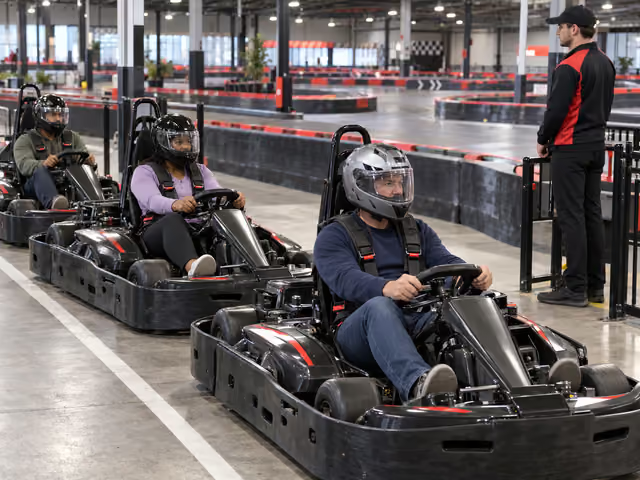
Wear the headsock and a fitted full-face helmet; fasten its strap, the kart's harness and the visor as staff directs. Staff assigns and activates each kart. Wait for permission to leave the pit lane.
Green starts racing; yellow warns of an incident, so slow and follow the marshal; red means all stop; black requires leaving the track for a safety infraction; white signals the last lap; the blue passing signal tells you to let faster karts through. The checkered flag ends the heat. Have staff explain the safe stopping and passing actions for this track before starting. Stay in the kart during a problem and seek the marshal's help using the briefing's method.
Build a lap, then read the result
Enter under staff direction
Join the single-file release when instructed. Begin gently so you can learn the route and the response of the pedals. Everyone drives at the same time; there are no alternating friend turns. Staff controls kart speed and may reduce it during incidents or for a driver's conduct or experience.
Drive smoothly through the circuit
Look ahead, slow in a straight line before a corner and turn at a speed you can control. Release the brake before accelerating. Keep both hands on the wheel. Avoid jerky steering, drifting, bumping and blocking. If traffic prevents a clear lap, follow staff guidance to leave room rather than forcing a pass; allow faster drivers through when signaled.
Respond to the flags
The marshal's instructions take priority over a lap time or a friend's challenge. React to caution and stop signals as briefed. If you spin, stall or feel unable to continue, use the staff-taught help procedure. Do not climb out onto the circuit or try to clear the kart yourself.
Finish the heat with everyone
At most K1 locations the heat ends when someone completes 12 laps. A slower driver can complete fewer laps in the same track time. Follow the end signal, return to the pits as directed and remain seated until staff permits you to get out. There is no extra lap to equalize lap counts.
Compare the official fastest laps
Collect the venue's result sheet after returning the helmet. The shortest valid fastest-lap time wins the heat; finishing order on the circuit and average lap time do not replace it. For your friends' comparison, use the official times from the same heat and track. For example, a 31.240-second best lap beats 31.500 seconds even if that driver crossed the line later. Ask staff about a missing time or penalty. If friends have identical displayed best times and staff cannot resolve them, this guide's house suggestion is to share the result, with no compulsory extra race.
Regroup and close the outing
Meet in the agreed off-track area, check everyone feels comfortable and share one corner or technique you learned. Return rented items and collect belongings. Another heat is optional and needs willing participants, payment or credits, and staff scheduling. If someone stops early, respect that decision; staff decides their official result and any booking remedy.
Help friends enjoy different experience levels
Tell first-timers that steering takes effort even though they sit down. A driver can ask for help with fit or stop participating; watching and joining the debrief still counts as spending time with the group. Agree a meeting place so friends in separate heats can find each other. Keep phones and other loose belongings stored as the venue instructs, and take photos only from permitted areas with people's consent.
Before a second heat, ask each willing driver to name one thing to try, such as smoother steering through a familiar turn. Let an experienced friend describe what worked off the track; they do not become a marshal or direct another kart during racing. View scores after driving so attention stays on the circuit.
Ask staff about unexpected speed changes, incidents or timing errors. Do not undo their decisions, alter equipment or demand a particular speed setting. A slower heat may reflect traffic and cautions as well as driving. Different tracks, speed settings and kart conditions make casual comparisons imperfect; treat separate sessions as personal experiences. K1's Grid Night, private events and leagues can race for position and need their own rules. This guide's two variations only change the off-track comparison; all track rules remain in force.
Already know the game?
Ideas & Twists
Choose a variation together before you start.
Go-karting · See main rules
House suggestion · two heatsBeat your own lap
Buy two heats for each willing driver on the same track and adult-kart format. Use the first as a baseline, then discuss one smooth-driving change before the second. After both, subtract the second heat's valid best-lap time from that driver's first best-lap time: 32.400 minus 31.900 is 0.500 seconds of improvement. Each person succeeds by improving their own time; there is no group winner. A zero or negative change means no measured improvement, not a penalty. If either result is missing, the track changes, or staff reports materially different speed settings, skip the calculation and discuss what you learned. Nobody must buy or finish a second heat; the outing can end after the first. Normal flags, timing and official results are unchanged.
Go-karting · See main rules
House suggestion · timing sheets neededThree-lap pace
Agree before the heat to compare sustained pace afterward, separately from the official fastest-lap result. Ask staff whether the result sheet provides individual laps and whether usable laps can be identified. For each willing driver, find their quickest sequence of three consecutive completed timed laps in the same heat, excluding sequences that include a caution, pit entry/exit or a staff-invalidated lap. Add the three times; the lowest total among friends wins this house comparison. A total of 31.2 + 31.4 + 31.3 is 93.9 seconds. Equal displayed totals share the result. If any participating driver has no eligible sequence or the sheet cannot identify usable laps, abandon the group comparison and keep the ordinary result. Do all calculations off the track with the sheets and optional paper or calculator; never ask for an extra lap or different driving behavior. Finish and return gear exactly as in the main outing.
About this guide
K1 Speed's U.S. Arrive & Drive pages supply this indoor adult-kart time trial, controls, preparation and finish. The chosen center's briefing and official results govern the session. The 2–8 range is a supported small-group hosting choice, subject to capacity confirmation. Regrouping, sharing an unresolved displayed tie and both after-race challenges are house suggestions. They do not change the venue's scoring or authorize changes on track. Other operators, private position races, outdoor tracks and leagues need their own session instructions.
Ready for something different?
Find another game →