

The quick version
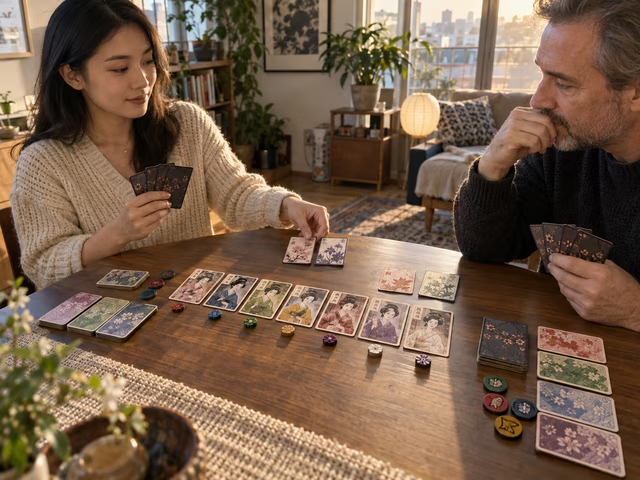
Deal six cards each after hiding one of the 21. On each turn draw one and use an unused action: keep one secret, discard two, offer three or split four. After four turns each, reveal secrets and award each artist to the larger matching collection. Win four artists or at least eleven value points.
Saved on this device only — clearing your browser's cache or site data removes them (no account backup).
Place the seven artists between you
Arrange the artist cards valued 2, 2, 2, 3, 3, 4 and 5 in a row, with a favor marker centered on each. Each player takes their four matching action markers face up. The item deck has as many cards of each artist's type as that artist's value, totaling 21.
Choose a first player. Shuffle all items, remove one face down without looking, and deal six to each person. The eight remaining cards form the draw deck. Keep hands private.
Draw, then spend one of four actions
Take the top item card, then choose one unused action marker, resolve it completely and turn it face down. Alternate turns until both people have used all four.
Secret: place one hand card face down under that marker; it will join your collection at round end. Trade-off: put two hand cards face down under its marker; neither will score this round. You may inspect your own hidden cards.
Gift: expose three cards. Your opponent chooses one for their side of its artist; you place the other two on your side of their matching artists. Competition: expose four cards as two clearly separate pairs. Your opponent chooses a whole pair; you receive the other. Put every received card beside its matching artist. Do not split or renegotiate a pair after the choice.
Compare favors after all actions
Reveal Secret cards and place each on its owner's side. For each artist, compare item counts on the two sides. Move its marker to the side with more; on a tie or two empty sides, leave the marker where it already is.
Count artists with markers on your side and add their printed values. Four artists or at least eleven points wins. If one player has four artists while the other has eleven or more points, the eleven-point player wins.
If neither wins, leave favor markers exactly where they are, collect all 21 item cards including discards and the excluded card, reset action markers, switch starting player and deal a new round. Tied artists in later rounds keep their earlier allegiance. Continue until a winning condition is met.
Show the opponent's choice first
Demonstrate Gift and Competition before dealing. The offered groups, not the art theme, are the crucial distinction. Keep received items aligned so each comparison is obvious. Ask the receiving player to state their selection before moving cards; this prevents accidental pair changes.
Players describe a tight two-player contest, with tastes differing over how much control the offers provide. Demonstrate both Gift and Competition before dealing.
Already know the game?
Ideas & Twists
Choose a variation together before you start.
Hanamikoji · See main rules
Original STUDplay house twistKnown omission
Reveal the one removed item card at the beginning of each round and leave it beside the deck. It stays out of play. Both players can now reason from the same known missing card.
Hanamikoji · See main rules
Original STUDplay house twistOpen secret
Resolve Secret by putting its chosen card face up under the marker immediately. It is visible but still joins that artist only during end-of-round scoring. This makes the remaining offers easier to read.
Hanamikoji · See main rules
Original STUDplay house twistVisible trade-off
Place the two Trade-off cards face up when discarding them. They remain out of that round's scoring and cannot be selected by either player. The other actions keep their normal hidden information.
Hanamikoji · See main rules
Original STUDplay house twistCommit an opening
After the deal but before the first draw, each player secretly selects an action marker. Reveal them together. Each player's first turn must use that chosen action after drawing; later turns may use remaining actions in any order. This creates an early commitment without changing card totals.
Hanamikoji · See main rules
Original STUDplay house twistReset neutral ties
At the end of each round, move a tied artist's favor marker to the center instead of keeping its prior allegiance. Majority artists still move to the winning side. Check the usual four-artist or eleven-point win after this reset. This reduces the defensive advantage carried into later rounds.
About this guide
Use the named physical base game and its supplied cards, boards and rules. Rules below are paraphrased teaching guidance. Original STUDplay house twists are optional suggestions, not publisher rules or balance-tested claims; agree one before setup.
Ready for something different?
Find another game →