

The quick version
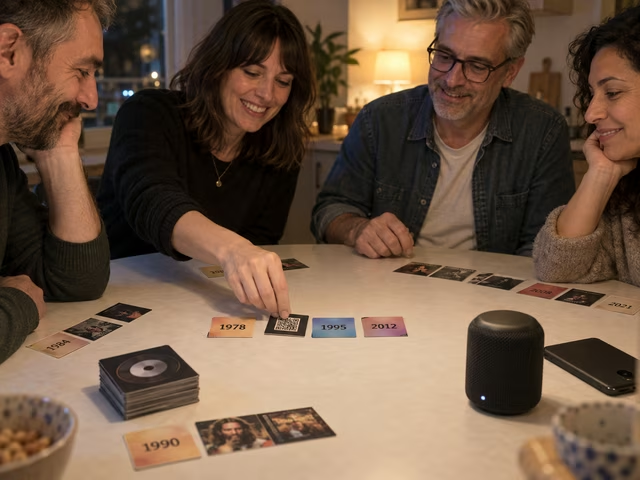
Give everyone one face-up dated card as a timeline starter. Scan a new card without exposing its date or track information. The active player listens and puts it date-side down into their timeline. Reveal: correctly ordered cards stay, incorrect cards are discarded. Equal-year neighbors allow either order. First to ten cards in their timeline wins.
Saved on this device only — clearing your browser's cache or site data removes them (no account backup).
Check playback before the first round
Use the physical Hitster Original cards and current app in your region. Open the app, test a scan and choose its available playback mode. Current US instructions allow short clips without a paid account; full-track options depend on the connected service and account. Verify those options on the actual device before starting.
Set tokens aside. Deal each player one card date-side up. Pick a first player and move clockwise; choosing randomly is this guide’s simple start convention. Designate a DJ to scan, rotating that task if convenient. Keep song-identifying screens and smartwatch notifications hidden from players. Choose a suitable edition or screen track content beforehand.
Build a timeline one song at a time
The DJ scans the top card’s QR code without revealing its date. Turn the device face down before playback, following the app’s countdown or motion setting. The active player listens, then places the card date-side down before, after or between their dated cards.
Reveal the card after the position is committed. If its year fits that gap, keep it face up there. If it shares a neighbor’s year, either adjacent position is valid. Otherwise discard it; do not move it to the right place and keep it. The next player takes a fresh song.
In this no-token format, naming title or artist is for enjoyment and earns nothing. Do not look up a track while deciding. First to a timeline of ten cards, including the starting card, wins. If a card or display accidentally exposes the answer before placement, replace that card without penalty.
Let the song finish its job
Keep volume low enough for comfortable conversation. Let the active player make their own placement before everyone discusses memories or guesses a year. A track that fails to load is replaced, not counted as a miss. Use the date printed on the card as the game’s answer rather than debating different reissues during play.
Already know the game?
Ideas & Twists
Choose a variation together before you start.
Hitster · See main rules
Published modeCooperative timeline
Use one shared starter card and five tokens as lives. Everyone discusses each placement. A wrong placement discards the card and costs one life. Reach ten total cards before losing the fifth life to win together; tokens have no other use here.
Hitster · See main rules
House suggestionSix-card sampler
Keep individual no-token timelines but finish as soon as someone reaches six total cards. This makes an introductory game shorter without changing placement rules.
Hitster · See main rules
House suggestionSilent first impression
Before discussing a song on a cooperative turn, each person points to their preferred gap. Then compare the choices and agree one placement. Use the published cooperative five-life and ten-card result.
Hitster · See main rules
House suggestionPaired timelines
With four or six people, form pairs and give each pair one starter. Partners discuss quietly and alternate who commits the card. Play ordinary no-token turns between pairs; first pair to ten wins.
Hitster · See main rules
House suggestionEven turns
After somebody reaches ten, finish the current circuit so everyone has had the same number of turns. Most timeline cards wins; tied leaders share the win. The starting card counts toward all totals.
About this guide
Main rules use the publisher’s optional no-token Original mode. Cooperative mode is published; remaining twists, random start and interruption remedy are house choices. Playback requirements were checked on the current official US page on 2026-10-09; no claim that regional services are identical.
Ready for something different?
Find another game →