

The quick version
Book a beginner walking ride and confirm every rider's eligibility, helmets and packing rules. Arrive for check-in, hear the briefing, and let staff match horses and adjust tack. Rehearse the guide's start, stop and steering cues before leaving. Follow in the assigned order and spacing, ask for help promptly, and dismount only when staff direct you at the return.
Saved on this device only — clearing your browser's cache or site data removes them (no account backup).
Book the ride and prepare each rider
This guide hosts 2–6 friends on an outfitter-led, walk-only trail ride, with one horse per rider and staff in addition to that count. It is a suggested small-group format, not an operator's capacity limit. Confirm enough places on the same departure before collecting commitments. The outfitter chooses the route and may combine your booking with other guests.
Tell the operator honestly who has never ridden. Ask about terrain, time in the saddle, mounting help, rider restrictions, weather cancellations and what happens if someone needs to stop early. Each person decides whether to take part; a friend can decline without explanation to the group. Ask privately about needs that could affect horse matching, balance or mounting, and discuss them directly with staff. Do not promise that a walking ride is effortless or suitable for every person.
For each rider, confirm an operator-assigned horse, fitted saddle and stirrups, bridle and reins, and a properly fitted, fastened equestrian helmet. Use a certified riding helmet rather than a bicycle helmet. Helmets for every rider are a condition of this guide's chosen format even where an operator makes them optional for adults. Wear full-length sturdy pants and closed-toe footwear accepted by the outfitter; riding boots with a small heel are a good option. Have staff approve soles and fit rather than assuming any hiking boot or trainer works.
Bring the booking details and required check-in identification or forms, weather-appropriate clothing and sun protection. Arrange drinking water before and after the ride, and ask exactly what may be carried on horseback and where other belongings can be secured. Do not assume backpacks, bottles, phones, cameras or bear spray can go with you. The outfitter must explain its emergency communication, first-aid and wildlife arrangements; guests should not improvise these by bringing prohibited items.
Hear the briefing before getting on
At check-in, complete the operator's required paperwork and screening, then introduce the group as beginners. Let staff select the horses and lead the approach; do not enter pens, feed horses or walk behind them on your own. Staff check tack, adjust stirrups and show how to mount using their assistance or mounting aid.
Ask the guide to demonstrate the cues for moving off, stopping and turning on these particular horses, the spacing to maintain, how to call for help and what to do at crossings or if a horse startles. Repeat the instructions back if uncertain. Keep reins in your hands as shown; never loop them around a hand or wrist. A friend giving conflicting riding advice makes the briefing harder to follow.
Before the trail, rehearse the taught cues under staff supervision in the departure area. If the rider or guide is not comfortable continuing, resolve it there: more instruction, a suitable change offered by staff, or sitting out. The guide decides when the group is ready to leave. This preparation is not a substitute for riding lessons.
Follow the trail and return together
Move off on the guide's cue
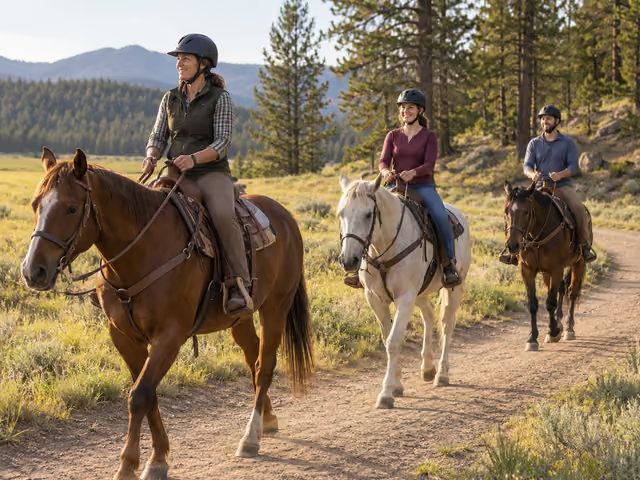
Take the order assigned by staff. Follow single file on the established trail at a walk, using the guide's spacing rather than riding nose-to-tail. Stay upright, look ahead and keep your feet positioned as taught. Keep both hands available for riding; photos can wait until after dismounting.
Let the guide manage the route
No passing, racing, shortcuts, horse swaps or requests to trot as a group challenge. At gates, crossings, other trail users or wildlife, follow the guide's instructions. Keep conversation calm and avoid shouting or sudden gestures around the horses. Enjoy what you can see from your place in line rather than crowding a friend for a better view.
Ask for help while there is time
Tell the guide promptly about a loose-feeling stirrup, painful position, fear or a horse moving unexpectedly. Use the taught stop cue if needed and wait for staff instructions. Do not jump off, turn back alone or attempt an unfamiliar correction. The guide chooses a safe pause, assistance or an early return. A shorter outing is a valid finish, not a failed challenge.
Finish at the corral
Wait for the guide to stop and organize the horses at the return. Dismount one at a time with staff help as needed, especially if your legs feel stiff. Hand the horse and borrowed equipment back to staff, gather belongings and confirm everyone is accounted for. The outing ends when all riders are off and the horses are back in staff care; there are no points, winners or ties.
The friend who organized the booking keeps arrival details and the group together. The outfitter leads the riding, handles the horses and decides changes on the trail.
Keep the outing comfortable and disputes simple
Choose the operator's shortest suitable beginner ride when the group is uncertain about time in the saddle. Leave breathing room afterward instead of scheduling another demanding activity immediately. Some people enjoy their first ride; others feel sore, intimidated or both. Ask how everyone is doing without promising that any reaction will be universal.
Requests to ride beside a partner, choose a particular horse, take a picture or change the pace go to the guide. Staff may decline because of horse compatibility, trail width or tour rules. Keep the assigned order unless staff change it. If two people heard different instructions, ask the guide to clarify rather than letting the group vote.
Respect a refusal to mount or continue. Confirm cancellation and early-return policies before paying, because a rider declining does not automatically mean a refund. A weather cancellation means choosing another outing or another date, not pressuring staff to depart. Watch for staff responding to questions and treating horses carefully; if your concerns are not resolved, do not mount.
After dismounting, have water where permitted and share one memorable part of the outing. Ask permission before taking or sharing photos. This is shared outdoor time and an introduction to guided riding, not a riding qualification or a guarantee of particular wildlife or scenery.
Already know the game?
Ideas & Twists
Choose a variation together before you start.
Guided horseback trail ride · See main rules
Suggested booking changeInstruction-first outing
Replace the ordinary departure briefing with an operator-offered beginner lesson followed by a walking trail ride. Confirm both parts and their combined commitment before booking; a standard tour may not offer this. Staff choose the lesson exercises, horses and readiness to continue. Keep helmets and all trail rules. Finish after staff supervise the final dismount; there is no skill score.
Guided horseback trail ride · See main rules
Suggested booking changeNaturalist-led ride
Choose an outfitter departure that explicitly includes landscape or natural-history interpretation. The guide adds explanations at places they judge appropriate; friends save questions for those pauses. Do not invent your own wildlife approach or stop the line for sightings. The walking pace, spacing, equipment and corral finish remain the same, and sightings are never promised.
Guided horseback trail ride · See main rules
Suggested booking changePrivate small-group departure
If the operator offers it, book a private guided departure for the same 2–6 riders instead of joining a mixed tour. Confirm the total price and operator staffing before everyone commits. Ask staff to tailor briefing and pauses to the least confident rider, while keeping their route, helmet, pace and safety decisions. Private means a booking arrangement; it does not permit independent riding.
About this guide
This is an original small-group host plan for a beginner outfitter-led walking ride, not a universal equestrian rulebook. Yellowstone's January 2026 NPS guidance and Roosevelt's dated 2026 operator page supply location-specific boundaries; USU Extension supports preparation. Helmets for every rider, the 2–6 friend range, practice request and three booking variations are this guide's chosen conditions or host suggestions. Confirm the actual operator's current route, eligibility, permitted belongings, staffing and cancellation terms. Private-stock, overnight, unguided and faster riding formats are outside this guide.
- National Park Service · Yellowstone horseback riding, updated January 21, 2026 ↗
- National Park Service · Yellowstone guided tour operators ↗
- Yellowstone National Park Lodges · Roosevelt Saddle Up, 2026 schedule ↗
- Utah State University Extension · So, You're Going on a Trail Ride, January 2024 ↗
- Yellowstone Horseback Riding · operator FAQ outside the park ↗
Ready for something different?
Find another game →