

The quick version
The opener pitches both shoes underhand, then the opponent pitches both. Opposing ringers cancel; an unmatched ringer is 3. Without a live ringer, the closest shoe within 6 inches scores 1, or 2 if the same side has both closest shoes. First to 21 or more after an inning wins.
Saved on this device only — clearing your browser's cache or site data removes them (no account backup).
Prepare the court and choose sides
Use a maintained horseshoe court: two securely anchored stakes 40 feet apart, measured front to front at platform level, with level pitching areas beside both pits. Stakes are 1 inch thick, expose 14–15 inches above platform level, and lean about 3 inches toward the opposite stake. Each landing pit is 31–36 inches wide and 43–72 inches long, filled with suitable loose sand, dirt or clay. Mark each foul line 37 feet from the target stake: 3 feet forward of the nearby stake. Leave clear space behind and beside both ends. A bag of shoes and stakes alone does not prepare a playable court.
Bring four purpose-made pitching horseshoes: two matching shoes per side, distinguished by color or markings. Keep a tape measure for distances, a straightedge for ringers, and paper and pencil for the running score. Check for damaged shoes, loose stakes, obstructing branches and hard objects in the landing area before starting.
In singles, both opponents start at the same end and walk to the opposite end after scoring. In regular doubles, put one teammate and one opponent at each end. Partners share their team's pair of shoes and stay at their assigned end; the receiving pair waits well behind and to the side of the target pit until all four pitches finish.
Take one unscored practice inning. Toss a coin; its winner chooses which side opens. Agree aloud: cancellation scoring, everyone's 37-foot line, first to 21 or more, and the friendly dispute remedies below. A new game resets scores and uses a fresh coin toss.
Pitch an inning, score, then return
Pitch both shoes
Stand beside your end's pit, behind the foul line. Pitch one shoe underhand, then your second from the same side. The opponent then pitches their two shoes; do not alternate individual shoes. Keep your feet off and behind the line until release. Everyone stays clear of the target and throwing lane. Approach only after all four pitches have stopped.
Identify ringers and close shoes
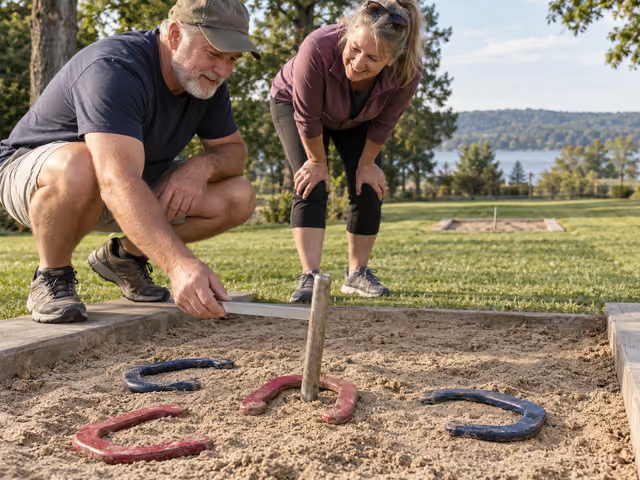
Count final positions, including shoes moved by another legal pitch. A ringer surrounds the stake so a straightedge across its open tips clears the stake without touching it. A non-ringer is in count only if its nearest part is no more than 6 inches from the stake. A leaner is an ordinary close shoe, worth no extra points. Beyond 6 inches is zero.
Cancel and award points
Cancel opposing ringers one for one. Each remaining ringer earns its side 3. Two ringers against none earn 6; two against one earn 3. With one live ringer, add 1 only if that side's other shoe is the closest remaining non-ringer within 6 inches. The opponent's close shoe cannot subtract from a live ringer. With no live ringers, the closest remaining shoe within 6 inches earns 1; add another 1 if the same side also has the second-closest shoe in count. Opposing close shoes at equal distance cancel; compare any remaining close shoes. Only one side scores in an inning.
Record and change ends
Agree the inning score before lifting shoes and add it to that side's running total. In singles, collect your pairs and walk to the other end to pitch back. In doubles, the receiving partners call the score, collect their team's shoes and pitch back. The scoring side opens the next inning. If neither side scores, the side that pitched last opens next.
Finish after the inning
After all four shoes are scored, a side at 21 or more wins. Going over 21 is allowed; there is no reset and no two-point margin. If tied below 21, continue normally. Cancellation lets only one side gain points, so both sides cannot first reach 21 in the same inning. Fixed-inning variations have their own tie rule.
Your ringer against their closest non-ringer earns you 3, not 2. One ringer each cancels those ringers; the closer of the remaining shoes can still earn 1 if within 6 inches.
Measure close calls and keep the lane clear
Demonstrate a ringer and a six-inch measurement before scoring. Read each inning's points and running total aloud. Keep cancelled ringers in place until the whole inning has been agreed; cancellation changes scoring, not the physical obstacles.
A pitch is foul if a foot touches or crosses the foul line before release, or the shoe hits ground outside the pit, its frame, a platform or backstop before coming to rest. It spends the pitch and scores zero even if it rebounds close. Pause play to remove a foul shoe in the scoring area, and resume only when the lane is clear. A legal shoe that merely ends beyond 6 inches is not a foul shoe; leave it until scoring.
For this friendly format, foul pitches are self-called or agreed by both sides. If a foul shoe moves legal shoes, use this house remedy: remove it and restore the legal shoes to their agreed earlier positions. If positions cannot be agreed, replay the entire inning with the previous running scores and the same opening side. This replaces NHPA's detailed disturbed-shoe procedures.
Measure before touching anything. If a moved shoe or unresolved scoring call cannot be settled together, use the same whole-inning replay remedy. If the wrong side opens and the mistake is caught before all four pitches, replay the inning; if caught afterward, keep the agreed score and restore the proper opening order next inning. Stop for a damaged shoe or unstable stake; make the equipment sound before resuming. Extra friends wait outside the lane and rotate into the next game rather than joining an inning.
Already know the game?
Ideas & Twists
Choose a variation together before you start.
Horseshoes · See main rules
Suggested house variationEight-inning match
Replace the race to 21 with eight complete innings of cancellation scoring. Keep the normal opening order and a separate inning count; highest running total after inning eight wins. If tied, play two more complete innings, then compare totals. Repeat in two-inning blocks while tied. In doubles this gives each partner four initial pitching turns.
Horseshoes · See main rules
Suggested house variationShorter pitching line
Keep the stakes 40 feet apart, but mark a 27-foot foul line from each target for every player. Use a level clear pitching strip beside the court at those lines, not the target pit or center lane. Everyone uses that distance throughout the game. Keep all scoring and the 21-or-more finish. This changes the throwing distance, not the stake spacing, and does not follow NHPA division eligibility.
Horseshoes · See main rules
Suggested house variationCount every close shoe
Replace cancellation with count-all scoring for eight complete innings. Each side independently receives 3 per ringer and 1 per non-ringer within 6 inches; opponents' shoes cancel nothing. Choose opening side A by coin toss. A opens innings 1, 4, 5 and 8; B opens 2, 3, 6 and 7. Highest total wins after eight, even if someone passed 21 earlier. If tied, play two more innings, A opening the first and B the second; compare totals after both. Repeat those two-inning blocks while tied. Keep the main pitching, foul and dispute rules.
About this guide
NHPA's January 2024 book is the selected scoring and rotation authority. The 21-point target, common full-distance line, self/agreed foul calls, whole-inning dispute replay and variations are friendly choices; this guide does not reproduce tournament timing, membership or division requirements. The older NHPA backyard primer supports preparation but has less precise rotation wording. Franklin corroborates the basic equipment and scoring; its differing distance/edition provisions are not adopted. Hosting advice is suggested.
Ready for something different?
Find another game →