

The quick version
Choose an indoor public skate, check rentals and beginner instruction, and agree an off-ice meeting point and finish time. Fit skates, helmets and gloves. First-timers learn balance, falling, getting up and stopping with an instructor before independent skating. Practice in the permitted area, then circulate only when you can control your movement. Regroup off the ice, decide whether to continue, and return rentals when you finish. This outing has no score or winner.
Saved on this device only — clearing your browser's cache or site data removes them (no account backup).
Choose the session and fit the gear
This plan supports 2–6 participating friends at an indoor public-skating session using figure skates. That is a small-group hosting range, not the rink's capacity. Public skate, hockey ice and figure-skating practice are different bookings. Check the exact session, admission, rental sizes, helmet provision, entry requirements and local rules before inviting people. Reserve places where required; do not assume a rink is open just because it has ice.
Ask where beginners may practice and how to arrange introductory instruction. Anyone new to skating, or unable to stop and recover from a fall, should book instruction before independent public skating; it may be earlier that day or on a previous visit. A floor guard is not necessarily an instructor, and some public sessions forbid coaching. If instruction or suitable practice space is unavailable, choose a lesson or another session instead. Confirm any separate class registration, membership and rental requirements.
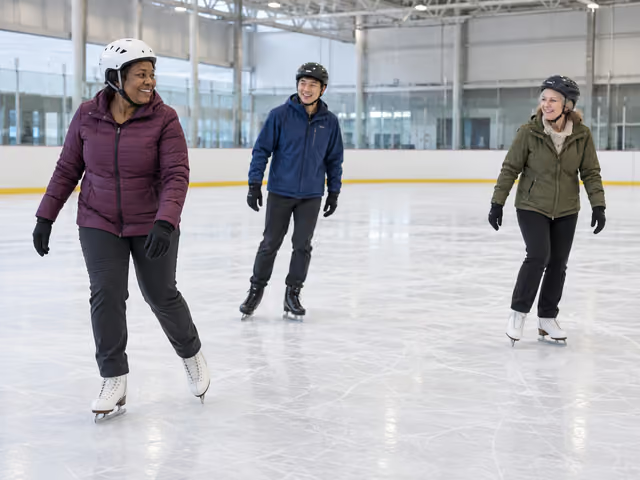
Each skater needs fitted figure skates, thin socks, gloves, a properly fitted skating helmet with its chin strap secured, and warm layers with trousers that allow movement. Helmets are required for everyone in this group plan, even where the venue only recommends them. Ask rental staff to check fit and lacing: boots should support your feet without pinching, and loose lace ends must be secured. Replace an uncomfortable or defective rental rather than pushing through pain. Bring ordinary shoes and water for off-ice breaks; ask where belongings can be left.
Choose an off-ice meeting spot that does not block doors and a departure time within your admission window. Pick a first regroup time, using a visible venue clock or an agreed off-ice reminder. Keep phones and headphones off the ice. Tell everyone they can rest, observe or finish early; count skating participants separately from spectators. Ask before physical help or photographs.
Start small, skate and regroup
Begin with instruction
Check in, collect rentals and put equipment on while seated. First-timers tell the instructor their experience and start in the designated teaching area. Learn and rehearse balance, a controlled fall and recovery, and a slow stop before skating independently. Tell the instructor if a movement feels beyond you. Friends wait in permitted areas rather than improvising a lesson in public traffic.
Take the first small movement
In the allowed beginner area, repeat the movement your instructor demonstrated. Forward marching means small alternating steps rather than trying to push off fast; progress to a short two-foot glide when ready. If others need the same space, take short attempts in turn and wait clear of moving skaters. Nobody has to finish a lap to participate.
Check control before a circuit
Practice your taught stop at low speed in clear, permitted space. A circuit is optional: stay with beginner practice until you can move, slow, stop and recover under control. Do not use the boards or another person as a brake. Ask for more instruction if you cannot control a stop.
Follow the rink's flow
Before entering circulation, look for traffic and follow the posted direction and staff's lane guidance. Skate forward at a speed you can control, leave space and pass only with a clear route. Keep entrances open. Do not form a line across the rink, pull someone along, weave, race, play tag, jump or spin. The group can skate separately; it need not stay side by side.
Meet off the ice
At the agreed checkpoint, use the permitted exit and meet at your off-ice spot. Stop there for conversation, water or equipment adjustments. Each person chooses another practice block, more circulation or finishing. Agree the next checkpoint before anyone returns; returning skaters check traffic again. If resurfacing starts, everyone leaves the ice and waits for staff to reopen it.
Finish and return equipment
Finish at the agreed departure time or when the rink ends the session, whichever comes first. Anyone can stop sooner; tell the host if leaving so nobody searches for them. Exit, sit to remove skates, put ordinary shoes back on, collect belongings and return rentals. There are no points, winner or tie-break. A few comfortable steps can be the whole outing.
Say: 'We will skate at our own pace and meet off the ice at the first checkpoint. Practice counts; laps are optional.' This is a host suggestion, not a skill test.
Keep different paces welcome
Let each person choose their own practice goal and stopping point. Confidence on wheels does not establish control on ice. Keep encouragement off the ice rather than calling someone into a busy lane. A confident friend can enjoy independent circuits while another stays in permitted beginner practice, then both return to the same meetup.
Use staff and posted rules to settle lane, passing, practice-area and session questions. Slow lanes, rest locations and coaching permissions differ between venues; do not declare the middle or the boards universally correct. If there is no usable space, leave the ice and ask staff about another session. Report crowding or unsafe behaviour instead of confronting someone while moving. If a person falls, give them room and alert staff when help is needed; do not grab or drag them upright. An injured or distressed participant stops and seeks staff assistance.
All gathering happens off the ice. The rink is shared, so do not add cones, targets, team challenges or improvised skating games. Staff instructions take priority over this host plan and its variations. Check any specific participation or access needs with the destination before booking.
Already know the game?
Ideas & Twists
Choose a variation together before you start.
Ice skating · See main rules
Host suggestion · supervised lessonLearn together
Replace the self-directed public outing with a booked adult beginner lesson for everyone who wants to join. Confirm places for the exact group, equipment, fees, registration and the instructor's ability to teach each person's level. Keep the main gear requirements. The instructor chooses the movements, practice space and rotation; do not run your own turns or drills. Meet off the ice after the lesson, return rentals and finish. Public practice afterward is an optional separate booking, not assumed class access. There is no score or required skill milestone.
Ice skating · See main rules
Host suggestion · repeat outingTwo visits, one skill
Turn the outing into two separately booked public-skate visits. At the first off-ice regroup, each person chooses one movement already taught by an instructor, such as marching, a short two-foot glide or a controlled stop, to revisit. Nobody chooses a jump or spin. Practice it only where the venue allows; ordinary circuits and breaks remain optional. Finish the first visit normally. At the second visit, recheck session rules and gear, repeat the same setup and choose whether to practise that movement again or ask for further instruction. Compare only your own comfort, not friends' attempts or lap totals. Finish and return rentals at the second visit's agreed time; either visit can end early. Each visit needs admission, and any extra lesson is booked separately.
About this guide
This is a host-designed indoor public-rink outing, not a judged figure-skating event or an official Learn to Skate course. Learn to Skate USA informs beginner preparation. The two operators illustrate concrete local rules and differences; the chosen venue controls its own session. The 2–6 range, all-participant helmet requirement, meetups, departure plan and both variations are host suggestions. Outdoor natural ice, hockey, speed skating and competition rules are separate formats.
Ready for something different?
Find another game →