

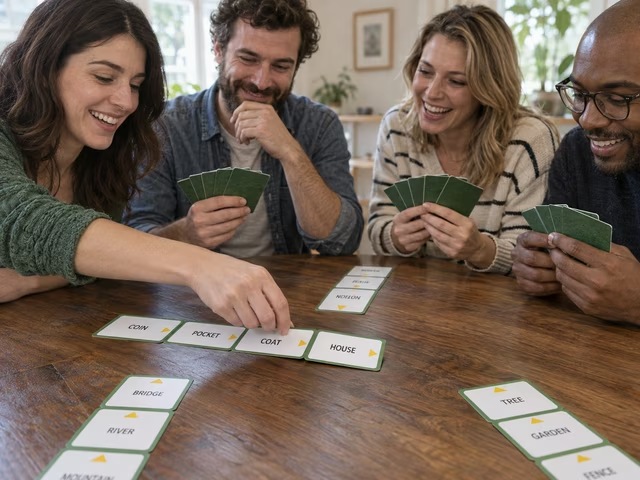
The quick version
Deal five cards each and start four separate one-card rows. On your turn, add a noun inside the smallest or outside the largest noun of a row, then refill. A fourth card triggers a Pickle Round: each opponent, then its starter, may add one larger noun or pass, without refilling. The last accepted card wins the row. First to four rows with three or four players, or three rows with five or six, wins.
Saved on this device only — clearing your browser's cache or site data removes them (no account backup).
Agree what counts as fitting inside
Shuffle, deal five secret cards each and place four face-up starters in a plus shape, with arrows pointing toward larger things. Keep space at both ends of each row. In this guide “inside” counts; merely resting on top does not. A conceptual interpretation can count if the table accepts it.
Play begins left of the dealer and moves clockwise. Each card normally needs to connect only to the card it touches. You may use another legitimate meaning of a word, but cannot add an extra noun to invent an entirely different object. Explain your actual containment claim when you play.
Grow a row until it becomes a contest
On your turn, place one card under the smallest end or over the largest end of any row. Never insert between cards. If you cannot or prefer not to play, put up to three unwanted cards under the draw pile and draw that many replacements instead. An ordinary turn ends with a five-card hand.
Anyone may challenge a connection. Hear the explanation briefly, then all except the challenged player vote yes or no. A majority rejects it; tied votes accept it. A rejected card goes under the draw pile, its player draws a replacement and their opportunity ends. Keep the debate about the words rather than the speaker.
An accepted fourth card starts a Pickle Round on that row alone. Beginning with the next player, each other person gets one opportunity to add a larger noun or pass; the starter then gets one final opportunity. Nobody refills during this contest, including the starter before their final chance. Ordinary challenge rules still apply.
The player of the last accepted card takes that entire row as one won set. Replace it with a new starter and refill all hands to five. Resume ordinary turns left of the person who triggered the contest. With three or four players, first to four won rows wins; with five or six, first to three wins.
Reward a clever connection without endless litigation
Give a challenged player one clear explanation and then vote. A strange but understandable connection can be the point of the game. If the draw pile empties, shuffle discarded cards into a fresh pile; won rows remain separate. Keep complete won rows visibly separated so nobody confuses the number of cards with the number of sets.
Already know the game?
Ideas & Twists
Choose a variation together before you start.
In a Pickle · See main rules
Published alternativeOne continuous story
Every new card must work with the entire row, not only its neighbor. Read the whole containment sequence aloud after playing. A word cannot switch meaning halfway through that row. Pickle Rounds and winning targets stay the same.
In a Pickle · See main rules
House suggestionPhysical containment only
Accept only a physical object or place actually fitting inside another; no words inside dictionaries or ideas inside minds. Multiple physical meanings remain allowed. Agree before dealing and use the normal challenge vote.
In a Pickle · See main rules
House suggestionFour-card hands
Deal and refill to four instead of five. Exchanges still replace up to three cards, and there is still no draw during a Pickle Round. Keep all normal row targets.
In a Pickle · See main rules
House suggestionOne-sentence explanation
Every play and every challenge defense gets one sentence. Then accept or vote without a second speech. The card must still make a clear containment claim; all scoring remains ordinary.
In a Pickle · See main rules
House suggestionFive contested rows
Play until exactly five Pickle Rounds have awarded rows, ignoring the normal target. Most won rows wins and ties are shared. Keep a public count so everyone knows when the last contest begins.
About this guide
Main play follows the ordinary three-to-six-player rules; the whole-row alternative is published. The remaining changes are house suggestions. This is a distinct containment argument game, not a generic word-association reskin.
Ready for something different?
Find another game →