

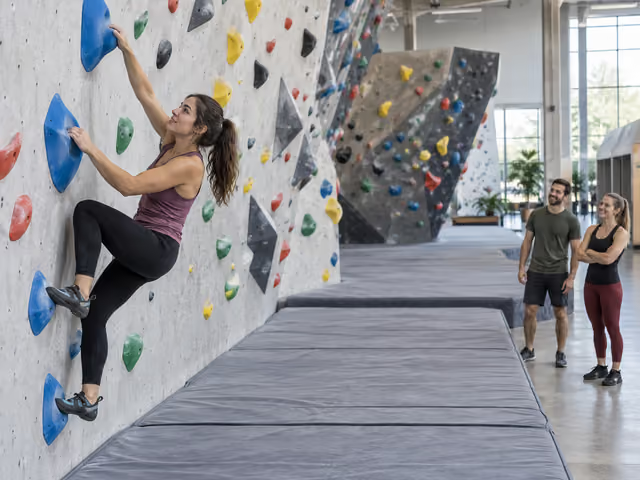
The quick version
Check in and complete the gym's required orientation first. Ask staff to identify an easy problem, its start, finish and descent. Wait for the whole fall zone to clear, try the problem, then descend as taught and leave space for the next climber. Rest between attempts. There is no group score or winner; finish at your agreed departure time or earlier if anyone needs to stop.
Saved on this device only — clearing your browser's cache or site data removes them (no account backup).
Arrange the visit and learn the wall
Choose a gym with indoor bouldering, then check opening hours, admission, shoe rental, group booking and first-visit requirements. Tell staff how many friends are coming and who is new. Reserve instruction if required or if anyone wants a coached introduction. Confirm the cost with the group before booking. Agree a departure time and a meeting place away from the climbing mats.
Everyone checks in, completes the required waiver or registration and follows the facility's orientation process. A more experienced friend does not replace staff instruction. Ask staff to teach and check your descent and landing technique before trying a problem. If you do not understand how to come down, get help before climbing.
Rent or bring correctly fitted climbing shoes; ask staff to check unfamiliar rental fit. Wear clothing that allows movement without hanging loosely. Empty pockets and remove jewellery as the gym directs. Store bags, bottles and chalk containers off the landing mats. This guide uses the bouldering area: no ropes, belayer, harness or personal crash-pad arrangement. The gym provides and manages the landing surface; padding does not remove injury risk.
Ask how this gym marks a problem's start, permitted holds, finish, grade and downclimb holds. Colours do not mean the same grade everywhere; some gyms use tags instead. Ask whether wall surfaces and volumes may be used. Choose ordinary finish-hold problems for the first visit rather than top-out structures. Warm up as staff recommends, starting with easy climbing.
Try a problem, come down and make room
Read the first problem from the floor
Have staff point out a suitable easy problem. Identify its starting hand positions and any marked starting feet, trace the allowed holds to the finish and plan the descent. For a typical two-hand start, put one hand on each marked start hold, or both on a single matched start hold, and establish yourself off the floor before moving onward. Follow the actual gym's marking instructions when they differ.
Wait for space
Look at climbers already on the wall and where they could swing or fall, including adjacent problems. Do not start if your climb or landing area overlaps theirs. Give people already climbing priority. Waiting friends stay in the gym's designated waiting area, away from fall zones; keep the mats clear of belongings.
Make one attempt
Climb using the holds permitted for that problem. An attempt ends when you complete it, return to the floor, fall or choose to stop. You may stop before the finish. If someone wants advice, discuss a possible hand or foot move; ask permission before giving a solution. Do not grab, push or lift the climber.
Recognise the finish
On a normal finish-hold problem, completion usually means controlling the final hold with both hands, rather than briefly slapping it. Confirm the local finish requirement with staff; do not impose a universal number of seconds. Do not climb over the wall or grab its upper edge unless staff has identified a designated top-out and taught its exit.
Descend and clear the wall
Downclimb wherever possible, using designated downclimb holds or other holds allowed for descent, even when they differ from the problem's colour. Follow the descent and landing method taught in your orientation. Once down, move out of the fall zone. Do not stage practice falls, jumps or spotting drills without facility instruction.
Rest, then choose another try
As a friendly turn-taking arrangement, take one attempt and yield to another waiting climber, including people outside your group. Rest off the mats; you do not need to climb again just because your turn comes round. Try the same problem again when ready, choose an easier one or watch. With 5–6 friends, spread into smaller groups only where there is room and non-overlapping climbing and landing space.
End the visit
Stop at the agreed departure time, at the end of booked access, or earlier when tired, sore or uncomfortable. Nobody owes a final attempt or a completed problem. Regroup off the mats, collect belongings, return rentals and check out as the gym requires. There are no points, ties or playoff climbs in this visit.
Touching the floor or using an off-route hold can help you rehearse a move, but it is not a completed ascent of the marked problem. Call it practice, then start a fresh attempt if you want a completion. Use whatever the facility permits to descend safely; descent is not an extra scoring challenge.
Keep the session social and settle uncertainty
Start by finding problems each friend can comfortably attempt, rather than making everyone chase the same grade. A grade describes difficulty, not points earned. Ask, Would you like a hint, a demonstration or another try on your own? Some people enjoy a shared puzzle; others want to work it out first. Discuss moves from a waiting area, and keep safety communication clear.
If a start, volume or finish is ambiguous, ask staff rather than turning it into a group argument. If a hold spins or appears damaged, stop using that problem and report it. If someone enters a fall zone, alert them and staff; do not step under the climber to move them. If anyone falls awkwardly or is hurt, stop the activity and get facility staff assistance.
Indoor spotting policies differ. Never assume a friend should stand underneath to catch you. Ask staff whether spotting is appropriate or required and get instruction before doing it; where required support or instruction is unavailable, choose another suitable problem with staff. This guide does not teach spotting or replace facility induction.
In a busy area, share access with other visitors rather than reserving a whole wall for your group. Rest somewhere permitted, and regroup at your meeting place if you spread out. Optional chalk and brushing follow gym policy; only brush reachable holds as instructed, keeping yourself and equipment out of another climber's fall zone. Save training boards and unfamiliar dynamic moves for a staff-led introduction.
Already know the game?
Ideas & Twists
Choose a variation together before you start.
Indoor bouldering · See main rules
Suggested social formatSolve a problem together
Choose one manageable marked problem that everyone wants to try. Before each person's attempt, ask whether they want suggestions or a demonstration. Compare different movement ideas between attempts, keeping normal route rules, rests and shared-wall priority. Completing it is optional; move on when the group is ready. Nobody assists by touching the climber.
Indoor bouldering · See main rules
Suggested technique formatRepeat an easy climb
After completing an easy problem, optionally repeat it with attention to deliberate foot placement. Keep every permitted hold available; do not remove holds or require a risky pause. Compare how the movement felt after coming down. Each repeat remains a separate attempt with a rest and a turn for others; finish when ready, with no speed or endurance score.
Indoor bouldering · See main rules
Suggested mixed-confidence formatChoose your own problem, then regroup
Instead of everyone attempting one shared climb, each friend picks a problem with staff guidance as needed. Friends may watch or discuss moves from outside fall zones. Regroup at your agreed off-mat meeting place to share one thing you tried, whether or not you finished it. Keep the original departure time and facility rules; grades are not compared as a contest.
About this guide
Recreational indoor outing, not a purchased-game edition or competition ruleset. Primary facility guidance and the ABC induction script were reviewed October 2, 2026. Sender One explicitly labels its start and finish conventions as house rules; they illustrate why local markings must be checked, not a universal start rule. The group size, one-attempt rotation, departure plan and social variations are hosting suggestions. Facility conditions and instruction always take priority; this text does not qualify a host as a climbing instructor.
- Association of British Climbing Walls · bouldering induction script hosted by The Climbing Academy (August 2024 path) ↗
- The Climbing Hangar · current conditions of use ↗
- Sender One · facility house start and finish rules, September 20, 2024 ↗
- Central Rock Gym · current first-visit FAQ ↗
- The Climbing Hangar · local colour and grade explanation ↗
Ready for something different?
Find another game →