

The quick version
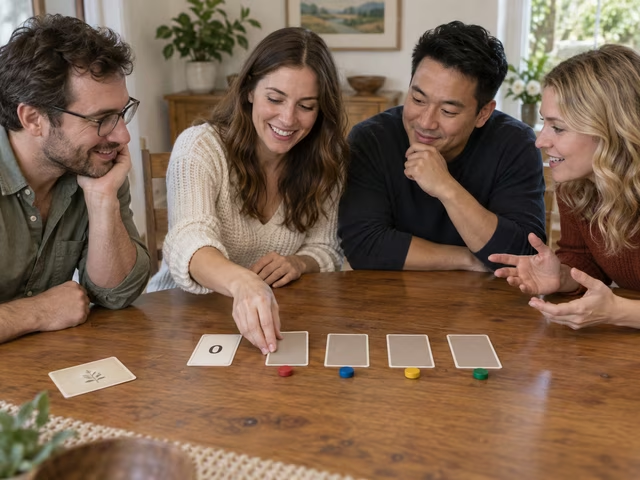
Deal one secret number each. Choose a spoken category and agree which end is low. Give examples without numbers, arrange the cards face down from low to high and adjust together. Once everyone agrees, reveal from the zero card onward. An entirely increasing row is a shared win; any reversal is a shared loss. One reveal completes a game.
Saved on this device only — clearing your browser's cache or site data removes them (no account backup).
Choose a scale everyone can use
Separate spoken categories from action categories. Use only spoken categories for this seated format, and set aside prompts involving excluded or unwanted subjects. Shuffle the numbers from 1 to 100 and deal one privately to each person. Set the zero card at the left end of the table and give each person their matching player-color cards.
Draw a category card and choose one of its two sides together. Confirm the direction of the scale before giving clues: for example, “foods from mild to spicy” has mild at the zero end. Nobody is judging whether your preference is correct; the group is trying to understand your estimate.
Explain, compare and place
Give an example that fits your secret number’s approximate position. For something low on a comfort scale, you might say “a stiff airport chair”; a high example might be “my favorite armchair.” These are original teaching examples. Never say your number, a quantity, a price or a coded numerical hint.
Speak in any order. Put your number card face down into the growing row, with a player-color card beneath it to show ownership. Cards may be inserted between other cards. Talk about how examples compare; you may qualify an example, replace it or ask others for help. Keep actual numbers secret.
Move cards until everyone agrees with the complete order. Then stop discussion and reveal from the zero end. Every number must be greater than the preceding one. If so, everyone wins. A single reversal makes this a loss; finish revealing and hear why people chose their clues. There is no individual score or tiebreak. Reshuffle for another game only if everyone wants one.
Let the differences do the work
Ask “What makes that example feel higher?” rather than telling someone what their number must be. Give everyone time to explain before a confident player rearranges the whole row. If a category relies on unfamiliar references, replace it before clues begin. If a number is exposed accidentally, abandon that attempt, reshuffle and start a fresh one.
Already know the game?
Ideas & Twists
Choose a variation together before you start.
Ito · See main rules
Published challenge, fixed house starting levelTwo numbers each
Deal two secret numbers to every person instead of one and give a separate example for each. Use two owner-color cards per person. Arrange all twice-as-many cards into one increasing row; any reversal still loses. This begins at the publisher’s later challenge level without playing its gradual progression.
Ito · See main rules
House suggestionOne example only
Give exactly one example per card and never replace or qualify it. Players may still compare those examples and rearrange cards. Reveal and judge the complete row normally. The restriction rewards choosing a clear initial reference.
Ito · See main rules
House suggestionSecond category, same numbers
Arrange the hidden cards using the first category, but do not reveal them. Choose a second category and give new examples for the same secret numbers. Discuss whether these clues suggest changing the order. Agree one final row, then reveal once and apply the normal all-correct win condition.
Ito · See main rules
House suggestionReverse the scale
Before dealing, announce that the printed category runs in the opposite direction. A normally impressive example now belongs low if that is the reversed endpoint. Cards themselves must still rise numerically from zero; only the meaning of the examples reverses. Use one game, then restore the usual direction.
Ito · See main rules
House suggestionEveryday objects
Replace the category card with “objects from awkward to easy to carry in one hand.” Use objects people recognize; describe imaginary handling rather than bringing objects out. Normal hidden numbers, discussion and increasing-row result remain.
About this guide
Main mechanics follow the Arcane Wonders English rules. Spoken-category selection, single-game endpoint, interruption remedy and labelled house variations are editorial choices. The challenge option is identified separately; no claims of universal popularity are made.
Ready for something different?
Find another game →