

The quick version
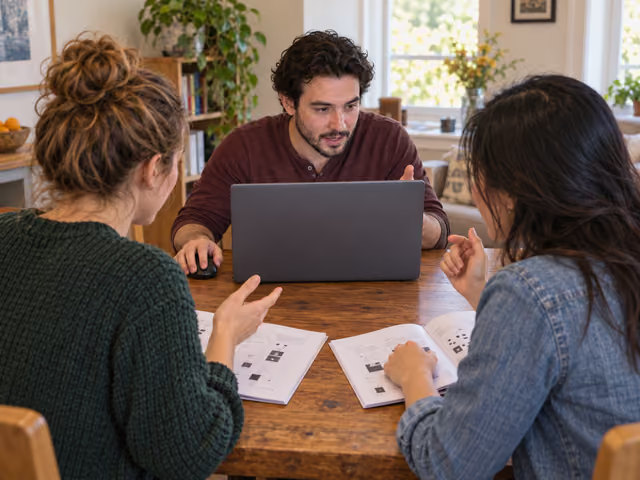
Choose one Defuser and give everyone else a printed manual. Hide the computer screen from the Experts and their manuals from the Defuser. Complete the controls tutorial, then open The First Bomb mission and read its briefing before starting. The Defuser describes one module; an Expert finds its matching manual page, asks for details, and gives an instruction. The Defuser repeats it back, acts, and reports the result. Continue until the game confirms defusal or explosion; then swap roles.
Saved on this device only — clearing your browser's cache or site data removes them (no account backup).
Prepare one screen and separate manuals
This guide uses Steel Crate Games' unmodified Steam Windows base game in English, played together in one room without VR. Use a PC on a Windows version supported by the current Steam client, install and test the game before friends arrive, and provide its screen, mouse and power supply. A laptop with its own display is convenient. Do not use a shared TV that lets the Experts watch. Other computer, console, mobile and VR editions exist, but their controls and equipment are outside this setup.
Print the complete English Bomb Defusal Manual from bombmanual.com: the currently supplied Version 1 has 23 pages and verification code 241 on its cover. Bring one full copy for each Expert: one copy for two people, two for three, three for four. When the game asks for a manual verification code, use the code on the matching cover. If a later game update requests another version, obtain that manual before playing. This guide is the hosting explanation; the printed manual's diagrams and decision tables are essential equipment, not optional further reading.
Seat one Defuser facing the screen and one to three Experts behind its opaque back. Keep the printed pages facing the Experts. Test the sightlines from every seat and remove reflections or mirrored screens. Everyone needs to hear ordinary spoken instructions. Use chairs and a stable table; set game audio so the group can hear each other. A phone, headset, VR device, gamepad, internet voice call and physical props are not part of this main format. Downloading/installing and printing happen before the session; test that your installed copy launches.
Optional: paper and pens for Expert notes or page tabs for navigation. With several Experts, agree who will read the current instruction and who will check it; do not have three people issuing conflicting commands. Tell a newcomer what each role involves and let them choose their first role. Complete the in-game controls tutorial, then choose The First Bomb mission. Read its displayed time, module count and strike allowance together before the Defuser starts the attempt.
Describe, look up, confirm, act
Describe the first puzzle
Once the countdown starts, the Defuser surveys the virtual bomb and chooses a module to describe. Say what kind of controls or display it has, then answer the Expert's questions. Rotate the bomb in the game to inspect its casing when needed. The Experts turn to the matching page in their printed manuals.
Ask for the needed facts
The Expert decides which observations the page needs. The Defuser reads colors, labels, positions or sequences accurately and supplies casing facts such as serial number, batteries, indicators and ports when asked. Do not substitute a remembered solution from an earlier bomb. Keep the current module name in the conversation so everyone follows the same puzzle.
Confirm one action
The Expert reads the page's instructions, checks the relevant condition, and states a single clear action. The Defuser repeats the instruction back before clicking, cutting, holding or releasing in the game. This read-back is a host suggestion. If the description is ambiguous, ask another question instead of guessing. Report the result immediately.
Continue while time remains
A green module light marks a solved ordinary module. Choose another; there is no required order and no alternating player-turn schedule. Some puzzles require several stages before they are solved. The printed page supplies those stages and timing conditions. An error can add a strike; tell the Experts the new count before following another instruction.
Read the game's outcome
The team succeeds when the game confirms the bomb is defused. Time reaching zero or exhausting the permitted strikes ends the attempt in an on-screen explosion. On bombs with a strike indicator, the third strike explodes the bomb and earlier strikes speed the countdown; without that indicator, the first strike explodes it. Let the game settle a last-second outcome.
For a plain Wires module, start with its wire count and colors from top to bottom; the Expert then uses the matching wire-count rules and asks for any other needed fact. This is a description example, not a shortcut telling you which wire to cut.
Use the manual as new modules appear
Begin with the introductory mission instead of jumping into a friend's advanced save. Find an unfamiliar module by its picture and controls before issuing commands; similar-looking wire puzzles can have different pages. Keep the full manual available even if one familiar puzzle is easy.
Later bombs can include needy modules. These reactivate and need repeated attention rather than one permanent solution; use their separate manual section while continuing the other puzzles. Start with missions that your group understands, and read each new briefing. Free Play becomes available after completing The First Bomb and allows configurable bombs. Steam Workshop missions and modules need their own instructions and are outside this base-game guide.
Share the result and swap roles
This is one cooperating team, not a tournament between the Defuser and Experts. There are no individual points or tie-breaks in this hosting format: each attempt is either a successful defusal or a failed bomb, as the software reports. Success is shared by everyone involved.
After the result, stop to identify one description that worked and one misunderstanding to fix. Start another attempt if the group wants to continue; its puzzle details can change, so inspect and read again. Rotate the Defuser and redistribute Expert responsibilities only between attempts. This guide suggests finishing after every willing person has had one Defuser round; agree on another stopping point before starting if someone prefers to remain an Expert. No fixed whole-session duration is promised.
Keep the information gap fair
For symbols, describe visible features until both players agree on the same symbol; a nickname helps only when everyone understands it. For words that sound alike, spell exactly what is displayed. For spatial instructions, agree that left, right, top and bottom refer to the Defuser's current view of the selected module. Announce a change of module rather than letting an Expert continue solving the one you left.
When Experts disagree, stop issuing commands long enough to locate the relevant printed condition. The Defuser supplies observations; the manual supplies the puzzle instruction; the game registers the result. A strike is part of that attempt, not permission to rewind it. Community shortcuts and reorganized cheat sheets change the puzzle experience; this main format uses the full official manual.
Do not let Experts peek at the screen or show manual pages to the Defuser during a live attempt. If someone accidentally reveals the hidden information, this guide suggests abandoning that attempt and starting another, without recording it as a fair success. That is a house remedy, not an official software penalty. If a technical interruption makes the attempt unusable, stop and restart after fixing it; do not invent a successful result.
Clear speech is more useful than shouting. The game involves timed pressure, reading, visual distinctions and audible cues; seated play does not establish accessibility for every person. Offer breaks or a different activity if the timer is unpleasant. Free Play's module exclusions may help a particular group, but check what that person needs rather than promising universal access.
Already know the game?
Ideas & Twists
Choose a variation together before you start.
Keep Talking and Nobody Explodes · See main rules
Official setting with a host-selected changeLonger Free Play countdown
After completing The First Bomb, choose an unmodified Free Play setup with needy modules and Hardcore disabled. Record the displayed module count and countdown, then increase the countdown by one available setting increment while keeping the module count unchanged. All observation, manual, strike and success rules remain. This gives the same size of puzzle more time; it does not make time unlimited. Check the final briefing before starting.
Keep Talking and Nobody Explodes · See main rules
House coordination suggestion · 3–4 peopleDivide the Expert work
Keep one Defuser and give each of the two or three Experts a full printed manual. Before starting, assign different module pages to different Experts. The Defuser describes the chosen module to its assigned Expert while others listen or prepare their pages. Only the assigned Expert gives commands for that module; a helper may ask to check an instruction. Switch the speaking Expert only after announcing the handover. Screen secrecy, bomb settings and the shared win/loss condition stay unchanged. With only two people, use the main format.
Keep Talking and Nobody Explodes · See main rules
Official Free Play accessibility settingExclude a difficult module
After completing The First Bomb, use Options → Accessibility to disable up to three module types that the group has agreed to omit, then launch Free Play. Keep the chosen module count, countdown, needy and Hardcore settings fixed and read the new briefing before starting. These exclusions affect Free Play only, not mission bombs. The remaining modules still use their full printed instructions and the same failure and defusal conditions. This removes selected puzzle types; it is not a promise that every access need is resolved.
About this guide
Rules follow the unmodified English base game and the current English Version 1 manual, reviewed October 2, 2026. The exact Steam build number was not exposed by the reviewed public pages. The 2–4-person range is this guide's hosting choice; the publisher allows two or more with no fixed Expert maximum. Separate printed copies, read-backs, role rotation, stopping point, Expert assignments and compromised-round remedy are host suggestions. Full module logic remains in the required manual. Remote, VR and modded formats are outside the main setup. The community glossary corroborates Free Play switch terminology; publisher sources establish the base rules and unlock.
- Steel Crate Games · English Version 1 Bomb Defusal Manual ↗
- Steel Crate Games · computer setup and controls ↗
- Steel Crate Games · modes, platforms and local cooperation ↗
- Steel Crate Games · Free Play and accessibility FAQ ↗
- Steam · Windows base game and system requirements ↗
- KTANE community repository · Free Play case and Hardcore glossary ↗
Ready for something different?
Find another game →