

The quick version
Each kicker gets up to three playable rolls to put a ball in fair territory. Run first, second, third and home for one run. Catch a kick, force a runner out at a base, or hand-tag them with the held ball. Swap after three outs or five runs. Higher total after five complete innings wins; a tie stays a tie.
Saved on this device only — clearing your browser's cache or site data removes them (no account backup).
Lay out the diamond and teams
Use a level outdoor field with room beyond every base for running and kicked balls. Check permission to use it, holes, slippery patches and nearby people. Wear athletic shoes; keep metal cleats off this friendly field. Use an inflated 10-inch rubber kickball, following its printed inflation guidance. Bring a pump if it needs inflation.
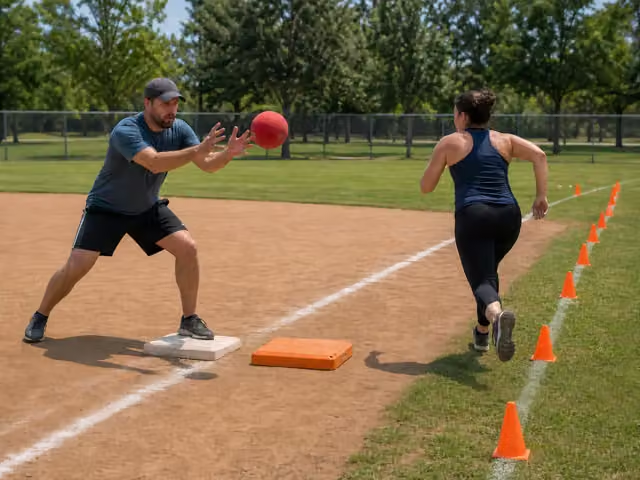
Mark home, first, second and third as the corners of a 60-foot square. First is to the kicker's right, third to the left. Put the fifth, contrasting marker beside first on its foul side: fielders use the inner base and runners coming from home use the outer base. Draw foul lines from home through first and third, extending into the outfield. Mark the pitcher at the square's center, about 42 feet 5 inches from home. Mark a separate outer boundary beyond the playing area; balls past it are out of play. Keep waiting players beyond it and clear of the foul lines.
Make two equal teams: 12, 14, 16, 18 or 20 players total. This six-to-ten-per-side house format has no gender quotas. Everyone fields and joins their team's written kicking order. Start with pitcher, catcher, first, second and third base coverage, then put remaining fielders across the outfield. Rotate fielding jobs between innings, keeping kicking order unchanged. The catcher stands well behind the kicker, outside the swing of the leg; all other defenders start behind the first-to-third diagonal until the kick.
Choose the first kicking team by a coin flip or mutual agreement. Write one score column per inning. Agree that each half ends at three outs or five runs, both teams finish every inning, and tied totals after inning five stay tied. This format has no time limit, early mercy finish or walk-off.
Roll, kick and run
Give the kicker a playable roll
The fielding pitcher rolls gently along the ground over home. The kicker keeps the planted foot at or behind the plate's front edge and kicks once with foot or lower leg. A playable roll crosses the plate on the ground at a manageable pace. Each such roll uses one of three chances, whether missed, left alone or kicked foul. A wide, bouncing or excessively fast roll is dead and repeated, even if kicked; no runners move. If the third playable roll produces no fair kick, the kicker is out. There are no separate balls, strikes or walks.
Call fair or foul
For this house format, the ball's first ground contact or first touch by a person determines fair or foul; the lines count as fair. A short fair kick is legal, including a bunt. Once fair, a ball rolling across a foul line remains live inside the outer boundary. An uncaught foul is dead: runners return, and the kicker has used a chance. A catch before any ground contact makes the kicker out, even over foul ground. On a caught foul, runners return and may not advance. A double kick or kick from in front of the plate is treated as an uncaught foul.
Advance in order
On a fair kick, the kicker runs to the outer first-base marker, then second, third and home in order, touching each. Runners may take further bases while the ball is live. First may be overrun safely if the runner is only stopping; return to inner first before the next pitch. An attempt toward second removes that protection. Other bases cannot be overrun safely. Never pass a teammate ahead of you or deliberately miss a base. Runners stay on their bases until a fair kick; leaving early is an out, with the pitch replayed and other runners restored. No stealing, sliding or bodily collisions.
Make an out
A catch before the ball hits the ground retires the kicker. Otherwise fielders may throw to each other. At a force, a fielder holding the ball touches the required base before the runner arrives. The kicker is forced to first; a runner on first is forced to second, and so on only while every base behind is occupied. If a trailing runner is put out, a force on runners ahead disappears. Without a force, gently touch the runner below the shoulders with the ball held in your hand while they are off base. Never throw the ball at a person. An exact arrival tie is safe. Multiple outs can occur on one play.
Retouch after a fair catch
On a fair fly caught in the air, runners must stay on or return to the base they occupied before the kick. They may advance only after the catch is secured and they have touched that base again. A defender holding the ball can touch the original base before a returning runner gets back to retire them. A dropped ball has no tag-up requirement. There is no automatic infield-fly out; deliberately dropping a catch to manufacture extra outs makes the play dead and replayed with runners restored.
Record runs and end the play
Touching home earns one run before the third out. If the third out is a force or the kicker is out before reaching first, no run from that play counts. Otherwise count runs that crossed home before the third out. End the half immediately at five valid runs, even if further runners could score. Between other plays, stop advancement only when the pitcher holds the ball at the center mark and all runners are on bases with nobody attempting to advance. Announce the outs and score, then roll to the next kicker.
With only a runner on second, a ground kick does not force that runner to third: first was empty. To retire them between bases, use a gentle hand tag. Touching third while holding the ball does nothing by itself.
Swap sides and finish the game
At three outs or five runs, clear the bases, record that half's runs and swap kicking and fielding teams. Two halves make one inning. Each team's next half begins with the next person in its order, not the first name again. If the next kicker is already on base during a half, replace them on base with a teammate who is neither on base nor next to kick; that substitute inherits the base and gains no extra kicking turn.
Complete both halves of inning five, even if the second team is ahead. Add each team's runs; the higher total wins. Equal totals are a draw. For another game, reset scores and kicking orders and choose the first team again. Stop immediately if the field becomes unsafe; if play cannot resume, use the score after the last fully completed inning, or record an unfinished game if none was completed.
Settle the calls before the next roll
Walk one unscored kick through first, a force out and a fair catch before starting. Tell the group which rolls count; this avoids importing league strike or foul counts. Let the waiting kicking team call outs, runs and fair/foul together. Give factual corrections calmly and keep dropped catches from becoming blame.
Out of play: a defensive throw crossing the marked outer boundary is dead. Each runner gets one base beyond the last base they touched when it crossed, including home if appropriate. A fair kicked ball crossing that boundary is dead and awards the kicker second and existing runners two bases from their starting bases. These are house ground rules, not automatic home runs. A ball crossing only a foul line stays live.
Contact and mistakes: keep fielders out of a runner's route unless making a play on the ball; avoid contact even then. If a defender blocks a runner, stop play and award that runner the base they were heading for; restore others to their last touched bases. Deliberately touching the ball as a runner or interfering with a catch is an out: stop play and restore other runners to their pre-kick bases. Accidentally being struck by a kicked or thrown ball is not an out in this hand-tag house format. Missing a base or passing another runner is an out when called. Stay within three feet of your direct base path when evading a tag; detours to avoid a collision are allowed.
Unclear calls: agree the result before the next roll. If nobody saw enough to resolve a disputed play, replay that kick with its pre-play chance count, outs, bases and score restored. Do not award points by argument. If someone leaves or cannot continue, pause to agree new balanced teams and restart from the last complete inning; do not invent a runner or change the supported starting headcount mid-play.
Already know the game?
Ideas & Twists
Choose a variation together before you start.
Kickball · See main rules
Suggested house variationThree-inning game
Replace five innings with three complete innings. Keep the three-out or five-run half and normal run values. Both teams finish the third inning; higher total wins and a tie remains a draw. Choose this finish before the first roll.
Kickball · See main rules
Suggested house variationEveryone kicks each inning
Replace both the three-out ending and five-run cap with one full pass through each team's kicking order per half. Outs still remove kickers or runners, but do not end the half. The last kicker's play finishes normally; then stop and clear the bases. Keep counting valid runs, but omit the third-out scoring exception because a third out no longer ends the half. Keep five complete innings and the same draw finish. This guarantees one kicking turn per person each inning.
Kickball · See main rules
Suggested house variationOne extra inning
Replace the immediate draw after five innings with exactly one extra complete inning, using the same kicking order and three-out or five-run halves. Clear the bases first; do not add an automatic runner. Higher total after both halves wins. If still level, record a draw.
About this guide
A suggested friendly house game, not an official league edition. Published sources establish familiar equipment and baseball-style play; every rule on this page governs the selected house format. Six-to-ten-person teams, three playable rolls, first-contact fair/foul, held-ball tags only, no sliding, five-run halves, boundary awards and the finish are deliberate house choices. Sources differ on pitching, foul counts, bunting and infield flies. CLUBWAKA's currently linked PDF was not readable through the research tool; its edition is not claimed as verified.
Ready for something different?
Find another game →