

The quick version
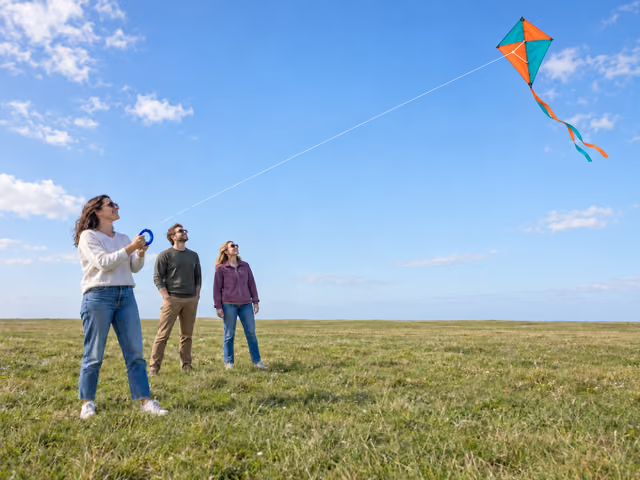
Choose a permitted open site and wind within your kite's rated range. Assemble and inspect the kite. Stand with your back to the wind; have a helper hold the kite downwind, nose up and facing you. Agree on a release signal, then let the wind lift it while the flyer takes in line. Feed out line when it pulls steadily. Land before changing flyers, then repeat or pack up.
Saved on this device only — clearing your browser's cache or site data removes them (no account backup).
Bring one kite and choose a safe flying lane
This guide hosts 2–6 adults sharing one small recreational single-line kite, such as a beginner delta or diamond. Bring the complete kite and its assembly instructions, all supplied rods and connectors, the matching nonmetallic flying line and winder, and any tail the maker specifies. Bring a bag for the equipment, drinking water and weather-appropriate sun protection. Gloves are useful for handling line; they do not make an overpowered kite suitable. Large display, fighter, glider, stunt and traction kites need different skills or instructions.
Pick a permitted broad open field or beach with smooth wind and clear ground. Keep the whole possible kite-and-line reach clear of people, pets, paths, roads, trees, buildings, overhead wires and water where recovery would be unsafe. Avoid airports and check the site's flying and airspace restrictions before the visit. Trees and buildings disturb the air downwind, even when you can feel a breeze.
Choose dry, fair weather and a steady breeze comfortably inside the maker's wind range, including gusts. Wind can be stronger aloft. Do not launch in wet or stormy weather, with a storm approaching, in strong gusts, or when the site is crowded. A forecast helps plan the outing; reassess conditions at the field. If they do not suit the kite, postpone flying.
Assemble exactly as supplied: seat the rods, attach the flying line at the specified tow point on the bridle or keel, fit the required tail and check for wear, twists or a line caught around the frame. The bridle is the short arrangement of cords on the kite; the flying line connects to its designated tow point, not a wingtip. Never use wire or line designed to cut another kite's line. Inspect the winder and its line connection too. Do not alter the bridle to compensate for an unsafe site.
Launch, fly, land and change roles
Agree on the first roles
Choose one flyer to control the line and one launch helper. Everyone else waits beside or behind the flyer, away from the line and launch path, and watches for approaching people. Anyone may call 'land' if conditions change. Before each flight, ask who wants the next flying turn; passing or watching is fine.
Launch together
The flyer faces downwind with the wind at their back and holds the winder securely. Agree on a clear visual release signal, such as raising a free hand, before separating. The helper takes the kite about 50 feet downwind as the flyer pays out line, using less only when the kite's instructions and site permit. Keep the line untangled and the kite nose up, its face toward the flyer. The helper stands behind it and releases on the agreed signal, without throwing. The flyer takes in line to help it climb, then lets out line as wind pressure supports it. No one needs to sprint.
Manage the flight
Keep control of the winder. Feed out line gradually while the kite pulls steadily; take in line when it slackens. Stay within the clear flying lane and any site limits. Do not empty the winder, leave the kite unattended or wrap line around fingers, hands or your body. A single-line kite is not steered left and right like a two-line stunt kite. The aim is a manageable flight, not maximum height.
Land before swapping
Tell the helper you are bringing it down and keep the landing area clear. Retrieve line smoothly under light pull. If it pulls harder, walk toward the kite on clear ground while taking in line to reduce tension; pause if you run out of room. Follow the kite's instructions for retrieval. Do not force tightly wound line onto a winder under heavy tension. With the kite grounded, the helper holds it while you secure the line, then the next willing flyer starts a new launch. This guide uses grounded role changes rather than passing a live winder.
Finish and pack
Finish after everyone who wants a turn has had one, or earlier if wind, weather, daylight, fatigue or people entering the area make flying unsuitable. There are no points, winner or ties. Secure the grounded kite, wind loose line without crossing loops, disassemble as instructed and collect every rod, connector, tail and piece of line. Brush off sand or dirt and dry damp equipment before storing. Leave the site clear.
With the kite still grounded, have the flyer and helper say the release and landing signals aloud. Show where everyone will stand and the clear route for retrieving the kite. This rehearsal is a host suggestion, not a flying test.
Reset problems rather than chasing the kite
If it will not rise, check wind direction, assembly, line snags and the maker's wind range before trying again. Use the assisted launch rather than running across the field. If it repeatedly dives or spins, land and inspect it; strong or turbulent wind, a snag or an assembly imbalance can be involved. Only change a tail or bridle as the particular maker instructs. Failed launches do not cost anyone their turn.
If people enter the flying lane or the pull becomes difficult to manage, bring the kite down promptly. If line crosses another kite's line, tell the other flyer and stop yanking; coordinate a controlled recovery. A line caught in overhead electrical wires must be left alone: keep clear and notify the utility. Never climb or enter unsafe ground to recover equipment.
Keep discussion calm and signals clear. If people disagree about whether the space or weather is suitable, this guide's house agreement is to stop and reassess; nobody has to persuade a reluctant friend to fly. Helpers and observers can choose their roles. This session includes walking for setup, launches and retrieval, so it is not an assured seated or low-movement activity. Check terrain and the required movements with the group before choosing the site.
Already know the game?
Ideas & Twists
Choose a variation together before you start.
Kite flying · See main rules
House practice formatLaunch-and-land practice
Replace the open-ended flying session with one complete launch, short stable flight and landing for each willing flyer. Keep the same kite, site and helper method; ground the kite between turns. A failed launch is retried only after checking conditions, with no penalty. Finish when everyone has completed or declined a cycle, or when conditions require stopping. There is no score or time target.
Kite flying · See main rules
House equipment comparisonCompare two single-line kites
Bring a second small recreational single-line kite with its own matching line, winder, instructions and specified tail. Choose weather inside BOTH kites' rated ranges. Fly only one at a time in the same clear lane: land, pack its line, then launch the other. Each willing flyer tries both and the group compares launch effort, steady pull and movement; do not rank by maximum height. Finish after the comparison turns or stop sooner if conditions change. No points or winner.
Kite flying · See main rules
House observation formatKeep a wind journal
Add paper and a pen. Before each launch, the group predicts how steadily the kite will fly using what the grass, flags and breeze suggest; one observer records the prediction. After landing, the flyer describes the pull and the observer records what happened and any setup correction. Keep the same launch and grounded role changes. Finish after one recorded flight or attempted flight per willing flyer, then compare notes. Predictions earn no points; a poor attempt is information, not a reason to keep flying in unsuitable conditions.
About this guide
General single-line technique follows the opened AKA guidance and its How to Fly a Kite revised edition by Glenn Davison. The PDF identifies the first edition's 1992 printing; no revision date or numbered current edition was established. This is an unscored shared-kite hosting format, not a competition rulebook. The 2–6 range, grounded role changes, stop-on-disagreement agreement and three variations are host suggestions. Assembly, wind rating, line strength, tail and bridle instructions remain specific to the actual kite; Prism's Flip-specific spin launch and 5–25 mph rating are not imported.
Ready for something different?
Find another game →