

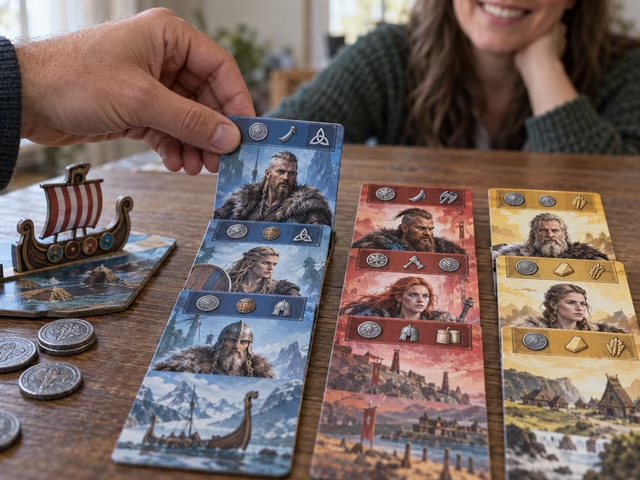
The quick version
Take reputation points, then recruit one card from hand or spend crew to explore. You may trade bracelets once before or after that action. Reaching 40 points triggers an equal-turn finish; highest score wins.
Saved on this device only — clearing your browser's cache or site data removes them (no account backup).
Set out two markets and your ship
Separate Trading Lands and Lands of Influence into shuffled decks, revealing three of each. Prepare Viking cards by player count: with two remove 3 and 4 marked cards; with three remove 4; with four use all. Shuffle and expose five Vikings in the colored board slots.
Everyone uses the normal side of a ship. Each takes two starting Vikings of different colors from the deck into a face-up crew, following the starting setup depicted below the ship. Put one recruit and one bracelet on the ship; keep two additional tokens of each beside it as unavailable supply. Put score and reputation markers on their starting spaces. Draw three Vikings privately. Choose a starting player at random; remember that seat.
Collect reputation, then recruit or explore
First add victory points equal to the highest numbered value reached on your reputation track. Then choose exactly one action.
Recruit: play one Viking from your three-card hand onto your same-color crew column. Collect every reward visible at the top of that column, including the new card, in any order. Take the face-up Viking from the board slot matching the COLOR YOU PLAYED, not necessarily a Viking whose own color matches. You may instead spend one recruit to choose any of the five cards. Refill that slot.
Explore: choose one of the six destinations. Discard crew cards matching the number and colors in its upper-left cost. Any-color symbols require the specified matching group; four-of-one-color means four cards of a single color. Each recruit token you spend replaces one required Viking. Put the destination above your ship and gain its upper-right immediate rewards. Refill from the same destination deck.
Once per turn, before or after that action, you may trade. Spend one, two or three bracelets to gain every reward in the first one, two or three columns of BOTH your ship and all owned destinations. A two-bracelet trade includes the first and second columns, not just the second.
Keep resources and crew separate
Victory icons advance the score marker; reputation icons advance the reputation marker. Recruit and bracelet icons add those tokens to the ship, up to three of each; overflow is lost. An icon that draws a Viking directly into the crew does so without activating its column.
Whenever the Viking deck empties, shuffle its discard pile. If both are empty, each player tied for the largest crew discards one chosen Viking, then form the needed deck. A recruit action replaces the card played from your hand; exploration normally leaves the hand unchanged.
Finish the current round at 40
When anyone reaches 40 or more victory points, complete that person's turn and continue only until the player immediately before the original starting player has acted. Everyone receives the same number of turns. Highest score wins; tied players compare their combined recruits and bracelets. If still tied, share the win as an explicit house resolution.
Before starting, demonstrate a recruit into a column with two cards and point to the resulting three rewards. Then show the destination cost that would remove those cards. This makes the central tradeoff clear.
Keep the two tracks distinct
Reputation pays victory points at the start of your next turn; advancing reputation does not itself move the victory marker unless an icon also awards victory points. Read destination costs aloud before discarding crew. Keep the ship's active tokens separate from its spare supply.
A recommendation discussion includes Knarr among games one couple enjoys. For a two-player introduction, demonstrate recruitment and exploration together so the crew-spending tradeoff is clear.
Already know the game?
Ideas & Twists
Choose a variation together before you start.
Knarr · See main rules
Publisher base-box variantAdvanced ships
Before setup, agree to use the advanced side of every ship. Read each ship's printed starting crew/assets and trade rewards before choosing seats. Use those instead of the normal ship values. Markets, recruitment, exploration, 40-point finish and ties stay the same.
Knarr · See main rules
Original STUDplay house twistOpen hands
Keep your three hand cards face up in a separate row below the crew. They remain hand cards and grant no rewards until recruited. This exposes possible next columns while retaining the ordinary action economy.
Knarr · See main rules
Original STUDplay house twistDestination refresh
Give everyone one paper refresh token. At the start of their action step, before recruiting or exploring, a player may discard it to put one face-up destination on the bottom of its own deck and reveal a replacement. This does not consume the action. If its deck is empty, the token cannot target that destination type.
Knarr · See main rules
Original STUDplay house twistCrew choice
For each player's two different-color starting Vikings, draw four cards. Choose two of different colors and shuffle the others back. If all four share a color, reveal cards until a second color appears, then choose. Do not collect their rewards. Normal ship assets and three-card hands follow.
Knarr · See main rules
Original STUDplay house twistBracelet commitment
At setup, each player puts one unused bracelet token on a paper reminder instead of their side supply. It cannot become available until they own their first destination. Before that they may hold at most two bracelets on their ship; then return to the normal maximum of three. Starting active bracelets remain one.
About this guide
Use the named physical base game and its supplied cards, boards and rules. Rules below are paraphrased teaching guidance. Original STUDplay house twists are optional suggestions, not publisher rules or balance-tested claims; agree one before setup.
Ready for something different?
Find another game →