

The quick version
Book a beginner two-team session, attend the briefing and make equal teams. Fit a vest each, learn the two-handed grip and identify the other team's lights. Wait for the start signal; walk through the arena, aim at an opponent's lit sensor and squeeze the trigger. When your suit deactivates, move safely and wait for it to reactivate. At the end signal, stop and return the equipment. Compare finished team totals; this guide shares a tied result.
Saved on this device only — clearing your browser's cache or site data removes them (no account backup).
Book the actual game, then make two teams
This guide uses Laserforce Standard Team on commercial Gen7 or Gen8 equipment, with everyone playing as level-one Recruit guests. It hosts 4, 6, 8, 10 or 12 friends in equal teams of 2–6. That is our social hosting range, not the manufacturer's minimum or an arena-capacity promise. Ask the venue to confirm this mission, guest levels, capacity and a session without active Warbots or other special interactive hazards. If it uses a different system or mission, have staff explain its rules instead of importing these numbers.
Before paying, check whether your group plays alone or joins a public session, how team assignment works, the mission length, check-in requirements and the cost. Do not assume a reservation buys a private arena. Ask about steps, low lighting, sound, flashing lights, vest fit and the route out; invite each friend to decide whether the setting suits them. A walking game is still a moving maze activity.
Split experienced players between the two teams. Staff assign red and green, or tell you the actual team colors. Wear secure closed-toe shoes and clothing that leaves the vest's targets uncovered. Secure loose belongings according to venue instructions. For the result in this guide, add each team's final individual scores; the higher total wins and an equal total is a draw. This simple social result and tie rule are host agreements, made before entering.
Know what a hit looks and sounds like
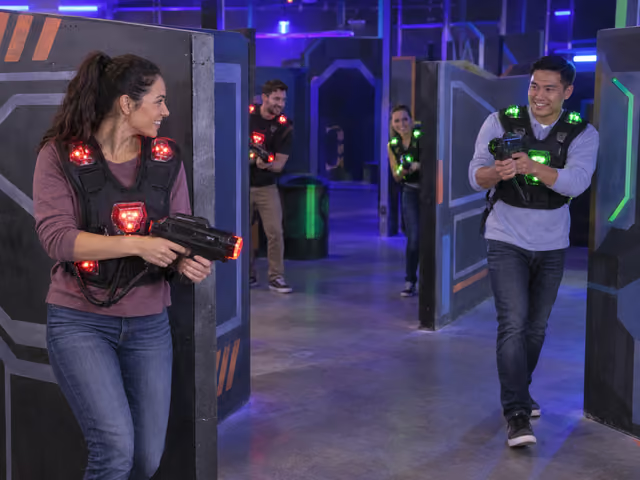
Staff fit one vest and its tethered phaser to each player. Ask them to point out the chest, back, shoulder and phaser targets on the actual kit. Hold the phaser using its required two-hand grip, keeping your arms clear of the chest target. Ask for a supervised demonstration of one registered tag, the deactivated signal, reactivation and the emergency stop or exit procedure. Aiming well means little if you do not know whether the system counted the hit.
Walk; do not run, climb, push, grab another player or obstruct an exit. Keep sensors uncovered by clothing, hands or equipment. Use arena partitions as cover only in the way staff permit. Staff set the minimum separation and restrictions on crouching, close pursuit and shooting through gaps. Do not copy an online tournament grip if it conflicts with the briefing. Aim at equipment targets, not faces.
Choose a familiar meeting point outside the arena for the finish. Anyone may leave through the staff-approved route; tell a marshal about an equipment problem or distress rather than trying to repair a live vest or forcing someone to continue.
Tag, recover and find the next angle
Begin on the signal
Enter only when directed and wait in the staff-assigned starting area until the mission begins. Everyone plays at the same time; there is no turn order. Identify a lit opposing-team target, aim with the demonstrated grip and squeeze the trigger. A flash of light is not a self-awarded point: the electronic hit signal and score record decide what registered.
Read your score
With all players at the same Recruit level, the published Standard Team schedule awards 100 points for tagging an opponent. Recruit players cannot tag their own teammates. Target the opposing color nevertheless; higher-level member games can penalize friendly fire and use different hit requirements. No hand-counted tag tally is needed.
Recover after a tag
A registered hit deactivates your phaser temporarily; unlimited lives and shots mean that you rejoin rather than leave the mission. Move to permitted cover without running and wait for the active signal. The published downtime is six to eight seconds; follow your suit's signal and the staff's actual settings. Being deactivated does not make you immune to every other player's tags. Do not chase someone at close range while they are down.
Use only explained bonuses
Recruit rapid fire can activate after consecutive successful tags; use the normal trigger and listen for the equipment announcement. Staff should explain the local activation behavior. On Gen8, the feature button can fire a short-range, wide-angle Scatter Blast that may tag several opponents; teammates are protected, and an opposing tag scores the same as an ordinary zap at equal levels. Gen7 does not supply that Gen8 Scatter Blast. Do not treat other feature-button powers as part of this guest game.
Try an arena target if one is active
Staff must identify which fixed targets are enemy or neutral and available for points. In published Standard Team, three consecutive registered zaps without a miss or being tagged destroy such a target for 1,001 points. Friendly targets are for your team to defend. Let the target's feedback confirm success; staff explain local recharge and repeat restrictions. If the venue has no active fixed targets, pursue player tags instead.
Finish the mission
Stop firing and follow the exit instructions when the game-end signal sounds or staff stop play. Return all equipment before gathering at the meeting point. Check each vest or player identity against the final score display, add each team's finished scores and compare totals. Equal totals share a draw; there is no improvised sudden-death shot in the maze. A second mission is a separate booking and starts with a new score.
Make the game fair enough to enjoy
Give a teammate a useful call such as 'green target past this corner' rather than shouting constantly. Two players can watch different angles without blocking a passage or huddling so tightly that they collide. A first game is a chance to learn the layout and hit signals. Praise someone finding a route or helping a teammate as well as a large score.
Holding a permitted defensive position can be legitimate; camping and sensor blocking are not the same accusation. Ask staff to show a legal grip and cover position. If a player seems impossible to tag, describe the vest number, location and what happened to the marshal. It may be grip, settings or faulty equipment. Do not grab their vest, cover your own targets in response or add a made-up penalty.
If a vest fails or the mission stops early, let staff resolve the electronic record. This guide's house remedy is to record the session as unfinished if they cannot provide a fair completed result; agree with the venue about any replay rather than promising one. If someone opts out, continue only with staff approval and treat the original equal-team contest as an informal session, not a comparable team result.
Before another game, ask everyone whether they want the same format, a new team balance or a break. Photos and public score sharing need the group's agreement. Phones are not needed during play; the vests, phasers and scoreboard are electronic devices.
Already know the game?
Ideas & Twists
Choose a variation together before you start.
Laser tag · See main rules
Official Individual mission; social tie ruleEveryone for themselves
Ask staff to load Laserforce Individual instead of Team for the same group; do not just ignore team colors in an active Team mission. Everyone is an opponent, and all active fixed targets are neutral. Equal-level player tags still score 100, but a destroyed fixed target scores 801 rather than Team's 1,001. Keep the Recruit setting, briefing, unlimited shots/lives, temporary downtime and end signal. Highest final individual score wins; equal top scores share the win as a house tie rule. If the venue cannot provide Individual, this twist is unavailable.
Laser tag · See main rules
Suggested house scoring variationEvery teammate counts
Keep equal teams and the complete Standard Team mission, but agree before entering to compare the lowest final individual score on each team instead of team totals. The higher of those two scores wins. If equal, compare the next-lowest player on each team, continuing upward until one score is higher; if every sorted score matches, draw. For example, 300/700/900 beats 200/900/1,200 because 300 beats 200. All players still play the whole mission and keep their own electronic points. This encourages helping a struggling teammate find useful routes; it does not authorize targeting the other team's novice at close range. Use only if every player finishes with a valid score; otherwise mark this contest unfinished.
Laser tag · See main rules
Suggested two-mission house matchSame teams, opposite colors
Arrange two complete missions with staff before starting. Keep the same equal rosters, guest levels, settings and mission duration, but ask staff to swap their team colors and any color-linked starting areas for mission two. Add each roster's team total from both completed missions; the greater combined total wins and equality is a draw. A 4,000-point first game plus 3,500 gives that roster 7,500 regardless of color. Do not combine games of different duration, with different participants or an unresolved equipment fault. If staff cannot offer the swap, play separate games instead. This compares both sides of a color-linked arena rather than adding a mid-game team change.
About this guide
The main example is published Laserforce Standard Team for equal-level Recruit guests, on Gen7 or Gen8, in a staffed indoor venue without active Warbots or extra hazards. Installed targets, downtime, power behavior and venue policies need staff confirmation. This is not an edition-neutral rulebook for Zone, Q-Zar, consumer sets, outdoor combat games or Space Marines. Even 4–12 headcounts, team-total comparison, shared ties, unfinished-result remedy and two scoring/match twists are explicit social hosting choices. Individual uses its own official mission and target score.
Ready for something different?
Find another game →