

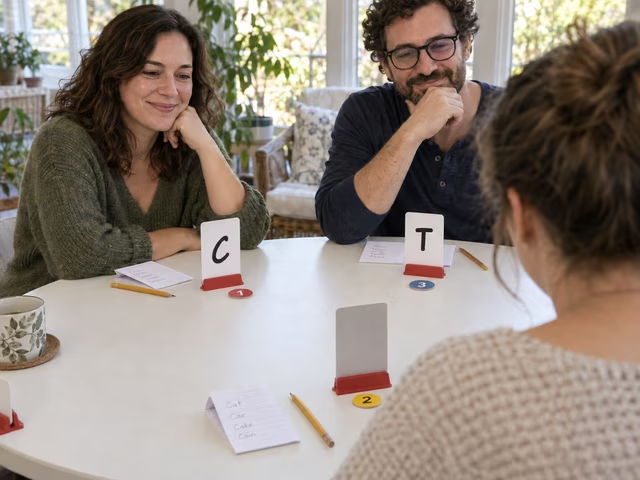
The quick version
Make and shuffle a five-letter word for your right neighbor. Keep your own cards hidden, showing one at a time outward. Choose a cluegiver, spend an available clue token and mark a word with numbered tokens. Record deductions, then decide whether to move to your next hidden letter. When clues end, arrange your unseen cards into a word and reveal together.
Saved on this device only — clearing your browser's cache or site data removes them (no account backup).
Keep every player’s word hidden
Divide the shuffled letter deck and use your portion to build a real five-letter word for the player on your right; use spare discards if needed. Shuffle those five cards before passing them. Never look at the cards you receive. Lay them face down in a row and put the leftmost into a stand facing away from you.
Use all six stands. Select the setup card for your player count and fill its printed clue-token spaces. For every empty seat, put a green token under a stack of random letter cards of the size printed on that setup card; display its top letter facing everybody. Keep remaining letters as the draw pile, and put the wildcard and numbered tokens centrally. Fold note sheets to keep guesses private.
Spell a clue without saying the word
Look for a word made from visible letters, never your own. A letter card may be reused. The wildcard can stand for one chosen letter, repeated if necessary, but its identity cannot be spoken. Compare possible clues only by length, number of players helped, number of nonplayer or bonus letters used, and whether a wildcard is used. Do not identify who is helped or describe the word.
Choose a cluegiver together. With four to six players, their first clue costs a red token and later clues cost an available green. With three players their first two clues use red; with two, their first three. Leaf greens are available immediately; central greens unlock only after all reds are taken. If no eligible token remains for someone, another eligible person must give the clue.
Mark the word in order with numbered tokens beside its letter cards, stacking multiple numbers when reusing a letter. Do not pronounce the word. Each recipient records visible letters with a blank for their own, then privately guesses. After receiving at least one clue for a letter, you may keep it for more help or return it face down and advance one position right. Never look back or return to a previous letter.
After a clue, replace every used nonplayer letter from its stack. Revealing the token beneath that stack adds an available green clue; later replacements come from the draw pile. A player finished with their original row displays a new hidden letter from the draw pile. Once used in a clue, they may guess it aloud: correct makes it a public bonus letter, wrong discards it. Draw a new hidden letter either way. A bonus letter used in a clue is discarded afterward.
Finish with a shared reveal
End after a round when no clue tokens remain or everyone agrees to finish. Privately plan and rearrange your still-hidden row into a known word. A public bonus letter or the wildcard may replace a card or extend a word, but each physical card can serve only one player. Agree those allocations before revealing.
Reveal in turn. Any correctly spelled word whose meaning you know counts; it need not be the original word. This guide uses a simple house result: count how many people formed valid words, with everyone succeeding as a perfect shared result. Do not shorten a word by omitting unresolved original cards. Discuss useful clues after the reveal, when hidden letters no longer matter.
Already know the game?
Ideas & Twists
Choose a variation together before you start.
Letter Jam · See main rules
Published difficulty optionFour-letter introduction
Build four-letter hidden words instead of five. Keep all clue tokens, nonplayer setup and bonus-letter rules. This leaves more clues per original letter.
Letter Jam · See main rules
Published difficulty optionSix-letter challenge
Build six-letter words instead of five. The same clue supply must cover more letters. Check that each created word uses available cards before passing it.
Letter Jam · See main rules
House suggestionNo wildcard clues
Do not use the wildcard while giving clues. It remains available for one player’s final word repair. Every other token and bonus-letter rule stays unchanged.
Letter Jam · See main rules
House suggestionEveryday vocabulary
Before creating words, agree that secret words and clues must be common English words, with no proper names or abbreviations. Never discuss during clue selection whether a particular clue meets that restriction; choose a different clue if unsure.
About this guide
Rules were read from the official PDF through direct text extraction after web-tool timeout, and cross-checked in the transcription. The printed player-count setup card is required for stack/token quantities. First two twists are published difficulty options; remaining twists and simple successful-word count are house choices.
Ready for something different?
Find another game →